Last updated October 30, 2026
 Water damage drying
 Fire & smoke cleanup
 Mold remediation
 Storm response
 Sewage cleanup
 Reconstruction
Free visual inspection and a written scope of work before any mitigation begins - photos, moisture readings, and drying logs go in your claim file
The scope we write is the scope we bill. Anything new gets shown to you, in writing, before we touch it.
Get your free estimateDIY vs Professional Damage Restoration: The Ontario Homeowner’s Decision Guide
The homeowner who extracts their own Category 2 water loss and never documents the source classification may discover months later that their carrier considers the resulting mold growth an uninsured secondary loss. The initial event was never professionally categorized. The claim record shows no water classification, no drying log, no psychrometric data. The insurer’s position is simple: the homeowner’s undocumented intervention broke the chain of causation. In Ontario, California, where summertime temperatures push indoor humidity past 60% within hours of a water event, that gap in documentation becomes expensive fast. This guide explains when DIY water damage work is defensible, when it is not, and what the Ontario homeowner stands to lose by choosing wrong.
Quick Answer
DIY damage restoration is only appropriate for Category 1 water losses (clean water from a supply line) affecting a small, contained area that can be fully dried within 48 hours. Category 2 or Category 3 water, any loss affecting structural cavities, any event involving sewage or exterior floodwater, or any loss tied to an insurance claim requires professional restoration with documented psychrometric data and IICRC-aligned methodology. In Ontario, California, the threshold question is not “can I rent a fan and try this?” but “what category is this water, and what documentation will my insurer require if something goes wrong?”
Restoration work we handle
Table of Contents
- The Three Water Categories: Why Classification Determines Everything
- What Consumer-Grade Equipment Actually Achieves vs. Commercial LGR Systems
- The Psychrometrics Problem: Why Drying Logs Matter to Your Insurer
- California Contractor Licensing and Ontario Homeowner Liability
- The DIY vs. Professional Decision Matrix
- Mold and Fire Damage: Where DIY Stops Being a Conversation
- How Professional Documentation Supports Your Insurance Claim
- Common Mistakes to Avoid
- When to Call a Professional
- Frequently Asked Questions
The Three Water Categories: Why Classification Determines Everything
The restoration industry classifies water damage into three categories under the IICRC S500 standard, and every decision you make about DIY work depends on which category you are dealing with. Misclassifying water is the single most common error we see in Ontario homes, and it is the error with the most expensive consequences.
Category 1: Sanitary Water. This is water from a clean source: a broken supply line, a faucet left running, a water heater leak from the cold-water intake. It poses no immediate health risk. Category 1 is the only water category that a homeowner can reasonably attempt to dry themselves, and even then, only when the affected area is small, the water has not sat for more than 24 to 48 hours, and no structural cavities are involved. The moment Category 1 water sits, wicks into drywall, or contacts contaminated surfaces, it degrades.
Category 2: Significantly Contaminated Water. This is grey water: washing machine overflow, dishwasher discharge, toilet overflow with urine only, sump pump failures. Category 2 water contains microorganisms and nutrients that support rapid bacterial growth. In Ontario’s summer heat, Category 2 water becomes Category 3 within 48 to 72 hours. A homeowner attempting to dry Category 2 water with rental equipment is not just fighting an uphill battle; they are potentially spreading contaminated moisture into wall cavities, under baseboards, and into subflooring where it will continue to grow.
Category 3: Grossly Contaminated Water. Sewage, floodwater, ground-surface water, and any water containing pathogenic or toxigenic agents. Category 3 water requires full containment, antimicrobial application, and often controlled demolition of affected materials. No consumer-grade approach exists for Category 3. The health risks associated with sewage-borne pathogens, including hepatitis, E. coli, and parasitic infections, make Category 3 a professional-only situation, and any homeowner who attempts to handle it themselves is taking a serious health risk.
Here is the point most guides miss: your insurance policy does not say “water damage is covered.” It says specific types of water damage are covered under specific conditions. When a carrier asks what category the water was, and the homeowner cannot answer because no professional classified it, the claim enters a gray zone. The documentation gap becomes the carrier’s leverage.
What Consumer-Grade Equipment Actually Achieves vs. Commercial LGR Systems
The equipment gap between what a homeowner can rent and what a professional restoration company deploys is not a matter of degree. It is a difference in kind.
A consumer-grade dehumidifier from a box store or rental shop typically removes 10 to 20 pints of water per day at 80°F and 60% relative humidity. A commercial low-grain-refrigerant dehumidifier, like the Dri-Eaz LGR models we run, removes 70 to 130 pints per day under the same conditions. The difference is measured in grain-per-pound removal rates: consumer units operate around 50 to 60 grains per pound of dry air; professional LGR units pull down to 34 grains per pound or lower. That lower grain count is what pulls moisture out of drywall, hardwood, and structural lumber, not just off the surface of the floor.
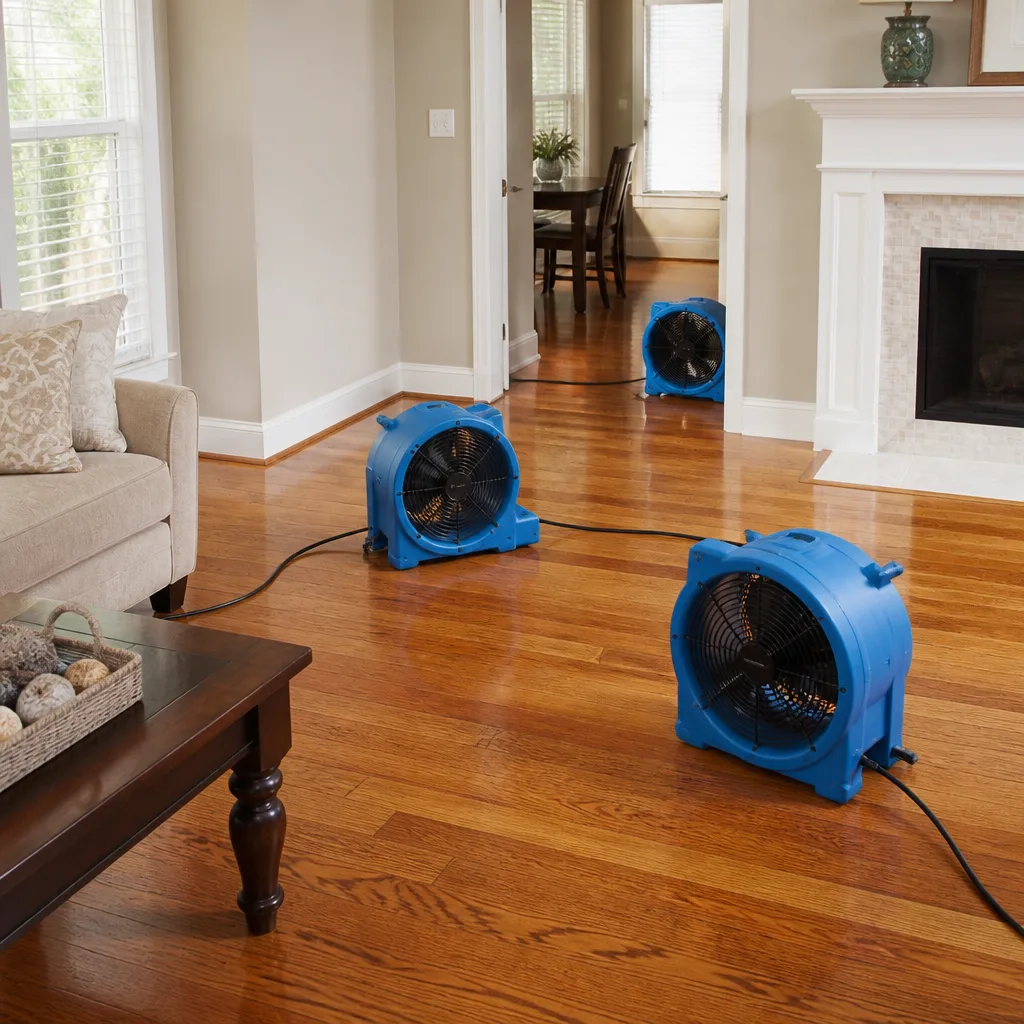
Air movement is the second gap. The box fans and carpet fans available to consumers move 1,500 to 3,000 cubic feet per minute. The professional air movers used in restoration work, from brands like Phoenix and XPOWER, move 2,500 to 4,500 CFM each, and a typical water loss requires four to eight of them, positioned at precise angles to create turbulent airflow across the entire affected surface. The difference is not more wind; it is airflow engineered to strip the boundary layer of saturated air from every square inch of wet material.
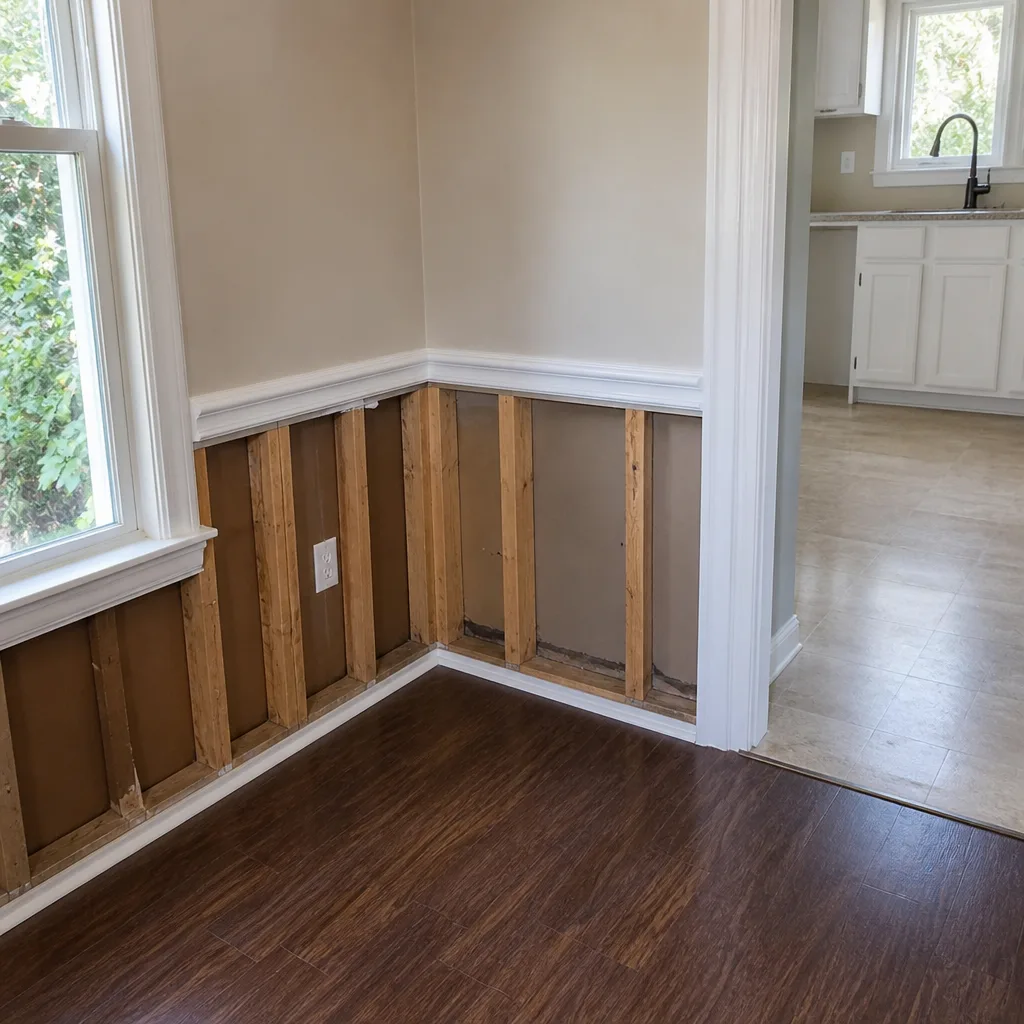
The third gap is the one almost no homeowner knows about: structural cavity drying. When water enters a wall cavity in an Ontario home, it is not enough to dry the visible drywall surface. The moisture inside the cavity, in the insulation, in the framing, behind the baseboards, will continue to migrate for weeks. Injectidry systems, which we use regularly on Ontario water losses, inject dry air directly into wall cavities, under cabinetry, and beneath hardwood subfloors. There is no consumer-grade equivalent. A homeowner can dry the surface of a wall and leave the cavity wet for a month, and the mold that grows in that cavity is invisible until it is a much larger problem.
What a wet vac actually achieves: extraction is the first and most important step in any water loss, and even a good consumer wet vac will leave behind 30 to 40% of the water that a truck-mounted or portable professional extraction unit removes. The residual moisture is what drives the drying time up, and the drying time is what determines whether mold takes hold. In Ontario, where the relative humidity from July through September rarely drops below 40%, that residual moisture is a mold invitation.
The Psychrometrics Problem: Why Drying Logs Matter to Your Insurer
Professional water damage restoration is not just about moving air and pulling water. It is about documenting that the drying process reached a defensible endpoint. That documentation is called a drying log, and it is built on psychrometric readings: temperature, relative humidity, and grains per pound measurements taken daily from the affected area and from an unaffected control area.
Here is what a professional drying log contains:
- Initial moisture readings from every affected material: drywall, baseboard, subfloor, framing, hardwood, tile, carpet pad.
- Daily psychrometric readings showing the progression of temperature, relative humidity, and specific humidity in both the affected space and a control space.
- Equipment placement records documenting how many air movers and dehumidifiers were deployed, where they were positioned, and when they were moved.
- Moisture content readings repeated daily until all materials reach their dry standard, typically 8% to 12% moisture content for hardwood and 12% to 16% for softwood framing.
- A final sign-off confirming the drying goal was reached and the space was returned to its pre-loss condition.
When an Ontario homeowner dries a water loss themselves, none of this exists. The carrier processes a claim with no drying log. The adjuster’s question is predictable: how do we know the space was actually dry? If mold appears six weeks later, the carrier’s position is that the mold resulted from incomplete drying by the homeowner, not from the covered loss. The secondary damage claim is reduced or denied because the chain of causation was broken by undocumented amateur intervention.
We have seen this exact scenario in Ontario more times than we can count. A homeowner files a water damage claim, gets a check, does the drying themselves with rental fans, and calls the carrier three months later when mold appears in the baseboards. The carrier’s response is consistent: the mold is a separate event caused by the homeowner’s failure to properly dry the original loss. Without a drying log, there is no proof the original loss was ever properly addressed.
Psychrometric documentation is also what makes the difference between a claim that pays in full and a claim that gets scrutinized for weeks. Adjusters recognize IICRC-aligned drying logs. They know the format, they know what a proper dry standard looks like, and they process those claims faster because the documentation answers their questions before they ask them.
California Contractor Licensing and Ontario Homeowner Liability
California requires any contractor performing water damage restoration work, including demolition, structural drying, and reconstruction, to hold a valid contractor’s license from the Contractors State License Board. The relevant classification is typically C-61/D-64 for damage restoration, or a B general building license for reconstruction work. What this means for the Ontario homeowner matters in three ways.
First: unlicensed restoration work creates liability for you. If you hire an unlicensed operator to handle a water loss in your Ontario home, and that operator fails to properly dry the structure, fails to contain contaminated water, or causes secondary damage, you may have no recourse. Unlicensed contractors are not bonded, often not insured, and the CSLB provides no complaint pathway for work performed by unlicensed operators. You carry the entire risk.
Second: resale disclosure obligations attach to unpermitted or improperly documented repairs. California Civil Code Section 1102 requires sellers to disclose known material facts about the property, including water damage and repairs. If you dry a water loss yourself, or hire an unlicensed operator, and mold is later discovered by a buyer’s inspector, you may face a disclosure failure claim. A professional restoration company’s documentation is your defense: it shows the loss was properly addressed, the drying was completed, and the space was returned to a documented dry standard.
Third: insurance coverage can be voided by unlicensed work. Many California homeowners policies contain language requiring that repairs be performed by licensed professionals. If you hire an unlicensed operator and the work fails, the carrier may deny the resulting secondary damage claim on the basis that the initial repair was not performed by a qualified party. The savings from hiring unlicensed help evaporates the first time an adjuster asks for the contractor’s license number and you cannot produce one.
Dorchester Water Damage operates under IICRC-aligned standards, and our documentation is built from day one to hold up to adjuster scrutiny. That is not a slogan. It is a workflow decision we made because our Ontario clients are almost always working with an insurance company, and the quality of the paperwork determines the size of the payout.
The DIY vs. Professional Decision Matrix
Here is a decision framework that produces a defensible go/no-go answer. Answer each question honestly.
- What is the water source? If the answer is anything other than a clean supply line (sink, tub, fresh water pipe), stop. Category 2 and Category 3 water are professional-only. If you do not know the source, treat it as contaminated.
- How large is the affected area? If the water covers more than roughly 10 square feet, or if it has traveled under baseboards, into closets, or through walls, you are past the DIY threshold. Small contained spills can be DIY. Anything that requires moving furniture and pulling baseboards is not.
- How long has the water been present? Water that has been sitting for more than 24 to 48 hours has begun to degrade toward Category 2. Water that has been sitting for more than 72 hours should be assumed Category 2 or worse. The clock matters.
- What materials are wet? Tile, concrete, and vinyl are forgiving. Hardwood, carpet with pad, drywall, and any porous material are not. The moment drywall is wet above the baseboard line, you need professional drying.
- Is an insurance claim being filed? If yes, this is the decisive variable. A carrier will require documentation that a homeowner cannot produce. If you want the claim paid in full, including any future secondary damage, you need a professional drying log.
- Can you realistically dry the space to standard within 48 hours? This means moisture content readings below 12% in all affected materials, not just a floor that feels dry to the touch. If the answer is not an emphatic yes, call a professional.
The pattern here is clear: the only appropriate DIY scenario is a small Category 1 spill on non-porous surfaces, caught immediately, with no insurance claim involved, in a space you can dry completely within 48 hours. Everything else belongs in professional hands.
Mold and Fire Damage: Where DIY Stops Being a Conversation
Mold remediation is never a DIY project. This is not a matter of preference. Mold remediation involves the removal and disposal of contaminated porous materials, containment of the work area to prevent spore spread, HEPA air filtration, and antimicrobial treatment of affected surfaces. The health risks associated with improper mold disturbance are well-documented, and the liability for improper remediation is real. In Ontario, a homeowner who disturbs mold without containment spreads spores throughout the house, and the remediation cost goes up, not down.
Fire damage restoration is a different world entirely. Smoke and soot are not just unpleasant; they are chemically active. Soot residue is acidic and begins etching surfaces within hours. Smoke odor penetrates every porous material in the structure. Professional fire damage restoration requires thermal fogging, ozone treatment, specialized cleaning agents for different surface types, and often structural cleaning of the HVAC system. There is no consumer-grade approach to fire damage. A homeowner who tries to wash soot off walls with household cleaners is often doing more harm than good, driving the soot deeper into the surface.
We provide all three services, water damage restoration in Muscoy, mold remediation, and fire damage restoration, because the real world does not divide losses into clean categories. A kitchen fire puts water in the structure from the fire suppression, soot throughout the house, and mold risk in every wet cavity. One company, one documentation file, one point of contact for the adjuster. That is the model we built.
How Professional Documentation Supports Your Insurance Claim
When you file a water damage claim on your Ontario home, the adjuster’s job is to determine what the carrier owes. Their tool for that determination is documentation. What they receive from a professional restoration company looks like this:
- Initial assessment with photo documentation of the affected area, the water source, and the materials involved.
- Water classification based on IICRC S500 standards, establishing what category of water caused the loss.
- Drying plan including equipment types, quantities, placement, and projected drying time.
- Daily drying logs with psychrometric readings and moisture content measurements.
- Final documentation confirming the drying goal was reached and the space was returned to pre-loss condition.
What they receive from a homeowner who did the work themselves is, in most cases, nothing. No classification. No drying log. No moisture readings. The claim is processed on the homeowner’s word, and the carrier’s obligation is to the policy, not to the homeowner’s narrative.
This is why we say on our Dorchester Water Damage home page that documentation is not an afterthought. It is the product. The drying is the work. The documentation is what gets you paid.
The professional affiliations matter here too. Our RIA and IFA affiliations mean our technicians are held to ongoing professional standards, not a one-time certification. Adjusters know what RIA membership means. It signals that the company operates under industry accountability, and that the paperwork will be in order.
Common Mistakes to Avoid
- Treating all water as the same. A homeowner in Ontario who dries a washing machine overflow the same way they would dry a clean water spill from a supply line is making a category error. The contamination level determines the response, and getting it wrong spreads contamination through the structure.
- Assuming the floor is dry because it feels dry. Drywall, hardwood, and subflooring hold moisture well below the surface. A moisture meter is the only way to know if structural materials are actually dry, and most homeowners do not own one.
- Using rental-store dehumidifiers and expecting professional results. The consumer-grade equipment at rental stores removes a fraction of the moisture that commercial LGR units remove. The difference is not efficiency; it is whether the job gets done at all before mold takes hold.
- Filing a claim without documentation. If you are filing an insurance claim, the documentation requirements are fixed. A homeowner’s word is not documentation. An IICRC-aligned drying log is.
- Hiring unlicensed labor to save money. In California, unlicensed restoration work carries liability, disclosure, and coverage risks that dwarf the savings. The contractor’s license number is the first thing an adjuster asks for when something goes wrong.
- Waiting to call a professional. The 48-hour window for preventing mold growth is real. Every day of delay in an Ontario water loss shortens the window and increases the scope of the remediation. Speed is a technical variable, not a convenience.
When to Call a Professional
Call a professional restoration company when the water is Category 2 or 3, when the affected area exceeds 10 square feet, when structural cavities are wet, when the water has been sitting for more than 48 hours, when mold is visible or suspected, when fire damage has occurred, or when an insurance claim is being filed. These are not judgment calls; they are threshold conditions that determine whether the loss can be properly addressed.
Dorchester Water Damage offers free estimates in Ontario. Call (833) 589-8366. A technician will assess the loss, classify the water, and provide a written scope of work before any equipment is deployed. That scope is yours to keep regardless of whether you hire us.
Frequently Asked Questions
Can I dry a small water leak myself in Ontario?
Yes, if the water is clean Category 1 from a supply line, the affected area is small (under 10 square feet), the water has not been sitting more than a few hours, no structural cavities are wet, and you can dry the space completely within 48 hours using proper air movement and dehumidification. If any of those conditions is not met, call a professional at (833) 589-8366 for an assessment.
How fast can mold grow after water damage in Ontario’s climate?
Mold can begin growing within 24 to 48 hours of water exposure, and Ontario’s summer humidity accelerates that timeline. The indoor relative humidity in an Ontario home with a water loss can exceed 60% within hours, which is the threshold at which mold growth becomes active. The 48-hour window for drying is not a guideline; it is the biological timer on mold spores that are already present in every home.
Will my insurance cover water damage if I try to dry it myself first?
Your initial claim for the water damage itself is generally covered regardless of whether you attempted DIY drying, assuming the cause of loss is covered. The problem is secondary damage: if mold appears later because the DIY drying was incomplete, the carrier may classify the mold as a separate event caused by your intervention, not by the original loss. A professional drying log protects your claim; a DIY job does not.
What does professional water damage restoration cost in Ontario?
Professional water damage restoration in the Ontario area typically ranges from $2,500 to $7,500 for a contained Category 1 loss, with larger or contaminated losses running higher. The determining variables are the affected square footage, the water category, the materials wet, and how much demolition is required. Every professional estimate should be a written scope, not a verbal number. Call (833) 589-8366 for a free estimate on your specific loss.
Do I really need structural drying, or can I just point fans at the wall?
If water has entered wall cavities, under baseboards, or beneath flooring, surface drying is not sufficient. The moisture inside the cavity will continue to migrate and support mold growth for weeks after the visible surface appears dry. Injectidry structural drying systems pull moisture from inside cavities without unnecessary demolition, which is why professional restoration companies use them instead of relying on surface airflow alone.
How do I know if a water damage contractor in Ontario is legitimate?
Ask for their California contractor’s license number and verify it with the Contractors State License Board. Ask about their IICRC certifications and their professional affiliations; RIA and IFA membership indicate ongoing industry accountability. Ask whether they will provide a written scope of work before starting. A legitimate operator answers all three questions without hesitation. An unlicensed operator can answer none of them.
The Bottom Line
The DIY vs. professional decision in water damage restoration is not a question of saving money. It is a question of water classification, documentation, and liability. The only appropriate DIY scenario is a small, contained Category 1 loss with no insurance claim involved. Everything else: Category 2 or 3 water, structural involvement, fire damage, mold, any insured loss, belongs in professional hands with documented methodology and psychrometric data. In Ontario, the climate works against you, the insurance company is watching the paperwork, and the contractor’s license number is the first line of defense. Choose accordingly.
Written by the team at Dorchester Water Damage, serving Ontario since 2018.
See the difference
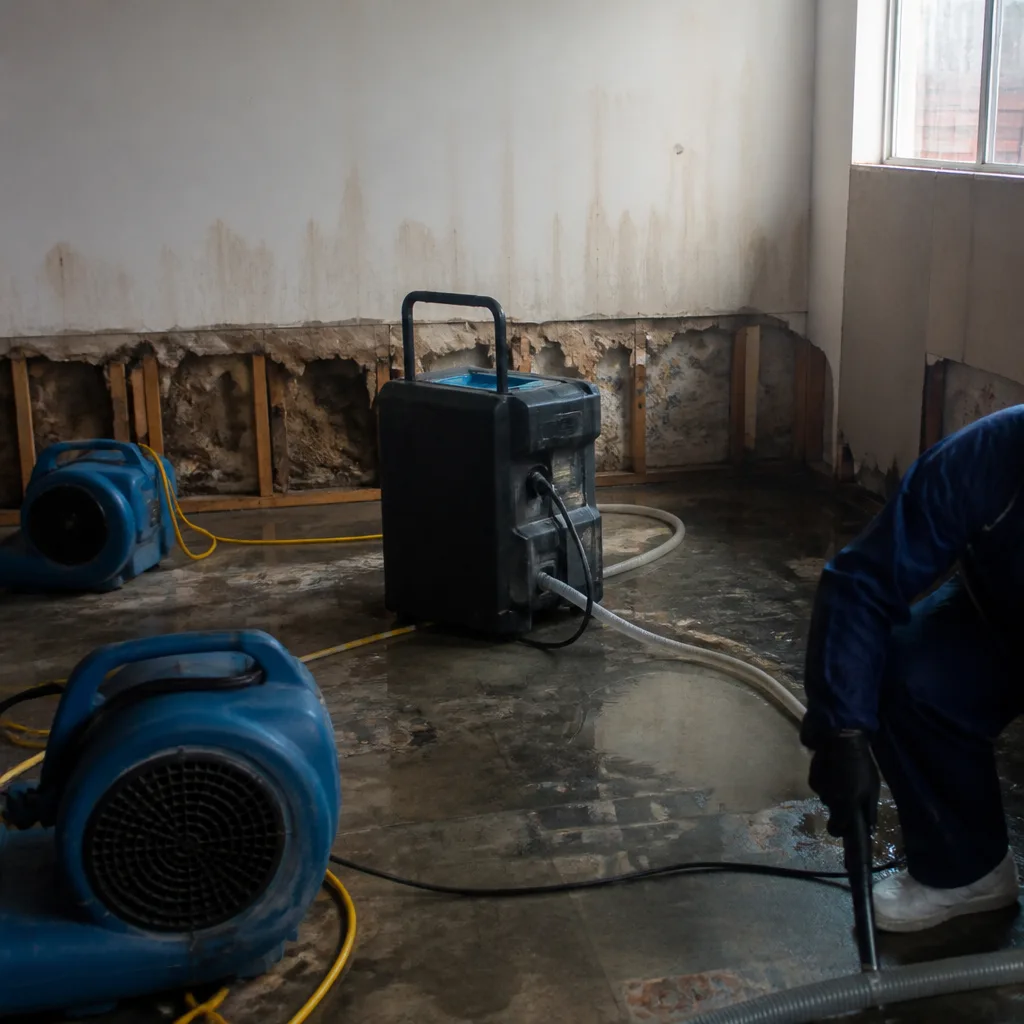 Before
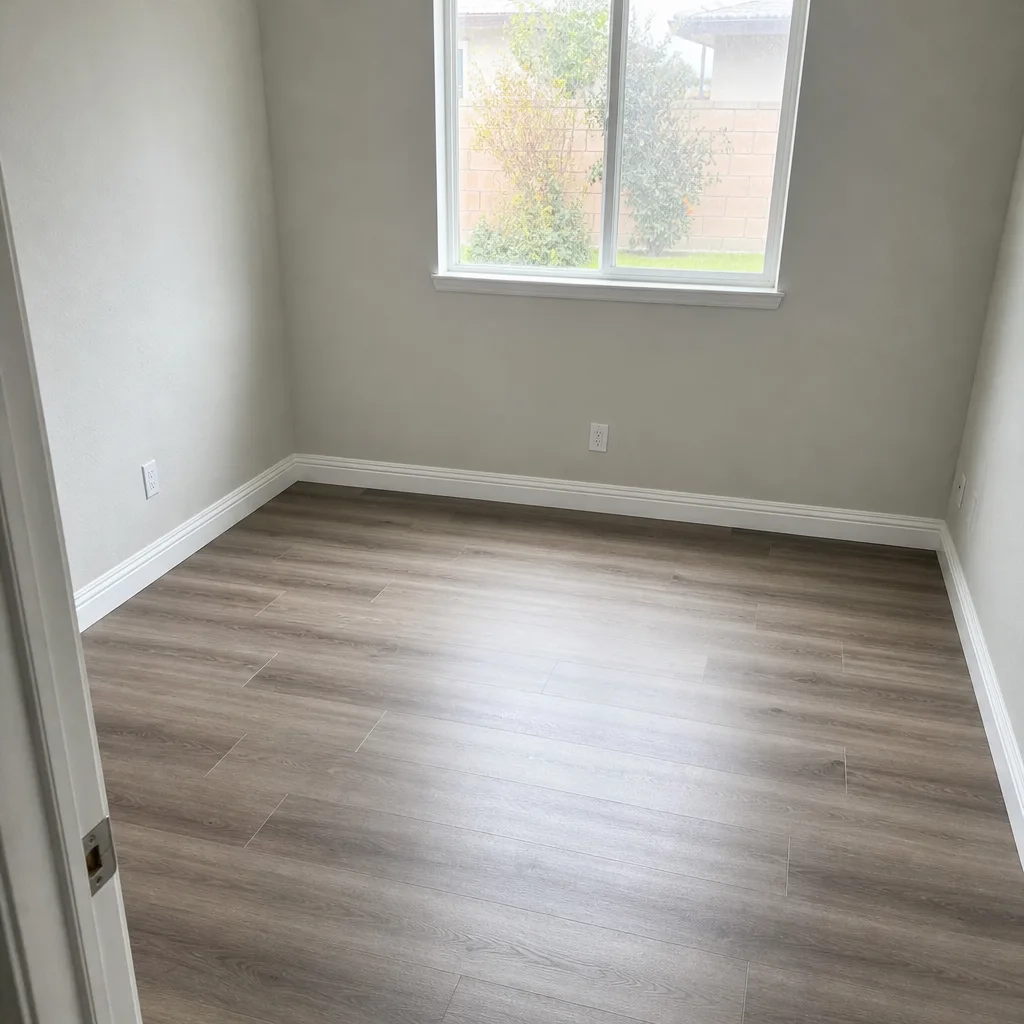 After
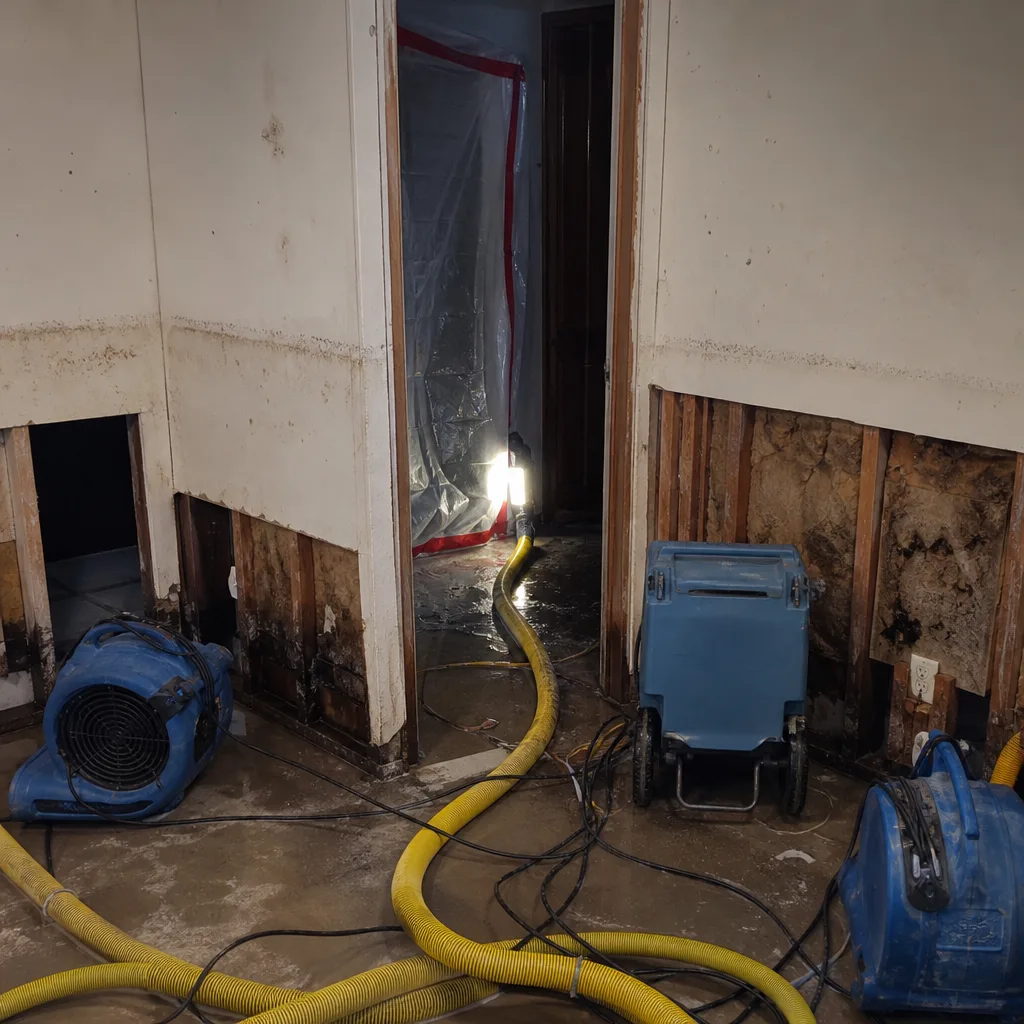 Before
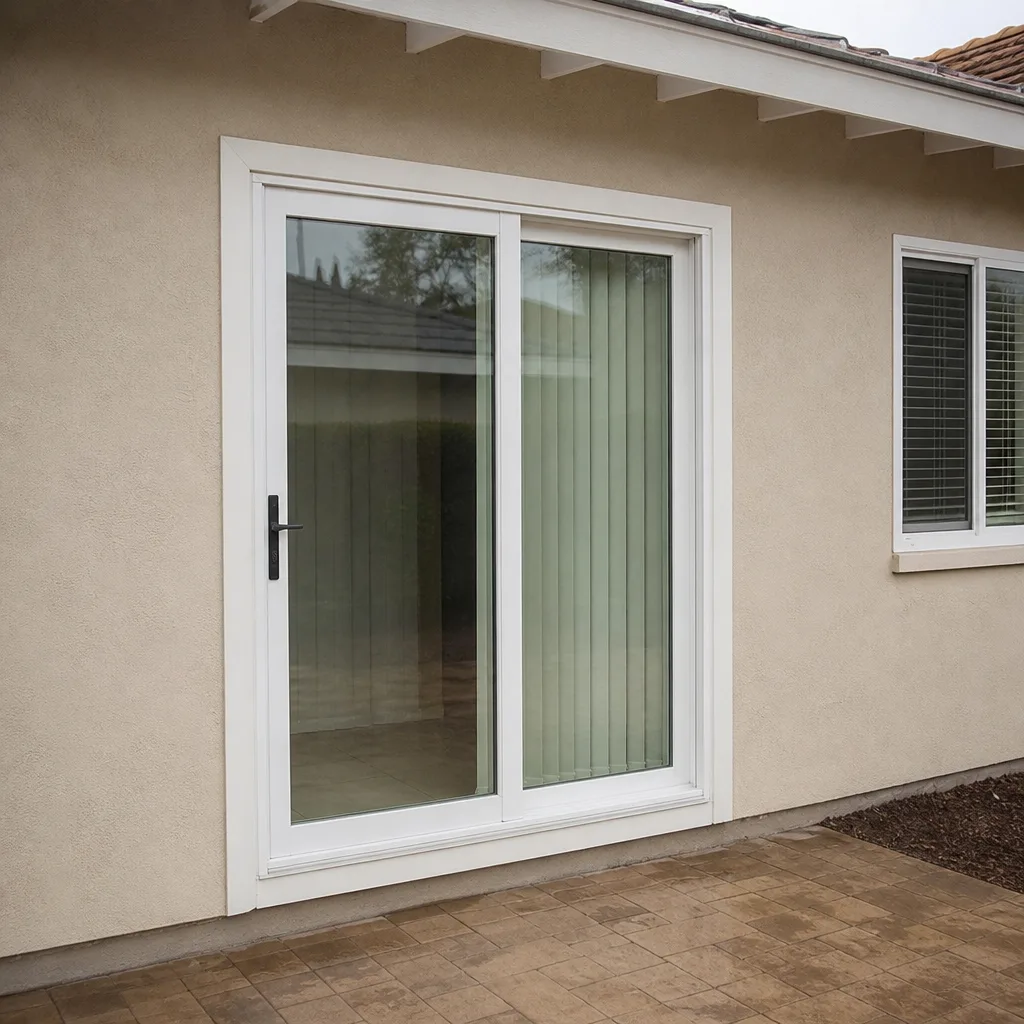 After
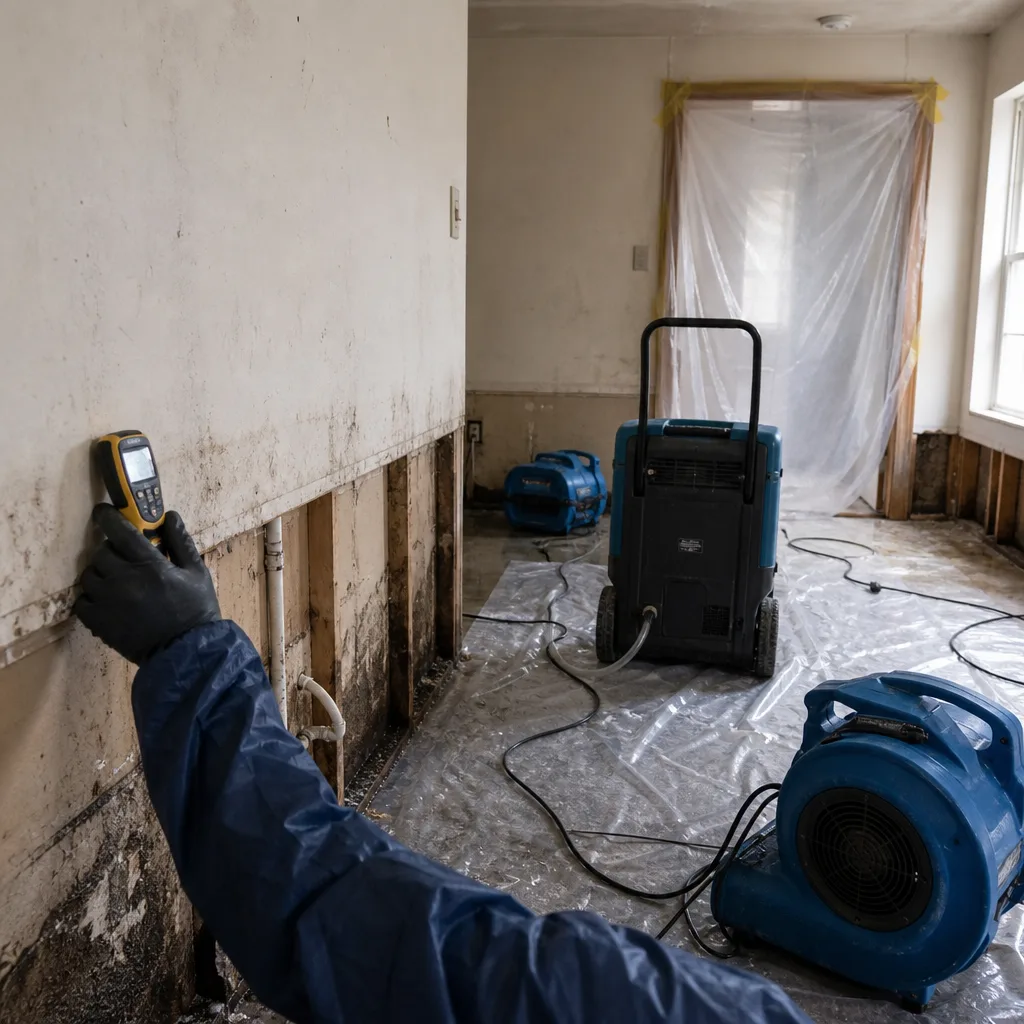 Before
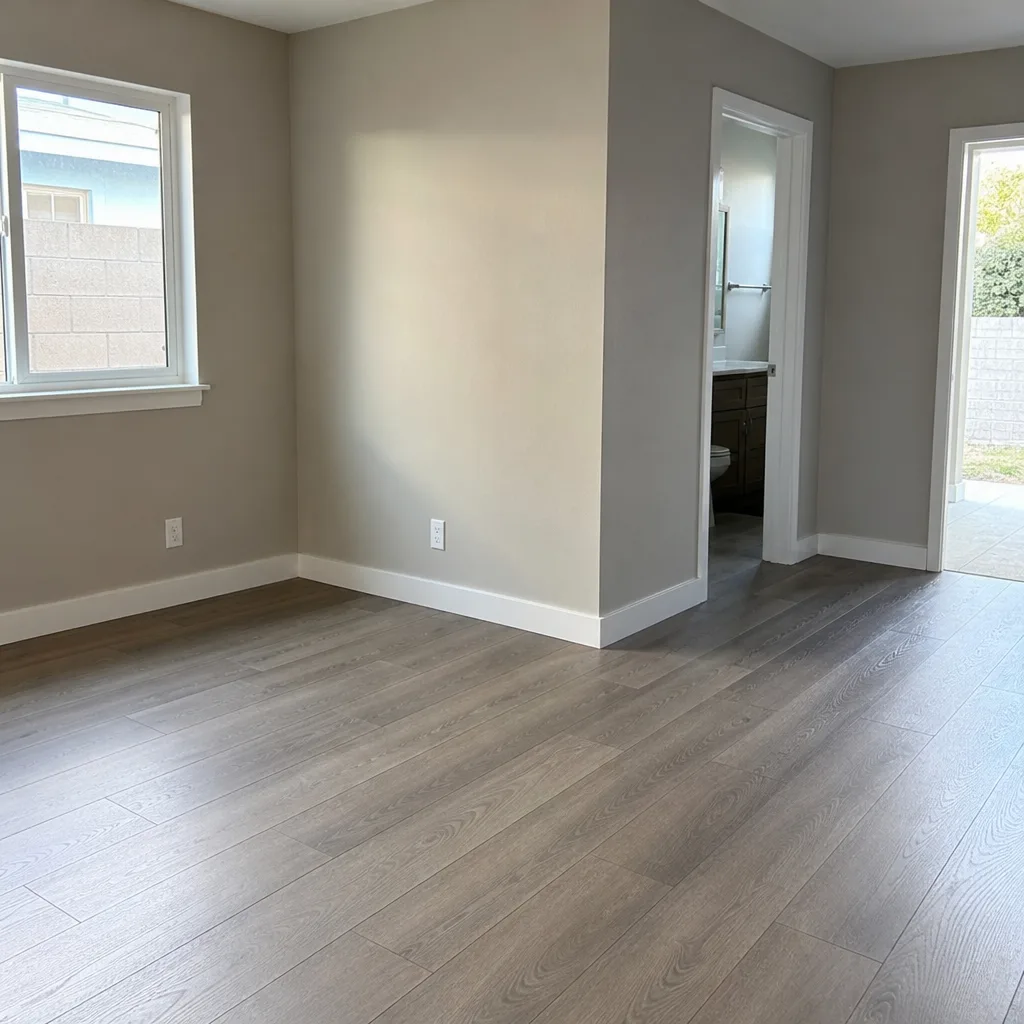 After