Last updated October 30, 2026
 Water damage drying
 Fire & smoke cleanup
 Mold remediation
 Storm response
 Sewage cleanup
 Reconstruction
Free visual inspection and a written scope of work before any mitigation begins - photos, moisture readings, and drying logs go in your claim file
The scope we write is the scope we bill. Anything new gets shown to you, in writing, before we touch it.
Get your free estimateHow to Hire a Damage Restoration Contractor in Ontario: A Step-by-Step Guide
In the thirty minutes after a water line ruptures in your Ontario home, you’ll likely field calls from three or four contractors. One of them will hand you a tablet with an Assignment of Benefits agreement and a pen. Sign it, and you’ve just signed away your insurance claim rights to a company you’ve never vetted. This guide and our Water Damage Restoration Troubleshooting: Common Problems and How to Fix Them exist because that moment is exactly when permanent financial mistakes get made. We’ll walk you through the same contractor evaluation framework insurance adjusters use, so the company you hire is the one your insurer would approve anyway.
Quick Answer
To hire a damage restoration contractor in Ontario, CA, verify IICRC certifications (WRT for water, ASD for structural drying, AMRT for mold), demand a written scope of work before signing anything, confirm they run professional-grade drying equipment (not rental-store fans), and check whether they document moisture readings in a format your insurer can review. Avoid any contractor who pushes an Assignment of Benefits agreement in the first hour or offers to waive your deductible. Call (833) 589-8366 for a free estimate from a contractor whose process aligns with what adjusters expect.
Restoration work we handle
Table of Contents
- Why Hiring Under Pressure Is Different in Ontario
- The IICRC Certifications That Actually Matter
- How to Read a Scope of Work Before You Sign
- Red Flags in Emergency Service Agreements
- Why Equipment Lists Matter: Commercial vs. Consumer Grade
- Questions to Ask Before Anyone Arrives
- How Insurance Adjusters Evaluate Contractors
- Common Mistakes to Avoid
Why Hiring Under Pressure Is Different in Ontario
Hiring a plumber to fix a dripping faucet is a retail transaction. Hiring a restoration contractor after a supply line burst in your Ontario attic at 2 a.m. is a crisis decision made under sleep deprivation, water actively spreading, and a contractor standing in your hallway saying the word “mold.” The decision-making conditions are degraded by design. You’re being asked to evaluate technical competence, contract terms, and insurance implications while your ceiling drips into a plastic bin.
Here’s what we’ve observed from years of working losses across Ontario: the contractors who apply the most time pressure are rarely the ones with the best equipment or documentation. The company that says “sign now, we can start tonight” is often the same company that shows up with three box fans from a hardware store and a dehumidifier meant for a basement. Real restoration work doesn’t require a signature in the first twenty minutes. Legitimate contractors can start mitigation with a simple authorization and finalize the contract after the water stops.
Ontario’s climate adds another layer. We’re inland, so the heat in July and August accelerates mold growth inside wall cavities faster than coastal markets. A wet wall that might take five days to develop microbial activity in Santa Monica can show visible mold in three days here. That’s not fear-mongering. That’s the reality of the San Bernardino Valley’s summer temperatures. It means speed matters, but it doesn’t mean you skip vetting. It means you vet faster, with a Water Damage Restoration Maintenance Checklist for Ontario Homeowners, not slower, with a panic.
The IICRC Certifications That Actually Matter
The IICRC (Institute of Inspection, Cleaning and Restoration Certification) is the standard-setting body for the restoration industry. When an insurer, adjuster, or property manager says a contractor “follows industry standards,” they mean IICRC standards. The certifications aren’t decorative. Each one authorizes a technician to perform specific work, and showing up without the right certification is a quiet sign the company isn’t running a serious operation.
Here are the three certifications you should ask about when hiring a restoration contractor in Ontario:
- WRT (Water Restoration Technician) – This is the entry-level certification for water damage work. A WRT-certified technician has been trained in the science of drying: psychrometry, moisture mapping, extraction techniques, and equipment placement. If a company can’t produce a single WRT-certified tech, that’s a hard stop.
- ASD (Applied Structural Drying) – This is the advanced certification that separates surface drying from structural drying. An ASD-certified technician knows how to dry inside wall cavities, under flooring, and within building assemblies without tearing everything apart. Companies like ours that run Injectidry systems rely on this methodology. It’s the difference between drying a wall and rebuilding it.
- AMRT (Applied Microbial Remediation Technician) – This certifies a technician to handle mold and sewage contamination safely. It covers containment, negative air pressure, proper removal protocols, and post-remediation verification. Any company doing mold work in Ontario without AMRT-certified staff is operating outside recognized industry practice.
Ask for certifications by name. Don’t accept “we’re fully certified.” Ask: “Do you have a WRT on staff? ASD? AMRT for the mold work?” The contractor who answers instantly and can show documentation is running the kind of operation your adjuster will accept. The contractor who gets vague is telling you something important about what will show up at your door.
How to Read a Scope of Work Before You Sign
A scope of work is the contract’s technical backbone. It lists what will be done, with what equipment, in what rooms, for how long, and at what cost. Adjusters read scopes of work line by line. You should too. The scope is where legitimate contractors prove their methodology and where sloppy operators hide omissions that become change orders later.
Here’s a step-by-step method for reading one:
- Find the moisture map. A legitimate scope starts with initial moisture readings: what was wet, how wet, and where. If the scope says “dried affected areas” without listing which rooms and what moisture content was measured, it’s not a scope. It’s a vague promise.
- Look for the equipment schedule. This lists every piece of drying equipment, by brand and model, with placement locations. “Dehumidifiers: 3” is not enough. “Dri-Eaz LGR 7000XLi, one unit, living room, southeast corner” is what professional documentation looks like.
- Check the drying goals. The scope should state target moisture content for wood (typically 8-12% depending on the material) and ambient conditions. If there are no numbers, there’s no way to know when the job is actually done.
- Review the demolition line items. Every area being cut, removed, or disposed of should be itemized with dimensions. “Remove affected drywall” without specifying which walls and how many linear feet is an open invitation for scope creep.
- Find the monitoring schedule. Professional restoration includes daily moisture readings during drying. The scope should state how often readings are taken and who reviews them.
- Confirm the post-remediation verification. For water and mold work, the scope should include a final moisture check or clearance testing. Without it, you’re trusting a contractor to declare their own work complete.
At Dorchester Water Damage, we provide a written scope before any work begins. Not after. Not verbally. On paper, before a single piece of equipment leaves the truck. If a contractor in Ontario tells you the scope “comes later” or “depends on what we find,” that’s a signal to find a different contractor.
Red Flags in Emergency Service Agreements
Emergency service agreements are the documents that get signed in the first hour after a loss. They’re often presented as “just an authorization to start work.” Some are. Many are not. Here are the clauses and patterns that should make you pause before signing anything in Ontario:
- Assignment of Benefits (AOB) clauses. This is the big one. An AOB transfers your insurance claim rights to the contractor. The contractor then bills your insurer directly, and you’re out of the loop. In states like Florida, AOB abuse became such a problem that the legislature had to step in. In California, AOBs are less common but still appear in emergency agreements. Read for the words “assignment of benefits” or “direct my insurance benefits.” If you see them, don’t sign.
- Waived deductible offers. A contractor who promises to “waive your deductible” is not doing you a favor. They’re inflating the claim to absorb the deductible, which is insurance fraud. You’re the one who signed the estimate, which means you’re the one on the hook. Legitimate contractors bill your deductible. The contractor who waives it is telling you how they’ll bill your insurer: dishonestly.
- Verbal-only moisture readings. “The walls are wet, I can feel it, we need to start.” No. Moisture readings come from moisture meters, not fingertips. A professional documents readings with the make and model of the meter. If the contractor won’t put readings in writing before starting, they can’t document the drying process either.
- Blank or unfilled contract fields. Any agreement with blank lines for scope, price, or duration is a blank check. Fill every field before signing. If the contractor says “we’ll fill that in later,” the answer is “then we’ll sign later.”
- Pressure language in the first hour. “If we don’t start now, mold will be everywhere by tomorrow.” True urgency exists, but a professional explains the urgency by showing you moisture readings, not by standing between you and your front door.
Here’s the pattern to notice: the red flags cluster together. A contractor with an AOB clause is likely the same one offering to waive your deductible and rushing you with verbal-only readings. The problems aren’t isolated. They indicate a business model built on exploiting urgency, not on documented restoration.
Why Equipment Lists Matter: Commercial vs. Consumer Grade
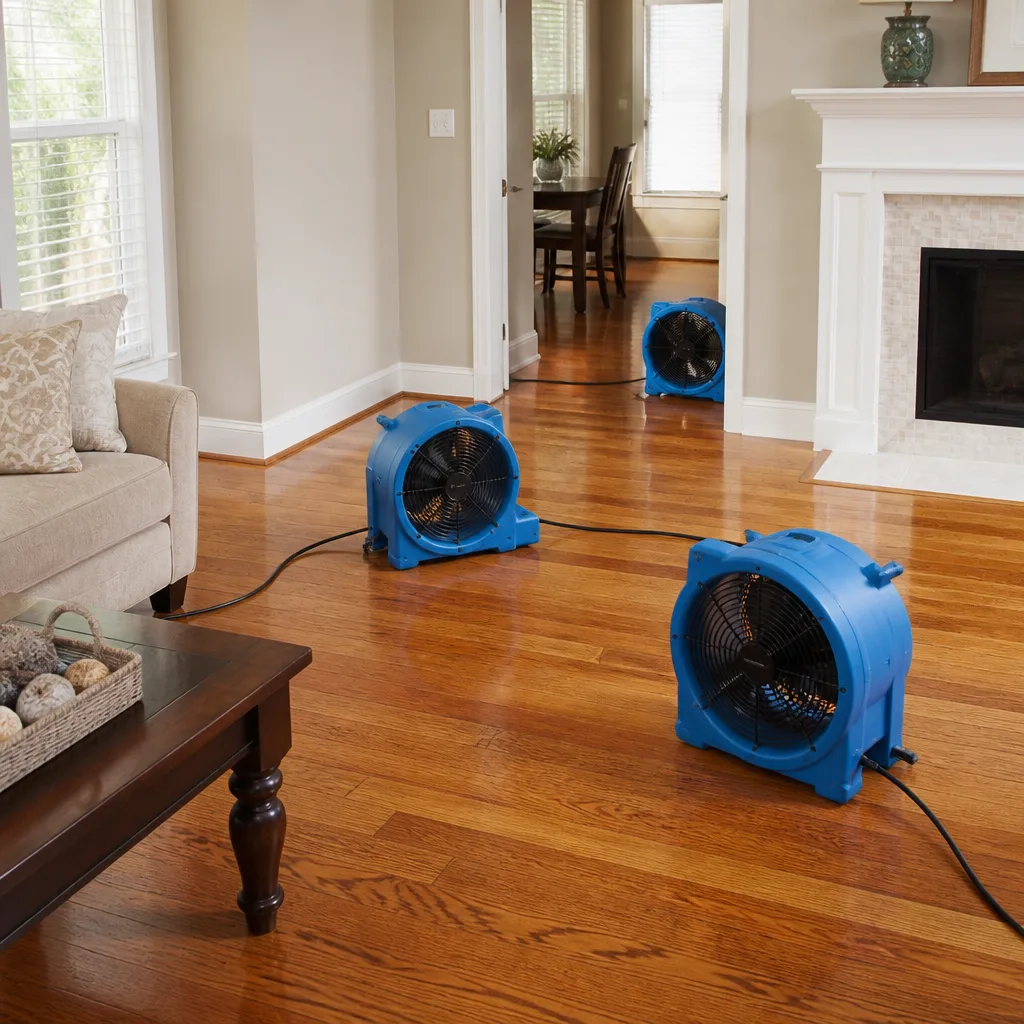
Equipment is where restoration quality lives or dies. A water loss in an Ontario home requires commercial-grade drying technology: low-grain refrigerant (LGR) dehumidifiers, high-volume air movers, and structural drying systems. The equipment that can dry a wall cavity is not the equipment sold at a hardware store for a damp basement.
Here’s how to tell the difference on an invoice or work order:
- LGR dehumidifiers vs. consumer dehumidifiers. An LGR (low-grain refrigerant) dehumidifier pulls moisture down to much lower humidity levels than a home dehumidifier. They’re built for restoration work, not seasonal dampness. On an invoice, look for brand names like Dri-Eaz, Phoenix, or B-Air. These are commercial restoration brands, not appliance manufacturers. A consumer dehumidifier from a big-box store might be rated at 30-50 pints per day at standard conditions. A Dri-Eaz LGR unit can pull 130+ pints per day at AHAM conditions and continues working efficiently at low humidity levels where consumer units stall.
- High-velocity air movers vs. box fans. Air movers are directional, powerful, and designed to create airflow across wet surfaces that accelerates evaporation. Box fans are not. An invoice that lists “fans” is not the same as an invoice listing “XPOWER centrifugal air movers.”
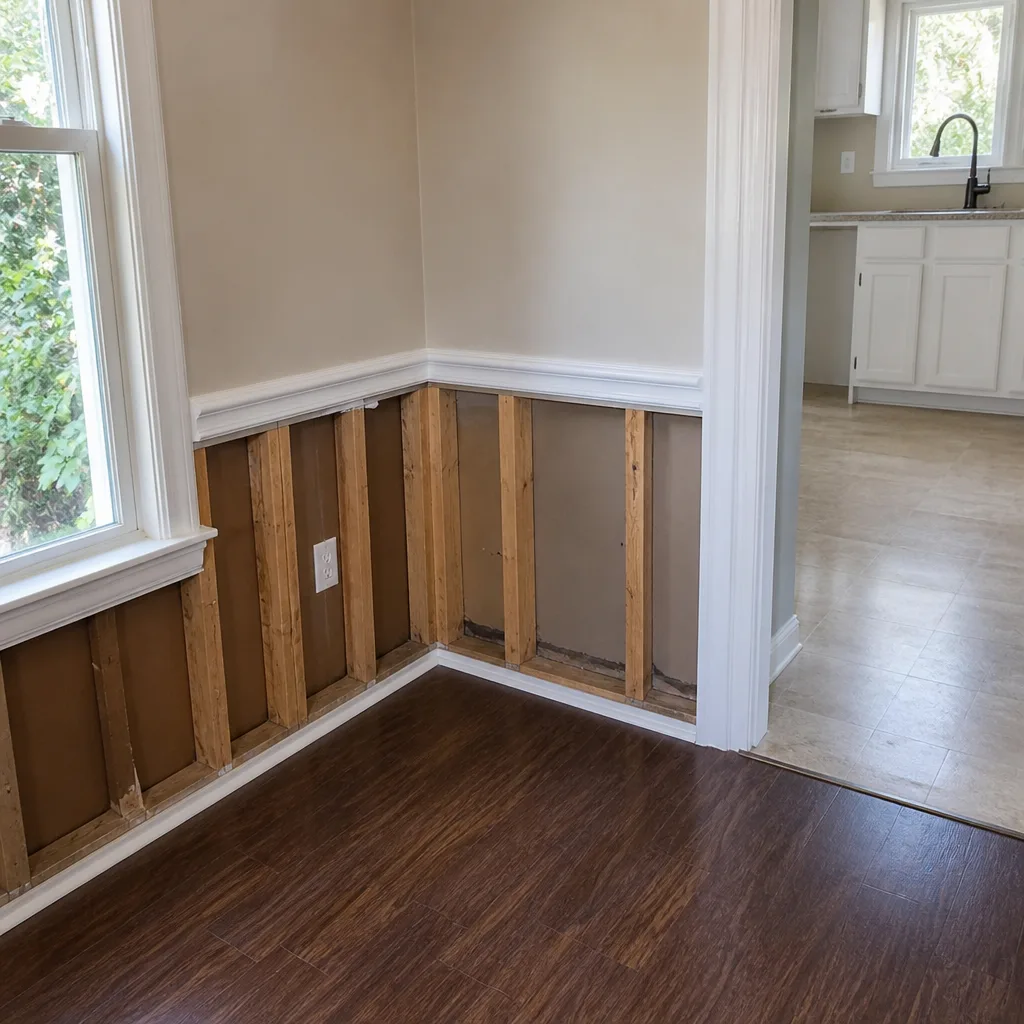
- Structural drying systems. This is where companies like ours differentiate ourselves. Injectidry systems pull moisture out of wall cavities and sub-floors through small access points, without defaulting to demolition. A contractor who doesn’t mention structural drying systems only knows how to dry surfaces, not buildings. If your walls are wet behind the drywall, surface drying won’t help.
- Moisture meters and thermal imaging. Professional restoration requires measurement. A contractor should arrive with moisture meters (penetrating and non-penetrating) and ideally a thermal imaging camera for identifying hidden moisture. “We can feel it’s wet” is not measurement.
At Dorchester Water Damage, our drying fleet runs Dri-Eaz, Phoenix, XPOWER, B-Air, and Injectidry equipment. These are the same brands large commercial restoration firms deploy nationwide. They’re not rental-store equipment. When you see these brand names on our scope, you’re seeing the same documentation your adjuster would review and approve. That’s the point: our process aligns with IICRC standards and holds up to insurer scrutiny.
For more on our water damage process specifically, see our Water Damage Restoration in Muscoy page.
Questions to Ask Before Anyone Arrives
Asking the right questions before a contractor enters your Ontario home takes five minutes and can save you five figures. Here are the questions that reveal whether a company does real restoration or just moves wet material around:
- “Do you perform drying in-house, or do you subcontract?” Many companies sub the actual drying work to crews you’ve never vetted. Ask who will show up, whose name is on the company’s license, and whether the people doing the work are W2 employees or independent contractors. At Dorchester Water Damage, our technicians run our equipment, under our process, under our accountability.
- “What certifications do your on-site technicians hold?” Ask for WRT, ASD, and AMRT by name. Watch the response. A quick, confident answer with names is good. A pause followed by “well, our company is certified” means they don’t have certified techs on staff.
- “Will you provide daily moisture readings during drying?” If the answer is no, walk away. Daily monitoring is standard IICRC practice. Without it, no one knows if drying is working until it’s too late.
- “How do you handle the insurance claim documentation?” A professional contractor documents everything: photos, moisture logs, equipment logs, and a final report your adjuster can review. Ask if they provide this. Ask how they communicate with adjusters. The right answer is “we document everything and work directly with your adjuster.”
- “What’s your plan if the drying isn’t working by day three?” This question separates technicians from equipment renters. A professional adjusts the plan based on data: more equipment, different placement, or removal of materials that won’t dry. A non-professional just lets the equipment run and bills you for extra days.
- “Can I see an example scope of work from a previous job?” A legitimate company will show you a redacted example. The refusal to share one tells you the documentation doesn’t exist.
These questions sound aggressive in print. They’re not. A professional restoration company in Ontario expects them. The contractor who gets defensive about certification questions or scope documentation is telling you, without saying it, that their operation wouldn’t pass adjuster review.
How Insurance Adjusters Evaluate Contractors
Here’s the inside view. When your Ontario home floods and you file a claim, your insurance company assigns an adjuster. That adjuster has seen thousands of restoration scopes. They’ve denied thousands of inflated line items. They’ve watched hundreds of contractors abandon jobs halfway through. They’re not evaluating your contractor’s marketing materials. They’re evaluating the same things this guide and our Seasonal Damage Restoration Care for Ontario: Year-Round Homeowner’s Guide have covered: certifications, documentation, equipment, and process.
Adjusters look for IICRC-aligned methodology because it’s defensible. If a contractor dries a wall to IICRC standards and the wall fails later, the contractor has a documented process showing they did the work correctly. If a contractor guesses, the guess is indefensible. Adjusters approve scopes from companies whose documentation demonstrates professional methodology. They push back on scopes from companies whose paperwork is thin.
Adjusters also notice equipment. A scope listing LGR dehumidifiers gets approved faster than one listing “fans.” A scope that includes structural drying systems like Injectidry shows the contractor knows how to dry without unnecessary demolition, which saves the insurer money and preserves your property. Adjusters like that. They also like contractors who communicate: who send daily moisture logs, who flag problems early, who provide final reports without being asked.
The practical implication for you: hire the contractor your adjuster would approve, and your claim moves faster, with fewer disputes, and with documentation that protects you. Hire a contractor whose process is informal, and you’re now managing a dispute between an annoyed adjuster and a defensive contractor while your walls stay wet. For mold work specifically, the documentation matters equally. See our Mold Remediation in Muscoy page for more on how that process works.
Our affiliations with the RIA (Restoration Industry Association) and IFA signal the same thing to adjusters: we’re part of the professional restoration community, not a pop-up operator. It’s not a marketing badge. It’s ongoing accountability to industry peers who know what good work looks like.
Common Mistakes to Avoid
- Signing an AOB in the first hour. You’re transferring claim rights to a company you’ve known for forty minutes. Never sign an Assignment of Benefits under time pressure. If a contractor insists, that’s the red flag doing its job.
- Accepting a verbal scope of work. “We’ll dry it out, fix the drywall, and you’ll be back to normal.” That’s not a scope. That’s a conversation. Get everything in writing before work starts, or you’ll be negotiating change orders from a position of zero leverage.
- Falling for a waived deductible offer. This is insurance fraud dressed as a favor. The contractor pads the estimate to cover your deductible, you sign the inflated scope, and when the insurer investigates, you’re the one who committed the fraud. Walk away.
- Hiring based on speed alone. The fastest response isn’t worthless, but it’s not the only variable. A contractor who shows up in twenty minutes with box fans is worse than one who arrives in ninety minutes with LGR dehumidifiers. Speed of arrival matters less than capability on arrival.
- Not verifying certifications by name. “We’re certified” can mean the owner took a weekend seminar eight years ago. Ask for WRT, ASD, and AMRT specifically, and ask whose name appears on the certificate.
- Assuming the insurance company will handle it. Your insurer reimburses you. They don’t hire your contractor for you (unless you use their preferred vendor program, which is optional). You’re the one signing the contract, so you’re the one who needs to vet the company.
- Skipping structural drying for cosmetic fixes. Drying the visible surface while moisture remains in the wall cavity means mold grows behind your fresh paint. Structural drying with systems like Injectidry is not optional in Ontario’s summer heat. It’s the difference between a one-time repair and a recurring mold problem.
See the difference
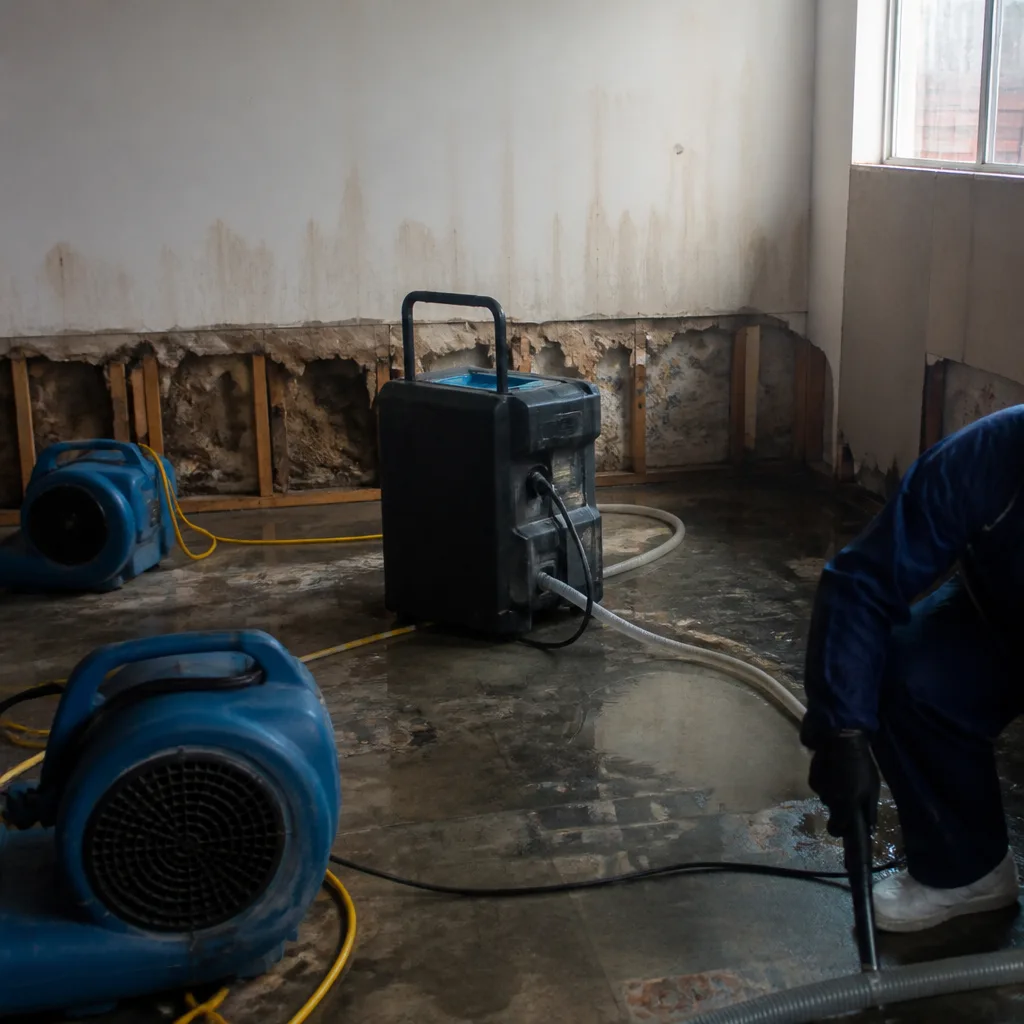 Before
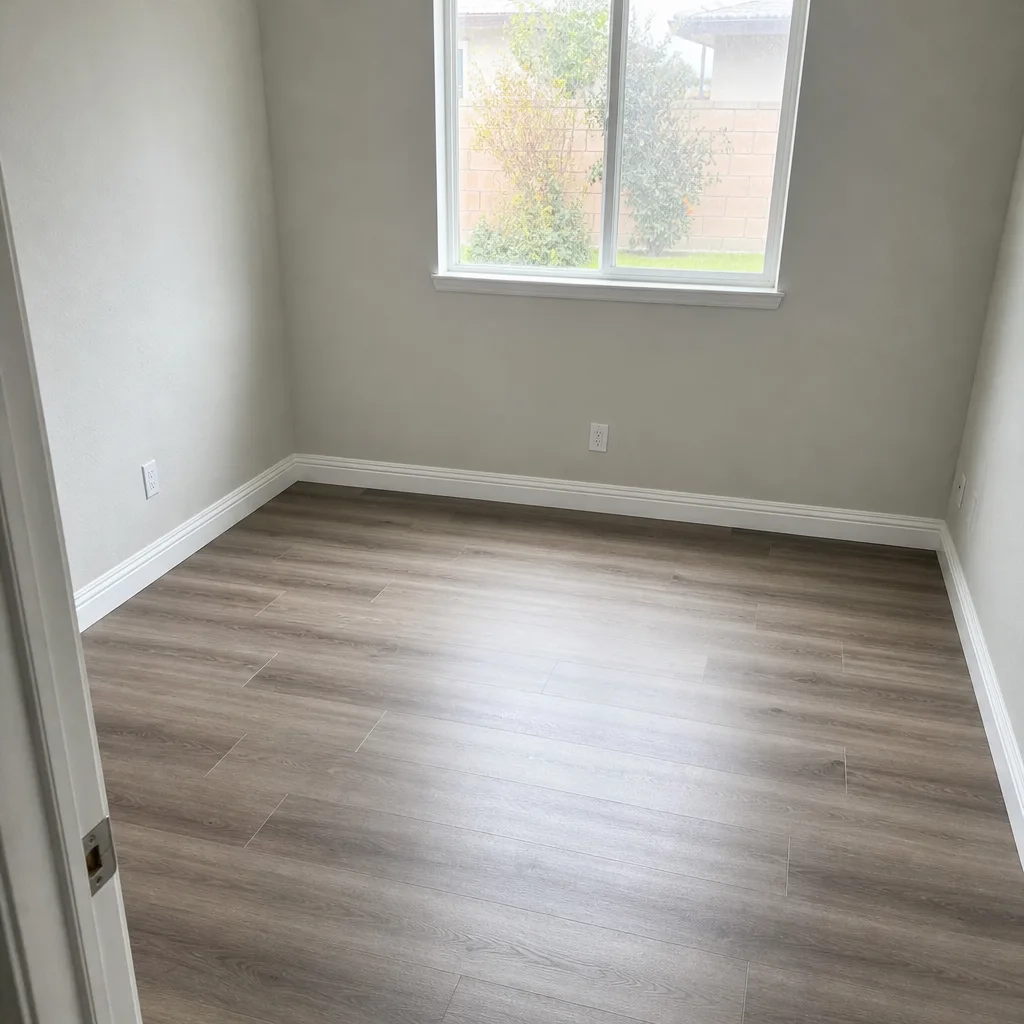 After
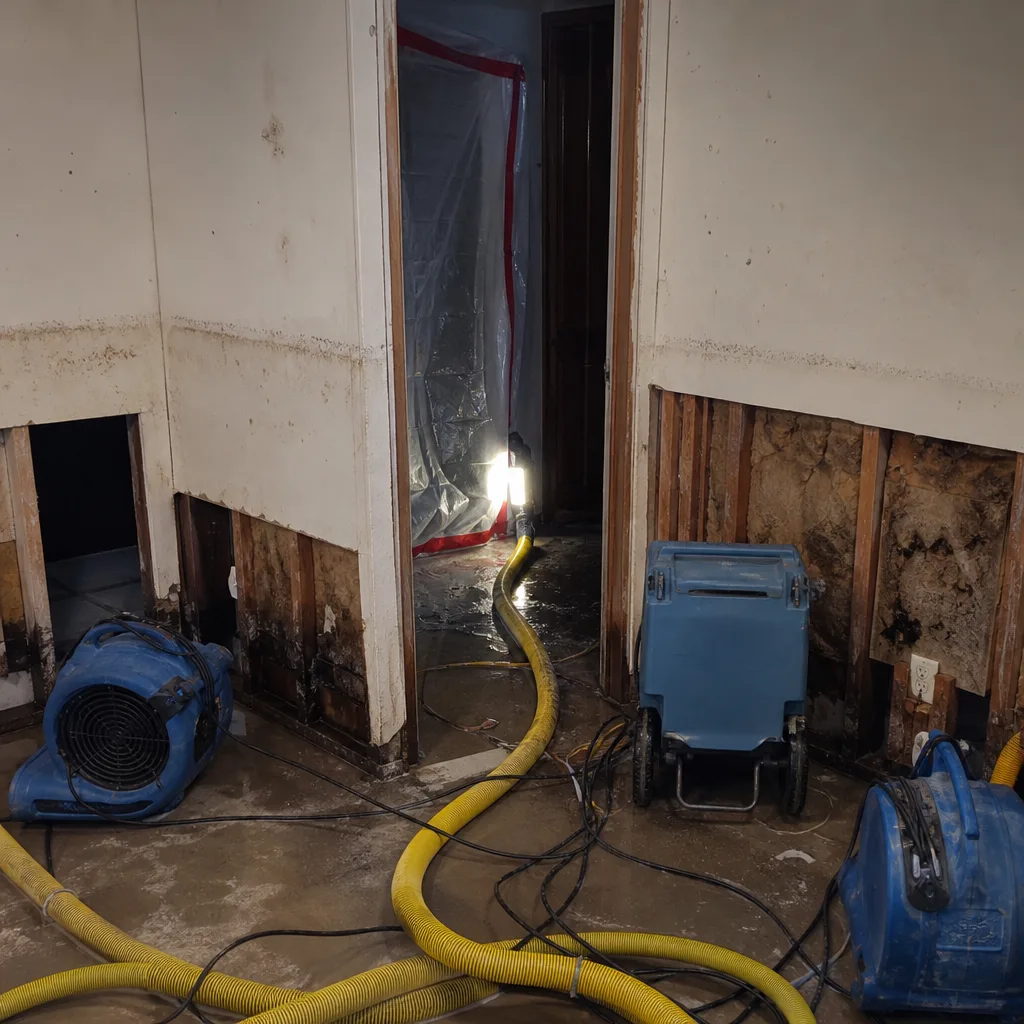 Before
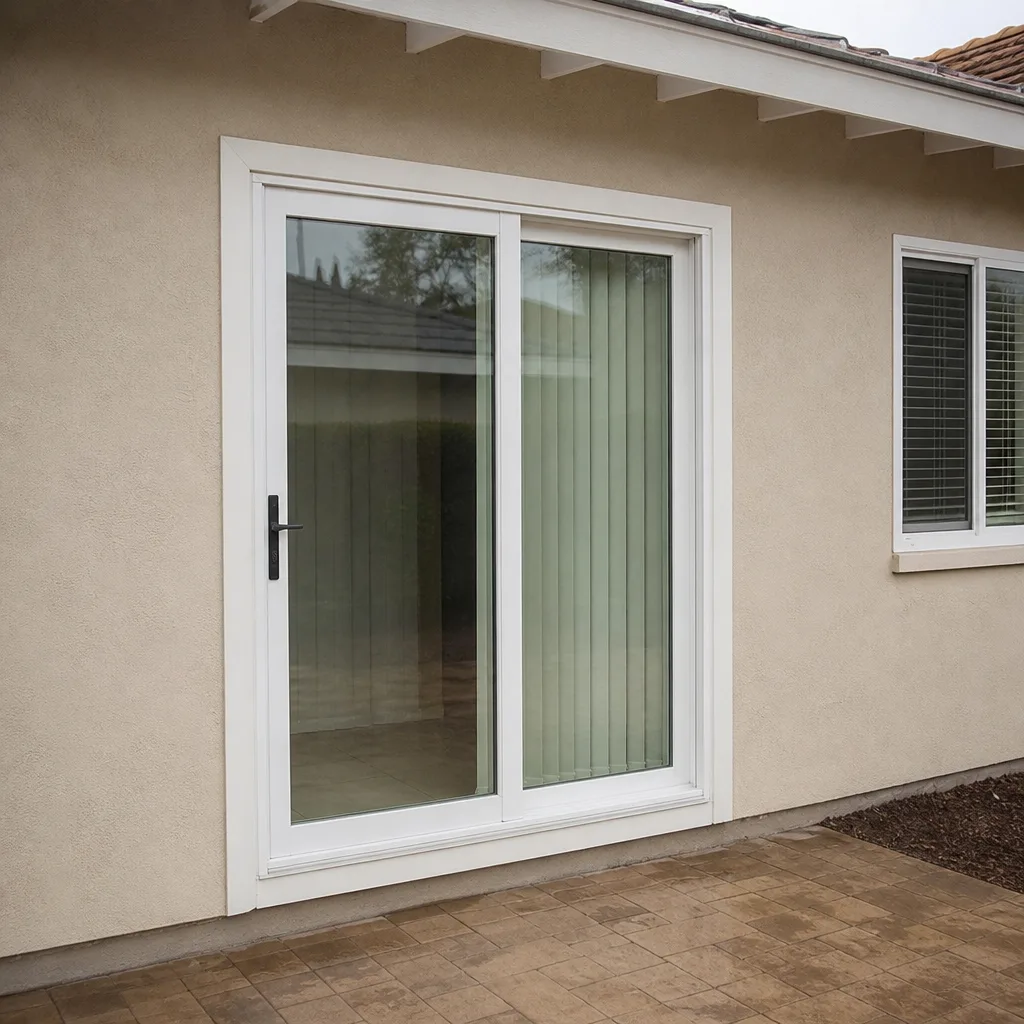 After
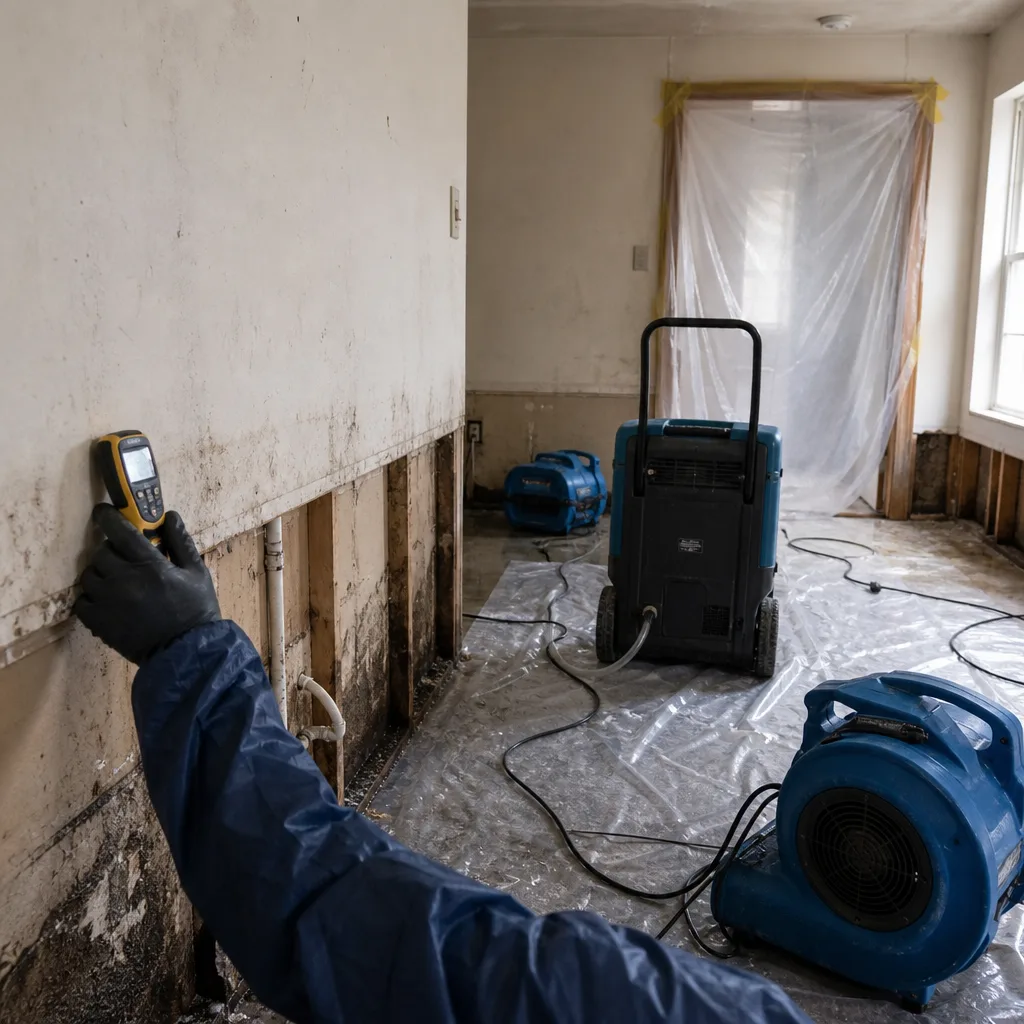 Before
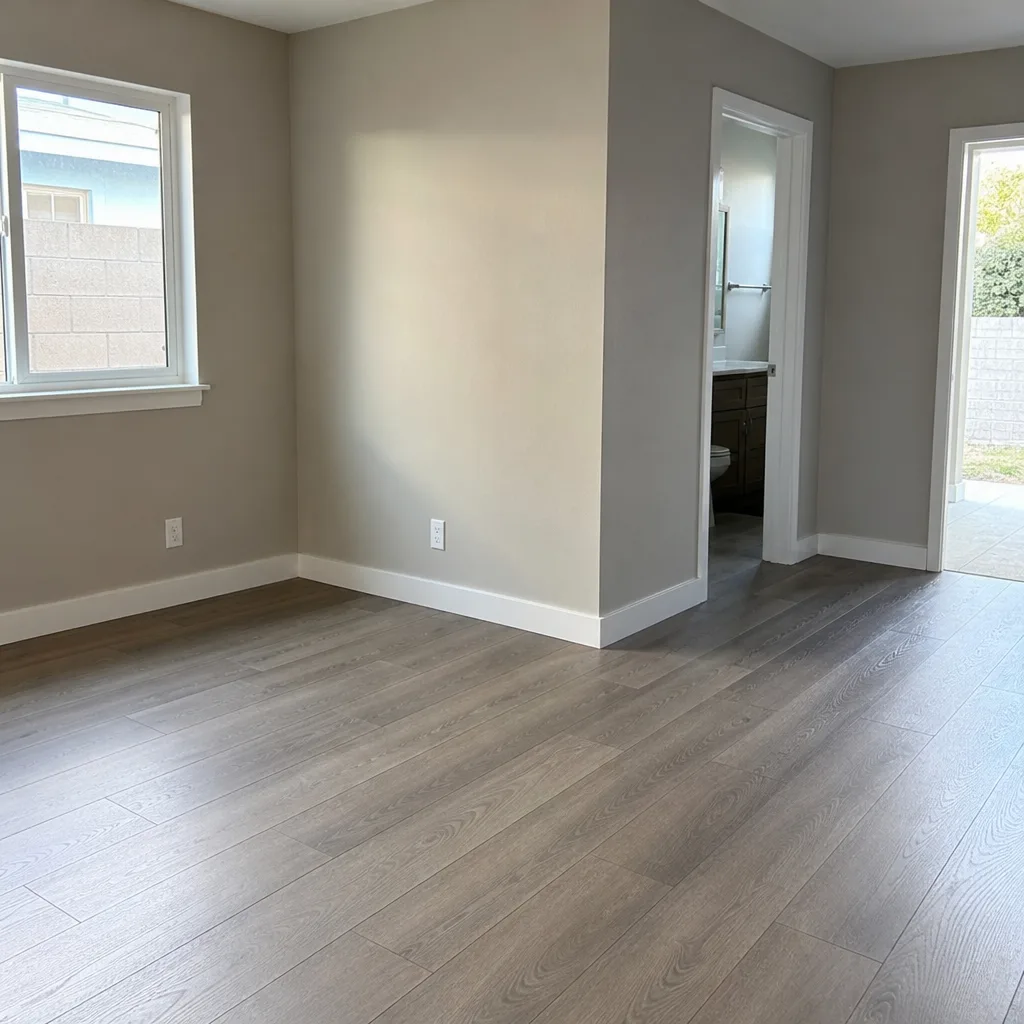 After
When to Call a Professional
Water from a supply line, sewage backup, or any source that touched building materials for more than a few hours requires professional drying. Not fans. Not towels. Not “let’s see if it dries on its own.” Mold visible on more than ten square feet, or any mold caused by sewage, means professional remediation with containment. Fire damage, even in a single room, means smoke and soot particles have traveled through your HVAC system and into areas you can’t see. These are not DIY situations. The equipment required is commercial-grade, and the documentation required is claim-grade. If you’re in Ontario and facing any of these, Dorchester Water Damage offers free estimates and can walk you through what the process actually looks like. For more guides & resources, visit our blog. Call (833) 589-8366 and ask for a written scope before committing to anything.
For fire-specific guidance, see our Fire Damage Restoration in Muscoy page.
Frequently Asked Questions
Water damage restoration in Ontario typically ranges from $2,500 to $7,500 for a single-room mitigation and drying project, while larger losses involving multiple rooms or structural drying can run $10,000 to $30,000 or more depending on the square footage and materials affected. The exact cost depends on water category (clean, gray, or black), the extent of demolition required, and how many days of drying are needed. Call (833) 589-8366 for a written scope and exact quote for your situation.
Most homeowner policies cover sudden and accidental water damage, like a burst pipe or appliance failure, but generally exclude gradual leaks, flooding, or neglect. The key to a smooth claim is documentation: a contractor who provides daily moisture readings, equipment logs, and a final report gives your adjuster what they need to approve the claim quickly.
A professional restoration company can typically dispatch a crew to an Ontario address within 1-2 hours of your call. The real question is whether that crew arrives with commercial LGR dehumidifiers and moisture meters or with consumer-grade equipment. Speed matters, but capability on arrival matters more.
If mold covers more than ten square feet or was caused by sewage or contaminated water, professional remediation with containment is necessary. Visible mold is often the tip of the problem; spores and moisture exist behind the wall surface. Surface cleaning without addressing the moisture source means the mold returns. An AMRT-certified technician can assess whether remediation is actually needed or if cleaning will suffice.
An Assignment of Benefits (AOB) transfers your insurance claim rights to the contractor, who then bills your insurer directly and controls the claim. You should rarely sign one. Once signed, you lose control of your claim, and disputes between the contractor and insurer become your problem. Legitimate contractors in Ontario work with your insurer through standard documentation, not through AOB agreements.
Equipment brand matter because commercial restoration brands like Dri-Eaz, Phoenix, XPOWER, and B-Air build machines designed for structural drying: LGR dehumidifiers, high-velocity air movers, and specialty systems. Consumer equipment from hardware stores is built for light-duty moisture control, not for pulling water from wall cavities. The brand names on your invoice tell you whether you’re paying for restoration or for extended fan rental.
The Bottom Line
Hiring a damage restoration contractor in Ontario under crisis conditions is the moment homeowners are most vulnerable to bad decisions. The contractor who pressures you, offers to waive your deductible, or waves a vague scope in front of you is not the contractor your adjuster would approve. The right hire has IICRC certifications by name (WRT, ASD, AMRT), runs commercial drying equipment from brands like Dri-Eaz and Injectidry, provides a written scope before work starts, and documents moisture readings daily. At Dorchester Water Damage, we built our process around what adjusters expect: professional-grade equipment, documented methodology, and one accountable company across water, mold, and fire restoration. If you’re facing a loss in Ontario, call (833) 589-8366 for a free estimate and a written scope. The water won’t wait, but your signature can.
Written by the team at Dorchester Water Damage, serving Ontario since 2018.