
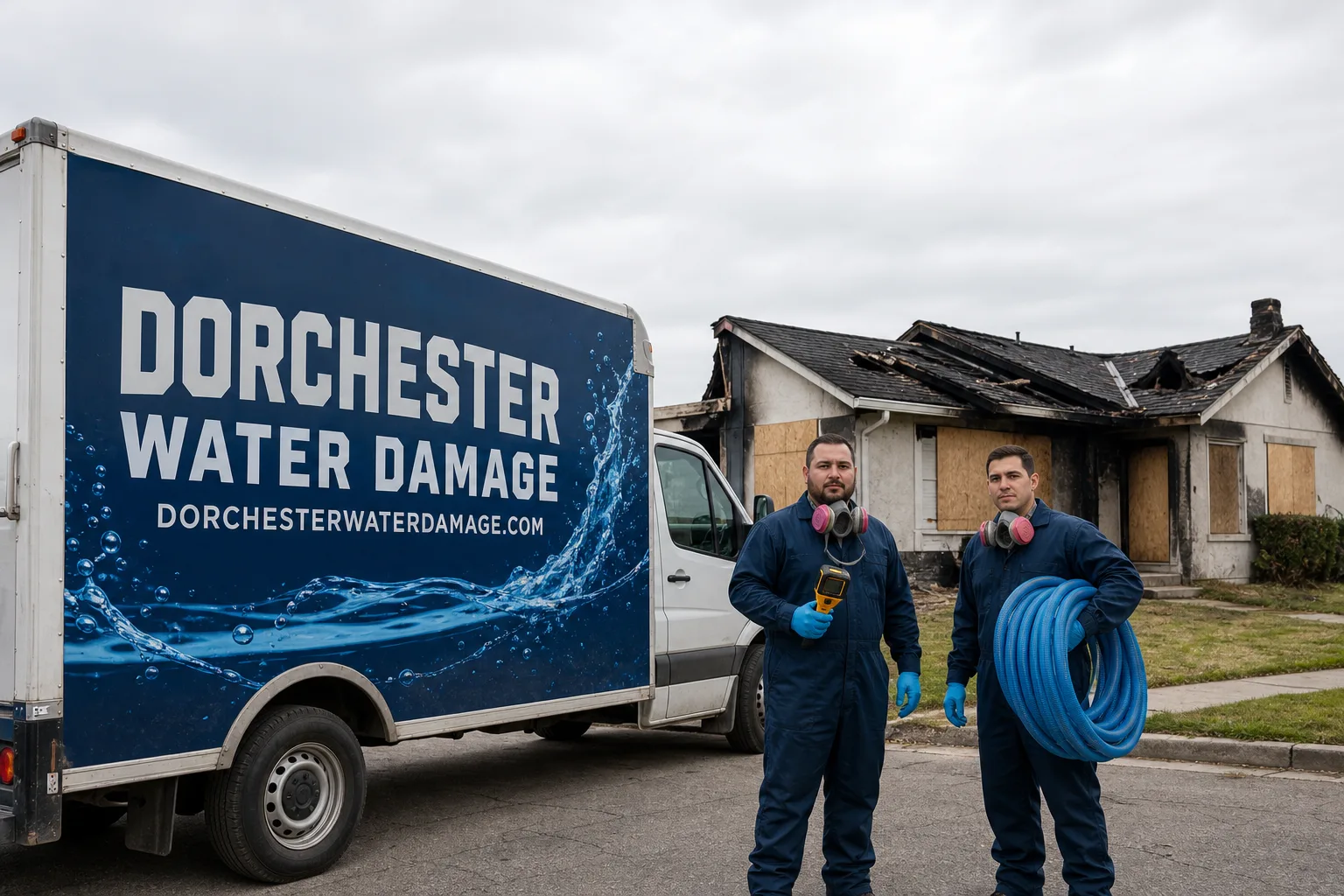
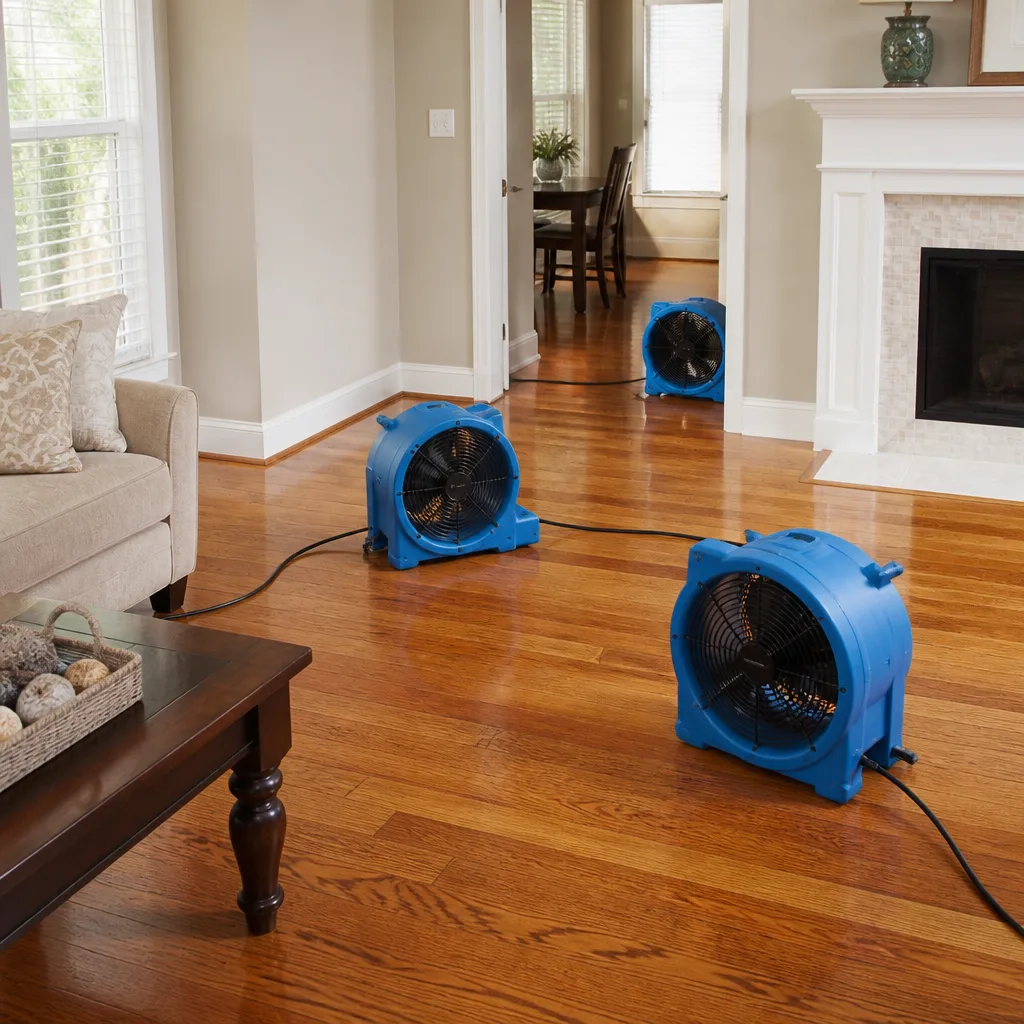
 Water damage drying
 Fire & smoke cleanup
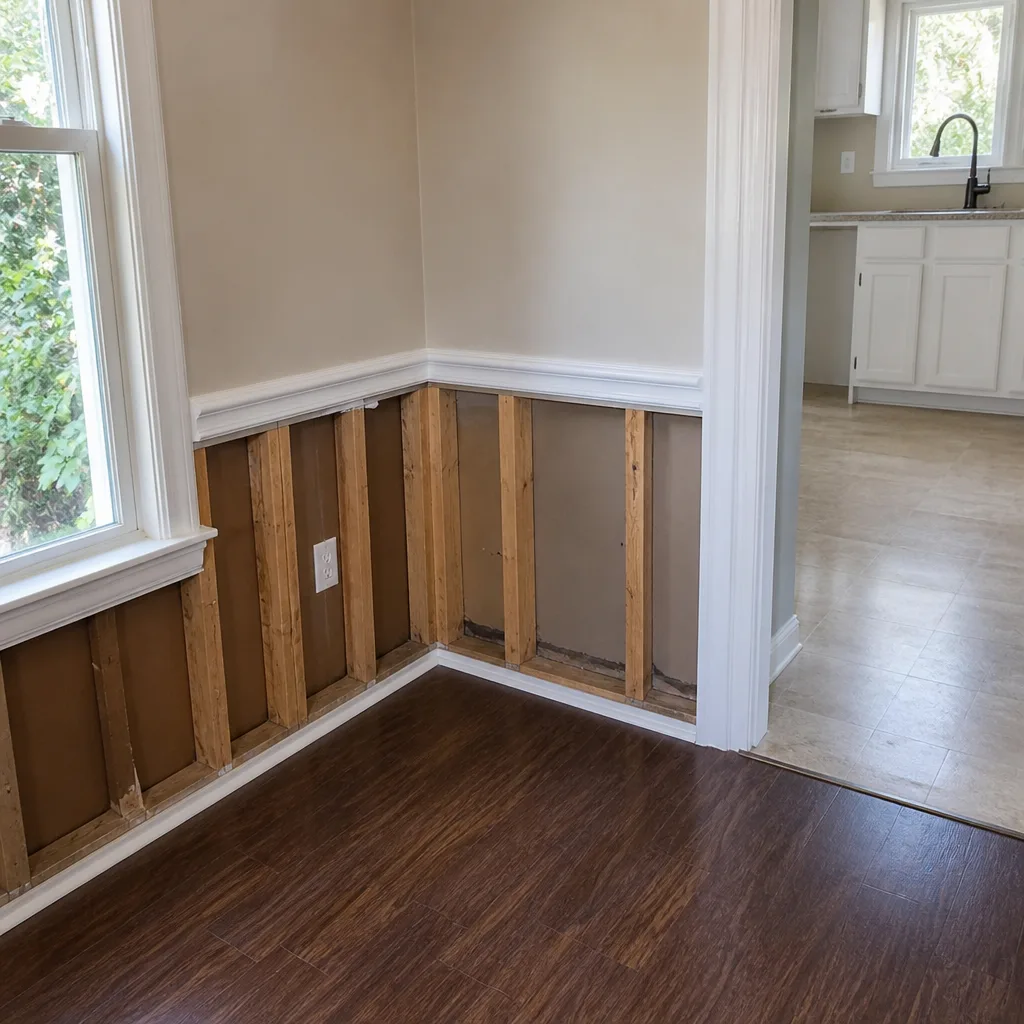 Mold remediation
 Storm response
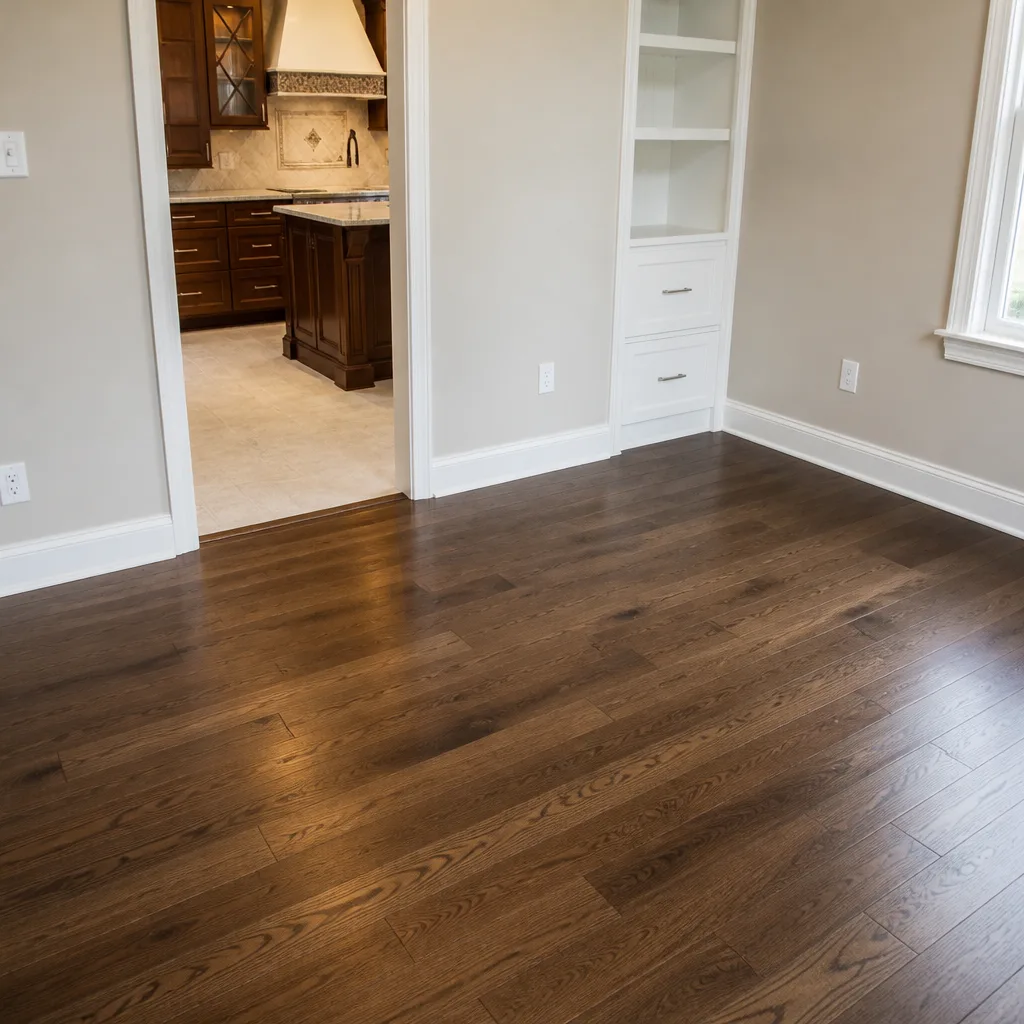 Sewage cleanup
 Reconstruction
Free visual inspection and a written scope of work before any mitigation begins - photos, moisture readings, and drying logs go in your claim file
The scope we write is the scope we bill. Anything new gets shown to you, in writing, before we touch it.
Get your free estimateFast, Reliable Water Damage Restoration Across Running Springs
Water damage restoration in Running Springs typically runs $2,800 – $7,500 for a full structural drying job, and our crews can reach most addresses in the 92382 ZIP within 60 – 90 minutes of your call. The mountain terrain changes everything here: steep driveways, narrow roads off Highway 18 and 330, and cabin construction that soaks up water differently than lowland stucco homes. We’re based nearby and we run this route constantly, which means when a pipe freezes and bursts at 2:00 a.m. in January, the crew showing up already knows what a Running Springs crawl space looks like. Call (833) 589-8366 the moment you see standing water or a spreading stain, and we’ll walk you through the first steps while the truck rolls.
Why Dorchester Water Damage Is Running Springs’s Preferred Water Damage Restoration Company
Running Springs homeowners call us because we don’t treat a mountain cabin like a Riverside ranch house. Glen Pacheco built this company around professional drying equipment, not rental-store fans, and that matters when subflooring is saturated and the temperature outside is 22 degrees. We run Dri-Eaz and Phoenix dehumidifiers on our trucks, the same brands large commercial restoration firms deploy, and our techs work to IICRC-aligned standards that adjusters recognize when the claim lands on their desk.
Local reputation here is built one steep driveway at a time. We’ve dried out A-frames near Running Springs School Road, 1970s full-time residences off Highway 18, and weekend cabins along Keller Peak. Each one required staging equipment at the street and hauling it uphill by hand. Our customers in Running Springs consistently mention the same things: the crew knew the mountain access problems before they arrived, the documentation was clean enough for insurance, and nobody tried to sell demolition that wasn’t needed.
Response time matters here more than in the flatlands. A Category 2 or 3 water loss in a cold cabin starts growing mold within 48 hours, and snowmelt can keep feeding moisture into a crawl space long after the initial leak is stopped. We dispatch to Running Springs immediately and we carry enough equipment on the first truck to begin extraction and set containment the same visit. No “we’ll come back tomorrow with the gear.”
Our technicians understand what a wildland-urban interface means for restoration work: defensible-space clearance around the home can’t be blocked by our equipment, and a debris-flow event means checking for contaminated water, not just applying fans. That’s the difference between a contractor who works the mountains and one who just types the ZIP code into a GPS.
Restoration work we handle
Flood Damage Restoration in Running Springs
Flood Damage Restoration in Running Springs means handling water that moved fast and carried something with it: mud, ash, wildfire debris, or sewage from a septic backup. The burn scars above town are not a hypothetical. When heavy rain hits those slopes, the water runs brown and fast, pushing against foundations and seeping into crawl spaces through any crack or vent gap. A standard flood job here starts at $4,000 and can reach $9,500 when debris-flow mud has contaminated the water and we’re removing category 2 or 3 material, not just drying it.
This is not a fan-and-wait situation. Debris-laden water that enters a wood-framed cabin requires extraction, containment, antimicrobial treatment in wall cavities, and often removal of saturated insulation and vapor barrier in the crawl space. We document every phase with moisture readings and photos, because your insurer is going to ask what category of water we found and what we did about it. A written scope agreed before we start any demolition keeps everyone honest, including us.
Structural Drying in Mountain Cabins
Running Springs cabins sit on steep lots, which means water doesn’t pool visibly in the living room. It migrates downhill inside the wall assembly, under the subfloor, into the crawl space behind a deck ledger. Our Injectidry structural drying system pulls moisture from inside those cavities without us tearing out drywall unnecessarily. We pair that with moisture mapping and daily drying logs, so by day five we know exactly which studs are dry and which need another 24 hours.
Debris-Flow Cleanup and Extraction
When mud and ash come through a foundation vent, this is category 2 or worse water. It needs extraction, then removal of contaminated porous materials, then drying and antimicrobial treatment. Running Springs homes on downhill lots are the most exposed, and the first 12 hours determine whether you’re looking at cleanup or a full mold remediation. We’ll tell you straight which one you’re dealing with.
Water Damage Cleanup in Running Springs
Water Damage Cleanup in Running Springs is the work that happens between “the water is off” and “the house is dry.” It’s the containment, the extraction, the removal of what can’t be saved, the setting of air movers and dehumidifiers, and the daily monitoring. A typical cleanup for a burst pipe in a mountain cabin runs $1,800 – $4,200 depending on how far the water traveled and how much flooring or drywall has to come up. If the leak ran while the house was empty for a week and mold has already set in, that number goes up and the job crosses into mold remediation territory.
We don’t hide the hard truth from Running Springs homeowners: a pipe that froze under a weekend cabin off Highway 330 can soak a subfloor, wick up into wall insulation, and leave moisture trapped behind tongue-and-groove pine before anyone notices. By the time you smell it, the mold has a 72-hour head start. That’s why our first visit includes a full moisture survey, not just a wet vac pass-through.
Emergency Extraction and Containment
Speed matters, but controlled speed matters more. We set containment first so whatever is in the water doesn’t become airborne and spread through the house. Then we extract with truck-mounted or portable units, depending on what the driveway allows. Running Springs access constraints mean we often run portable extraction gear up a set of wooden stairs rather than trying to fit a full crew around a hillside foundation.
Crawl Space and Subfloor Drying
The crawl space is where Running Springs water damage quietly becomes something worse. Snowmelt seeps under the deck, the slope hides it from view, and the vapor barrier traps humidity against the floor joists. We dry crawl spaces with commercial dehumidifiers and targeted air movement, and we treat framing with antimicrobial when the water came from outside. Damp joists left alone turn into a structural problem and a mold claim that could have been avoided.
Trusted Brands We Service in Running Springs
Our restoration work in Running Springs is built around equipment we’d put up against any commercial restoration firm in San Bernardino County. Dri-Eaz dehumidifiers, Phoenix air movers, XPOWER extraction units, B-Air dryers: these are the names an adjuster recognizes on a drying log, and that matters when your claim depends on documentation. We stock replacement HEPA filters, hoses, and drying chamber components on our trucks, so a mid-job equipment failure doesn’t mean a lost day waiting on parts out of the valley. Running Springs weather doesn’t wait, and neither do we. If a unit fails on a Friday afternoon, the fix is already in the truck, not “shipped next week.”
See the difference
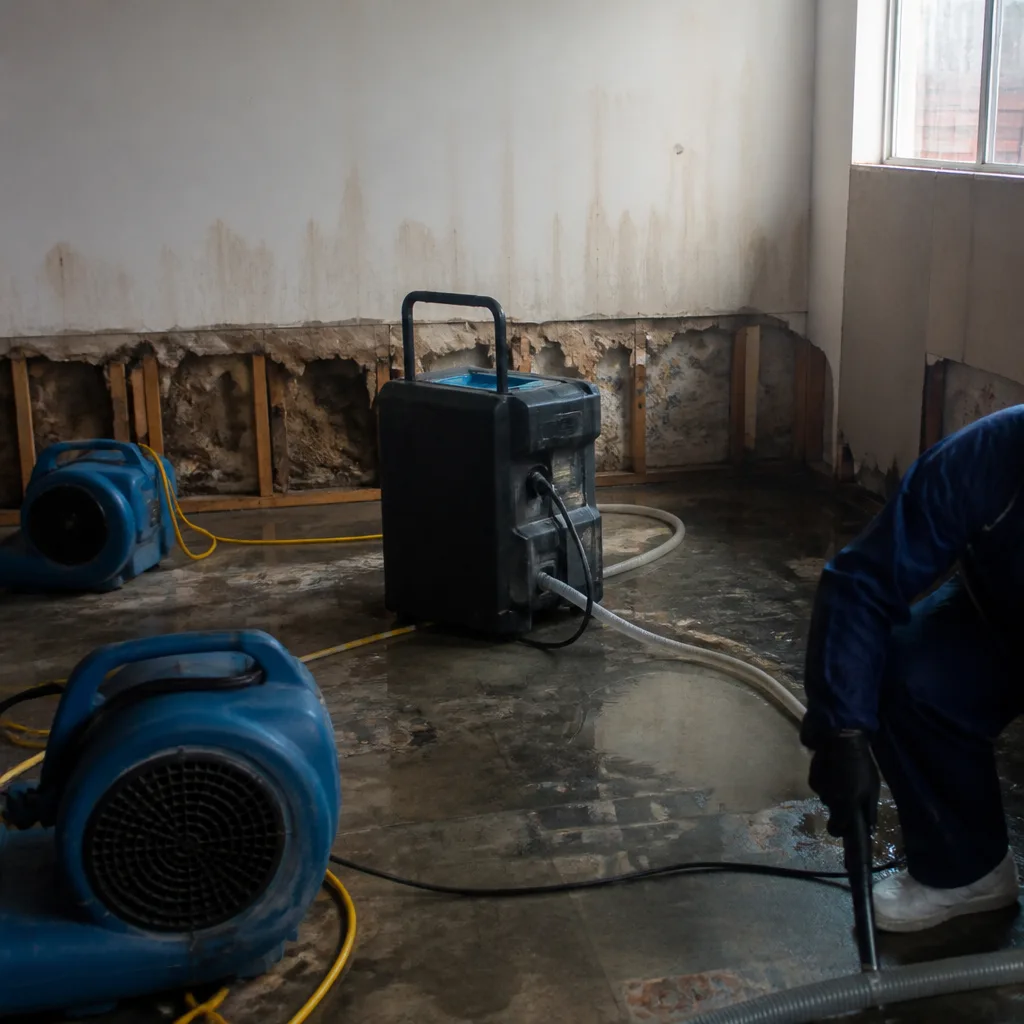 Before
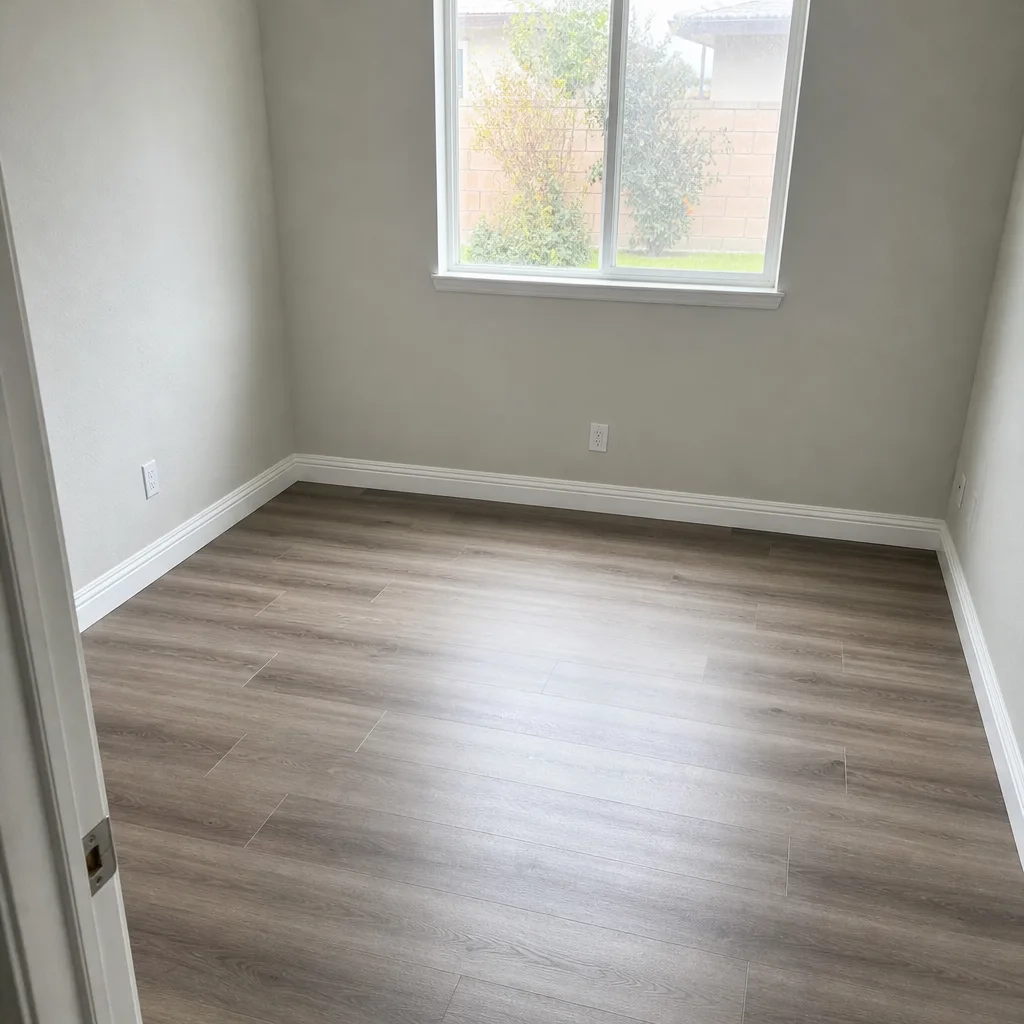 After
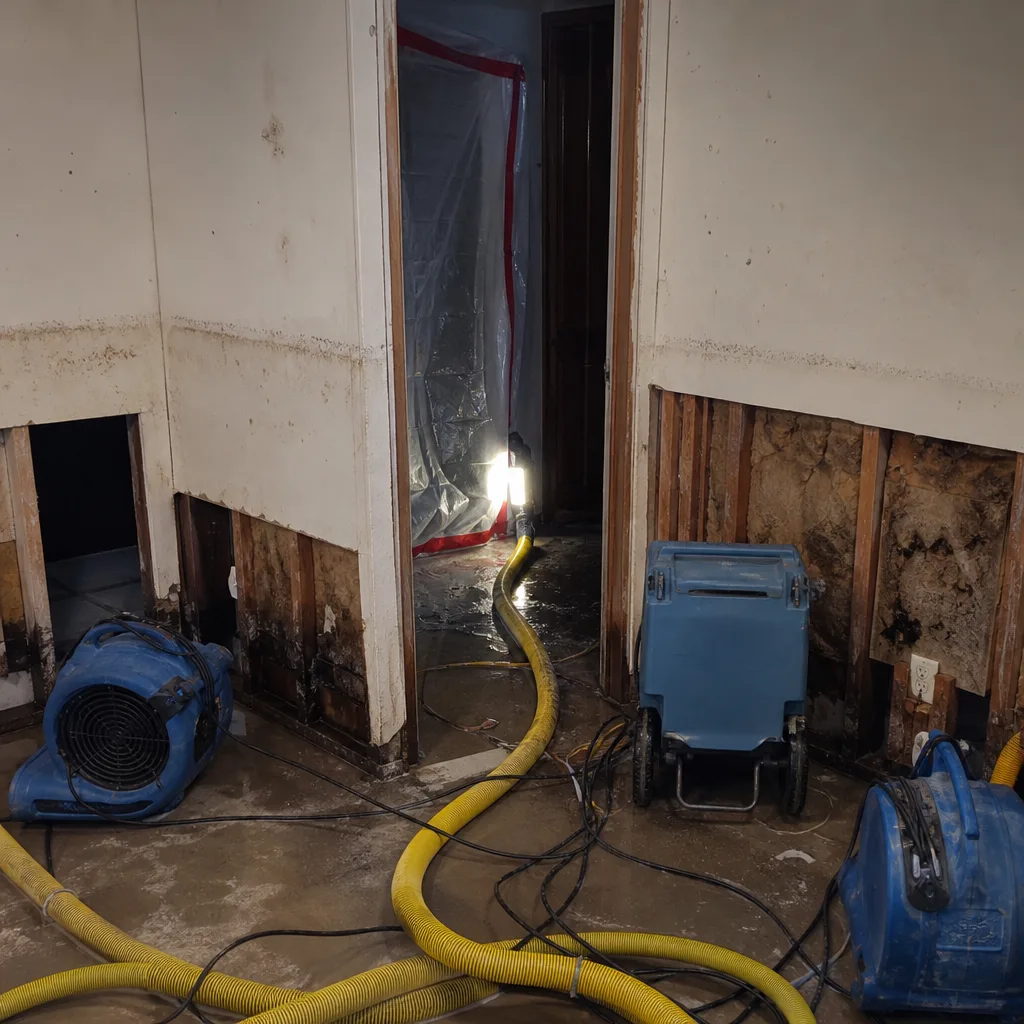 Before
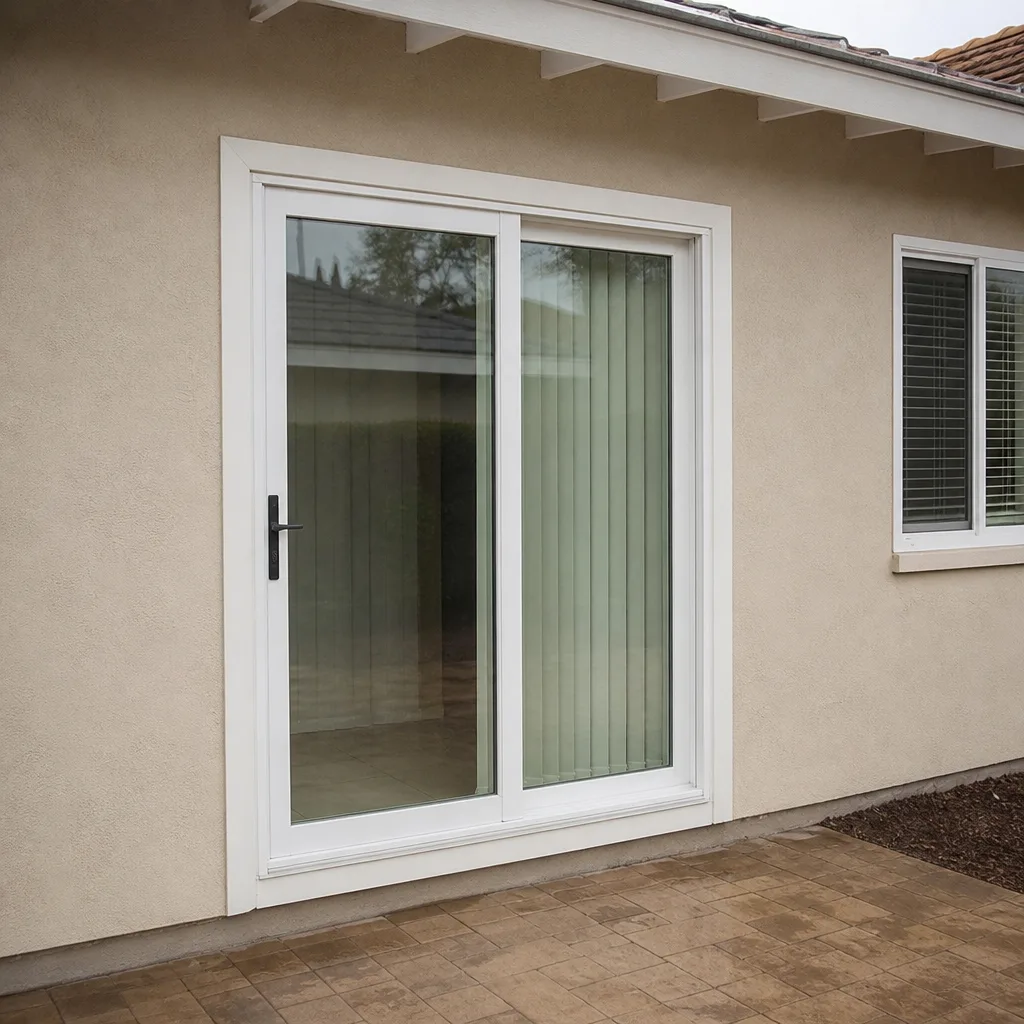 After
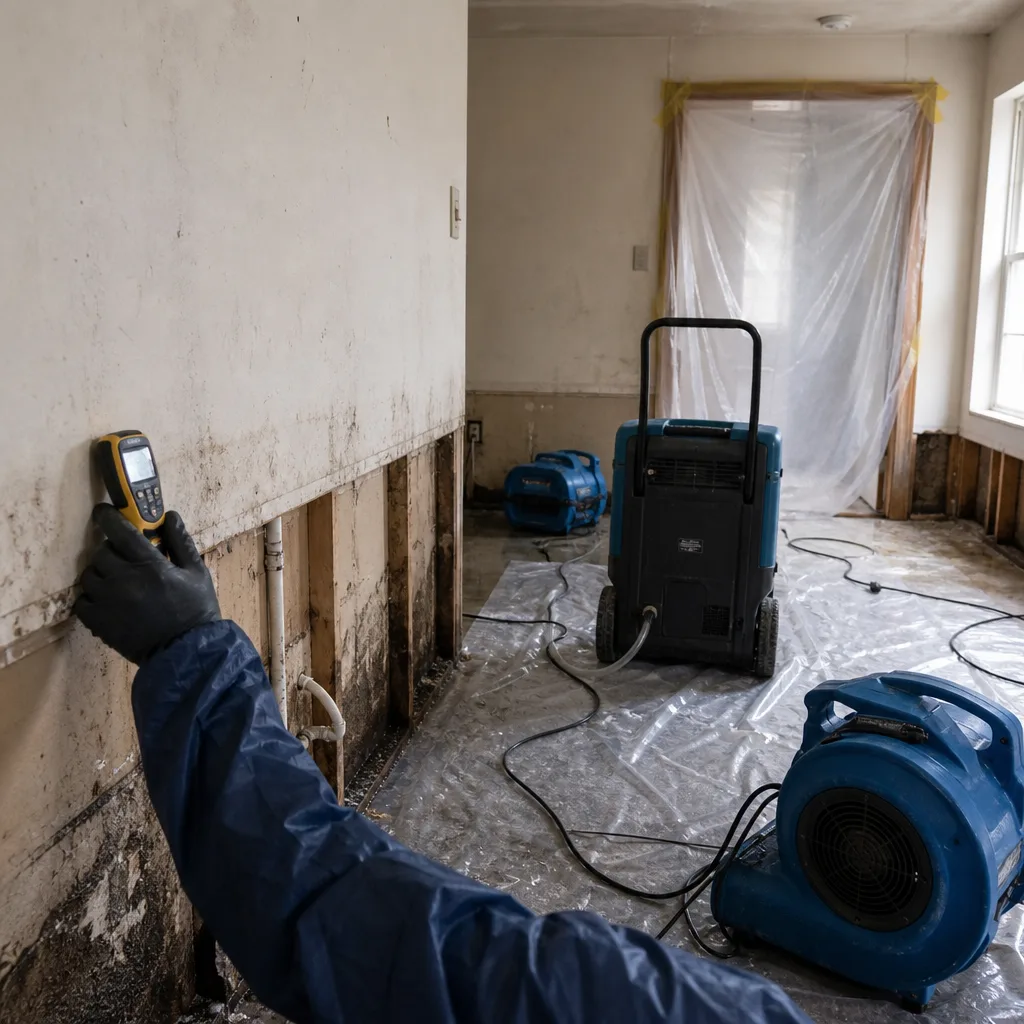 Before
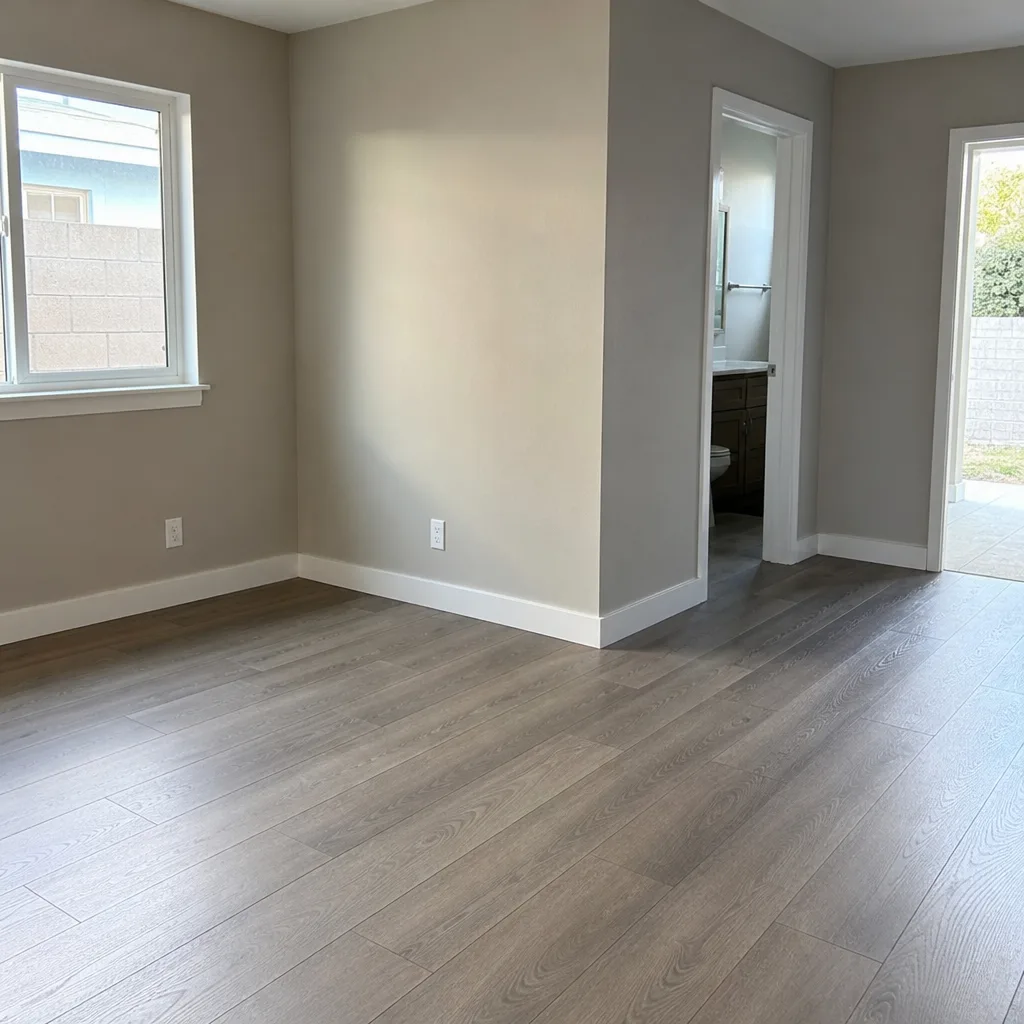 After
Common Water Damage Restoration Problems We See in Running Springs Homes
- Freeze-thaw pipe bursts in uninsulated walls. Mountain cabins built in the 1970s and 80s often have plumbing running through exterior walls or unheated crawl spaces, and a single cold snap splits copper or PEX like it’s nothing. The resulting water damage is always worse than the pipe replacement.
- Hidden crawl space moisture after snowmelt. Steep slopes hide dampness under decks and behind foundation planters, and by the time the homeowner sees a musty smell or buckled flooring, the joists have been wet for weeks. This is our most common mold precursor in Running Springs.
- Debris-flow contamination from burn scars. After the wildfires above town, the first heavy rain brings muddy, ash-laden water against foundations and into vent openings. That’s category 2 or 3 water and it requires antimicrobial treatment, not simple drying.
- Access constraints that complicate every phase. Steep driveways, switchback roads, and cabin foundations with minimal clearance mean each piece of equipment has to be staged and carried. Our crews plan for this before they arrive, which is why we’re not the guys standing in the road looking confused.
Pricing for Water Damage Restoration in Running Springs, CA
Here’s the honest math for Running Springs, based on the jobs we do here regularly. Emergency water extraction alone runs $900 – $1,800 including containment and initial moisture mapping. Full structural drying after a burst pipe: $2,800 – $4,500. A flood or debris-flow cleanup with category 2/3 water handling: $4,000 – $9,500 depending on how much material has to be removed and treated. Crawl space drying with mold prevention: $1,500 – $3,200. What moves these numbers is the square footage of wet material, the water category, how much demolition is required, and how hard the access is. Every job gets a written scope before we start, so you know what you’re approving and so does your insurer. Call (833) 589-8366 for a free estimate: we’ll come out, map the moisture, and put the numbers on paper.
We Also Serve Cities Near Running Springs
Our crews cover Running Springs and the surrounding mountain and foothill communities. We handle water damage in Lake Arrowhead, Highland, Mentone, and Crestline with the same IICRC-aligned process and equipment. If you’re on the mountain or in the lowlands nearby, the same Water Damage Restoration team handles the full job from first extraction to final drying log. For more about our work in this area, see Running Springs as well. One call covers the whole range: (833) 589-8366.
Serving Running Springs, CA — Our Local Coverage Area
We’re based in the Running Springs area and know this community well. Use the map below to see our service coverage — if you’re nearby, we can almost certainly help.
FAQs About Water Damage Restoration in Running Springs
Running Springs’ freeze-thaw cycle creates water damage that is worse than a standard lowland pipe leak because re-freezing can happen mid-restoration if we don’t control temperature during drying. Pipes that burst at 4,500 feet elevation often leak into uninsulated wall cavities and crawl spaces where moisture lingers longer and moves in unpredictable paths. Our drying plan here includes monitoring ambient temperature and adjusting dehumidifier placement to keep evaporation moving even when the nights drop into the 20s. Call (833) 589-8366 and we’ll explain what a mountain drying plan looks like for your specific home.
Yes, steep and narrow access is the normal condition in Running Springs, not the exception, so our crews stage equipment at the street and hand-carry extraction units, hoses, and drying gear up stairways or slopes as needed. We use portable Dri-Eaz and Phoenix units that don’t require a full truck-mounted setup at the door, and we plan every job around the driveway before we arrive. Most Running Springs cabins take us an extra 30 – 45 minutes for staging, and that’s already built into our response planning.
After a wildfire debris flow in Running Springs, you’re almost always dealing with category 2 or 3 water because the runoff carries ash, burned material, and hill slope contamination that makes it unsafe for simple drying alone. We treat this as contaminated water: extraction, removal of affected porous materials, antimicrobial application in cavities, and full drying with documentation. If debris mud has entered the crawl space, we inspect the foundation venting and advise when a full mold remediation is going to be necessary.
Mold can establish in a wet Running Springs cabin within 24 to 48 hours when temperatures inside are above about 60 degrees, and faster in wall cavities and crawl spaces where humidity stays high. Wood-framed cabins with older insulation give mold a ready food source, and the first sign is often a musty smell rather than visible growth. If your cabin has been wet for more than two days, call (833) 589-8366 and we’ll do a moisture survey before recommending cleanup versus remediation, because the dividing line matters for both health and insurance.
Yes, our crews in Running Springs set up containment, dryers, and equipment staging without blocking required defensible-space clearances around the structure, and we keep materials and fuel sources away from the home perimeter. During wildfire season, that means no loose debris accumulation and no equipment left in a position that would hinder a fire crew or add ember fuel. When we’re working on a home that’s already been affected by both fire and water in the same season, which is common up here, we plan the restoration sequence so water-damage fixes don’t create a new fire hazard risk.
If water is spreading through your Running Springs cabin right now, don’t wait. Call (833) 589-8366 and we’ll dispatch a crew from our mountain corridor route with the equipment, the documentation, and the local knowledge to get your home dry and your claim supported. Estimates are free, and we’ll put the scope in writing before any work starts.
Written by Glen Pacheco, Owner at Dorchester Water Damage, serving Running Springs and the San Bernardino mountain communities.