
 Water damage drying
 Fire & smoke cleanup
 Mold remediation
 Storm response
 Sewage cleanup
 Reconstruction
Free visual inspection and a written scope of work before any mitigation begins - photos, moisture readings, and drying logs go in your claim file
The scope we write is the scope we bill. Anything new gets shown to you, in writing, before we touch it.
Get your free estimateFast, Reliable Water Damage Restoration Across Highland
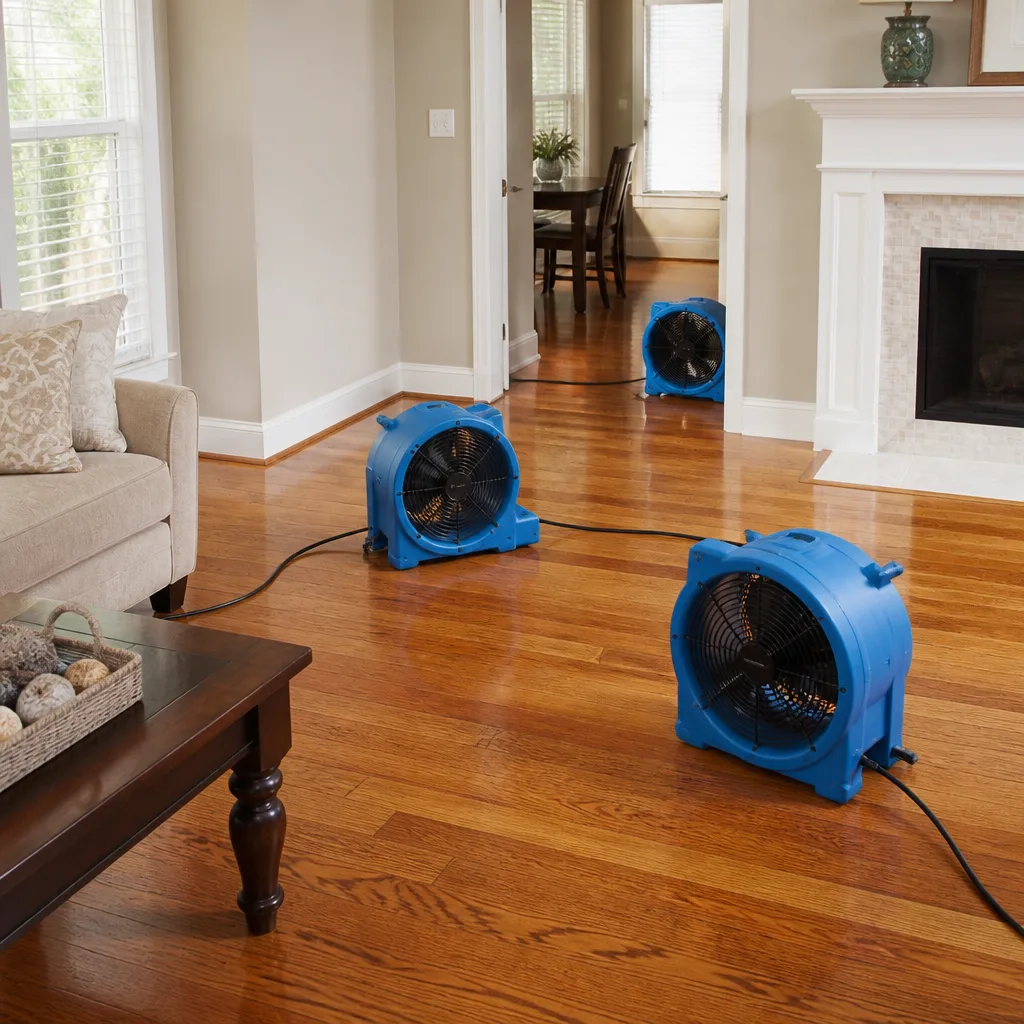
Water damage restoration in Highland typically costs between $1,800 and $5,400 depending on the water category, affected square footage, and whether structural drying is required. Most jobs in the 92346 area can be scoped and started the same day you call. We run a professional drying fleet from Dri-Eaz, Phoenix, and XPOWER equipment, not hardware-store rental fans, and our process follows IICRC-aligned standards that adjusters recognize. If you’re standing in water right now, call (833) 589-8366. We’ll walk you through immediate steps over the phone while a crew heads your way.
Why Dorchester Water Damage Is Highland’s Preferred Water Damage Restoration Company
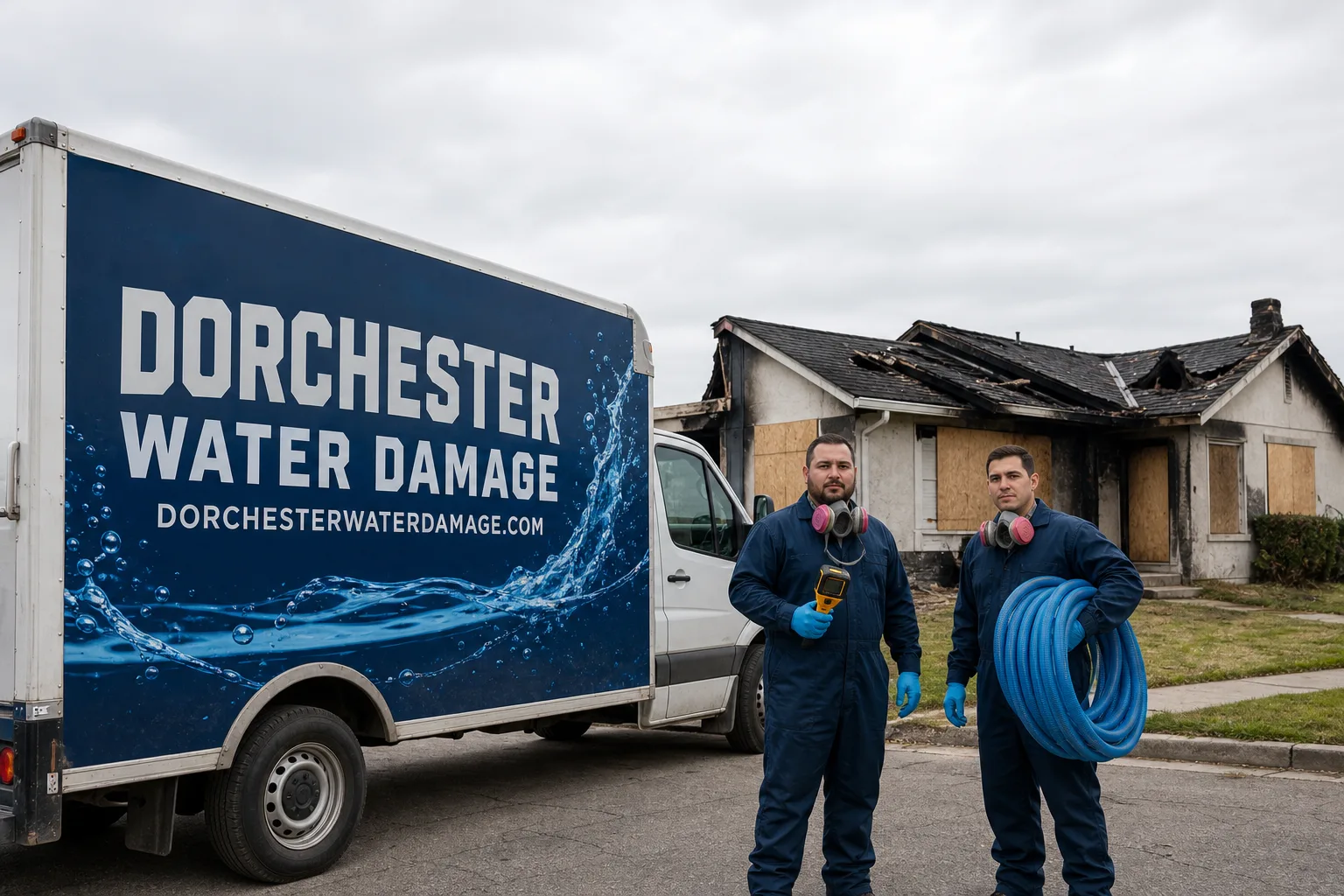
Highland presents a restoration problem most Inland Empire contractors don’t fully understand. The fire-then-flood cycle here means a home can have smoke residue in the attic from a Santa Ana wind event in September and muddy water at the sliding door when winter storms hit the burn scars above town. We scope for both in the same walkthrough. That dual-threat awareness comes from working Highland’s specific housing stock, which we’ll get into below. Homeowners and property managers in Highland call us because we arrive with commercial drying equipment already staged on the truck, not a clipboard and a promise.
Glen Pacheco built Dorchester Water Damage around documented methodology. Our moisture mapping, drying logs, and photo documentation are formatted to support insurance claims from day one. When an adjuster reviews the file, they see readings, equipment placement records, and pre-loss condition documentation, not informal estimates. For a property owner filing a claim after a burst pipe or a foothill runoff event, that documentation is the difference between a covered loss and a disputed one.
Response time to Highland is a real number for us. We dispatch from Ontario, and crews typically reach 92346 within 45 to 60 minutes for emergency water extraction. That window matters when Category 2 or 3 water is sitting in wall cavities behind mid-century stucco, where mold can establish within 24 to 48 hours.
Restoration work we handle
Flood Damage Restoration in Highland
Flood damage restoration in Highland often means something different than it does in flatland cities. When winter storms hit the San Bernardino foothills, runoff and debris flow down toward the washes and canyon-adjacent neighborhoods of 92346. Homeowners near those channels can find muddy water pressing against a patio door or garage wall within hours of heavy rain. That water is typically Category 3: it has traveled across ground, picked up contaminants, and requires extraction, removal of saturated porous materials, antimicrobial treatment, and structural drying. A typical flood damage restoration job in Highland runs $2,500 to $6,000, with the higher end reflecting jobs where mud intrusion requires flooring removal in multiple rooms.
Foothill Runoff and Mud Intrusion
The homes backing Highland’s foothill washes face a specific failure mode. Water doesn’t just pool on the surface; it pushes mud and debris against the stucco exterior and finds entry at door thresholds, weep screeds, and foundation cracks. By the time a homeowner sees standing water, moisture has already begun migrating into wall cavities and under slab flooring. We perform thermal-imaging moisture mapping on every flood job to find what the eye can’t see.
Emergency Extraction and Stabilization
Extraction is the first priority on any Highland flood job. We run truck-mounted extraction and portable units, then place high-volume air movers and dehumidifiers from Dri-Eaz and Phoenix within the first hours. Stabilization stops the migration of moisture into dry areas. It does not finish the job, but it prevents the loss from expanding while scoping and documentation for insurance proceed.
Water Damage Cleanup in Highland
Water damage cleanup in Highland covers the middle ground between a small leak and a full flood event: a failed water heater in a 1960s stucco home, a supply line burst inside a wall, an AC condensate overflow that soaked the hallway carpet. These jobs in 92346 typically run $1,200 to $3,800 depending on how far the water traveled and whether flooring or drywall must come out. The cleanup phase includes extraction, removal of unsalvageable materials, sanitizing affected surfaces, and setting up drying equipment with moisture readings taken daily until the structure stabilizes.
Burst Pipe and Appliance Failures
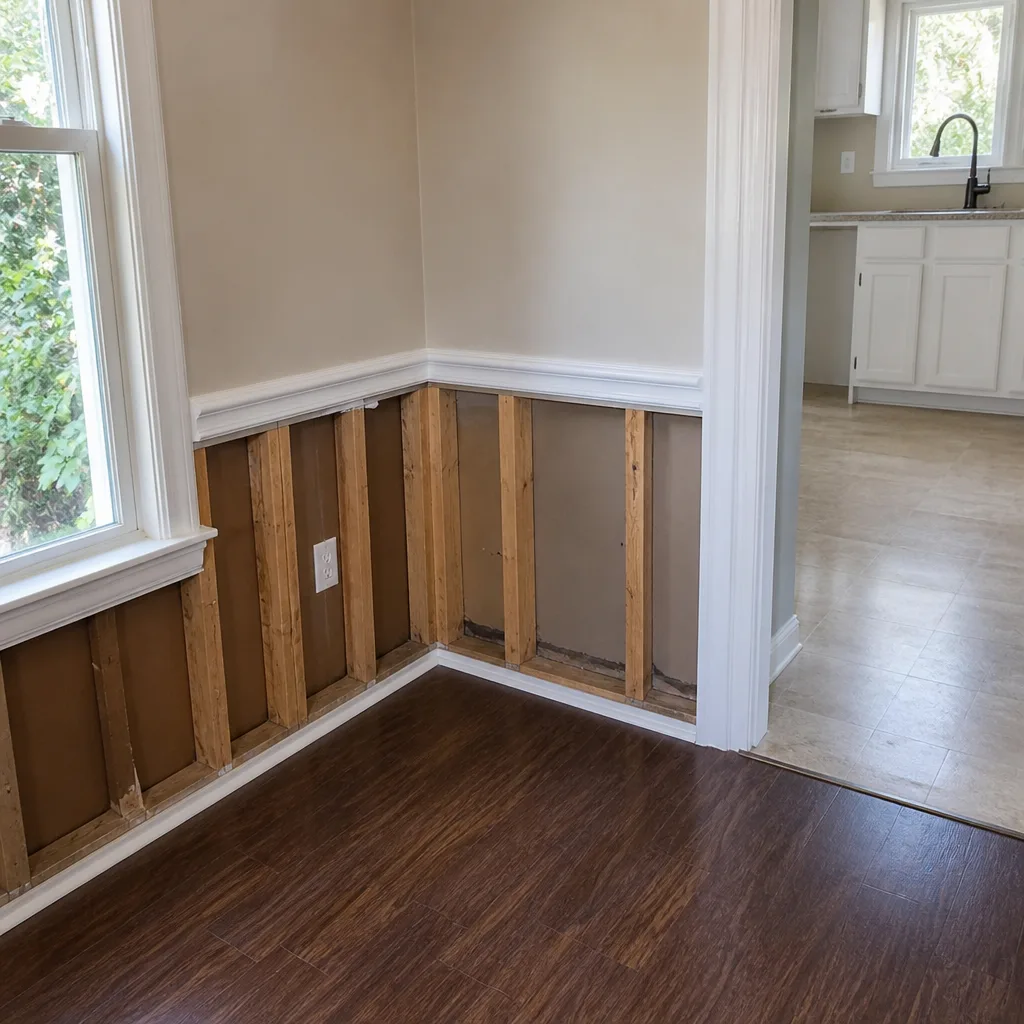
Older Highland homes carry original or early-generation plumbing, and supply line failures are the most common call we take outside of storm events. Water from a burst pipe inside a wall cavity is usually Category 1 at the source, but it degrades to Category 2 quickly if it sat before discovery. The key is cutting out the wet drywall and insulation on the first visit, because stucco exteriors trap moisture inside the wall assembly and slow natural drying to a crawl.
Ceiling and Roof Leak Response
Ceiling and roof leak water damage in Highland’s 1950s through 1970s stock often means water entering through roof penetrations, HVAC curbs, or worn flashing around chimneys. The water lands in attic insulation, then soaks through the drywall ceiling below. Our job involves removing the wet insulation, treating the affected framing, and drying the ceiling cavity. We document everything so the drywall replacement and repainting scope is clear, whether you file a claim or handle it privately.
Trusted Brands We Service in Highland
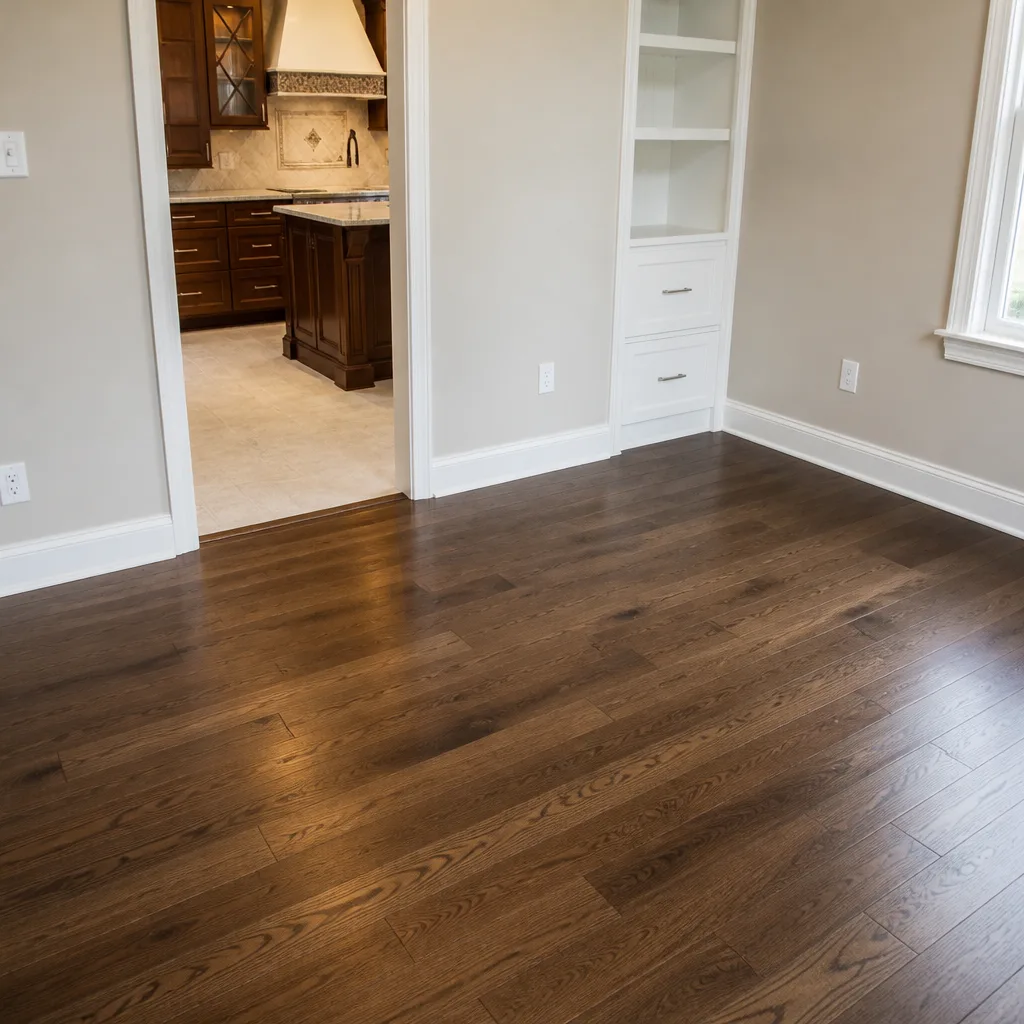
Highland homeowners own the same equipment brands we see across the Inland Empire. If you run a Carrier or Trane forced-air system, the smoke-and-water sequence here means your ductwork and blower assembly are part of the damage picture, and we document that for your claim. Our drying fleet includes Dri-Eaz, Phoenix, XPOWER, B-Air, and Injectidry equipment. The Injectidry system matters for Highland specifically: it pulls moisture from inside wall cavities and under sub-floors without unnecessary demolition, which preserves original finishes and reduces restoration cost. For homes with hardwood floors or tile over slab, that minimally invasive capability means less tear-out and faster return to normal.
See the difference
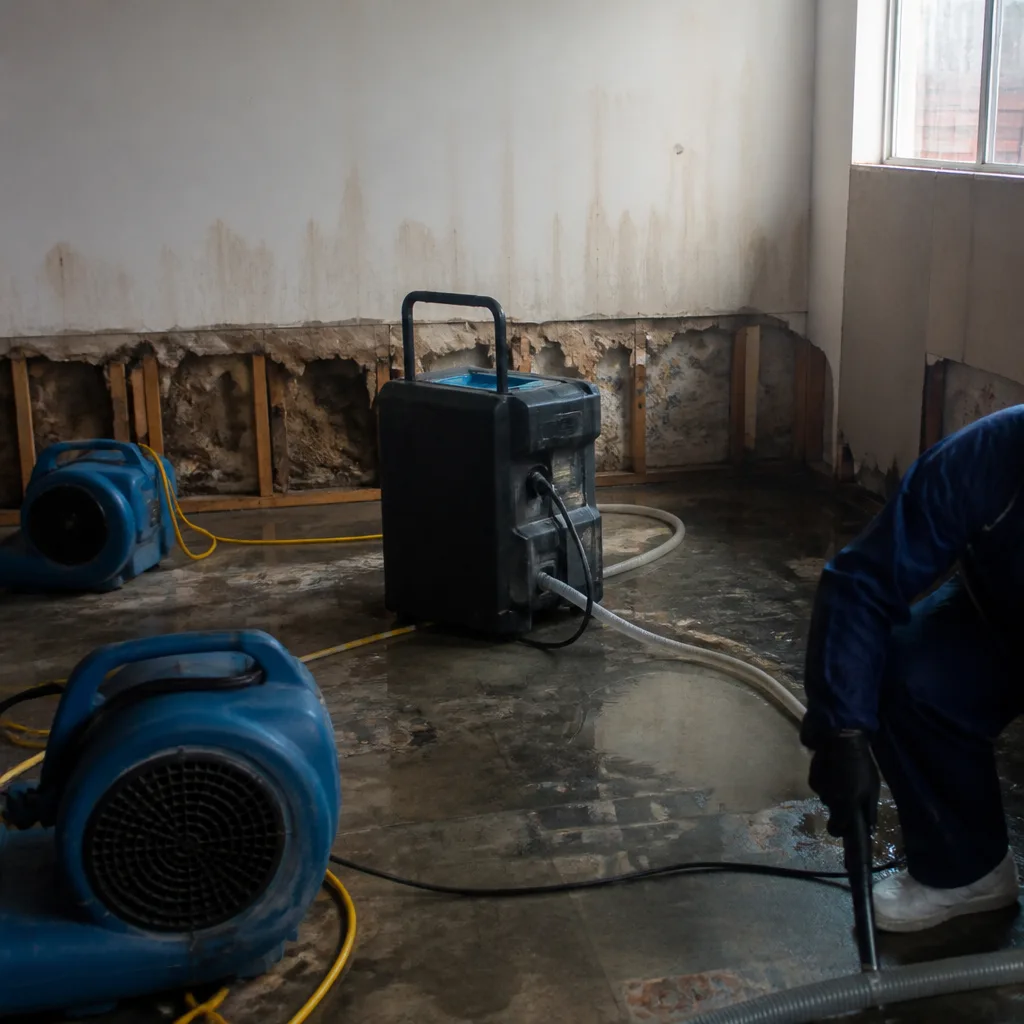 Before
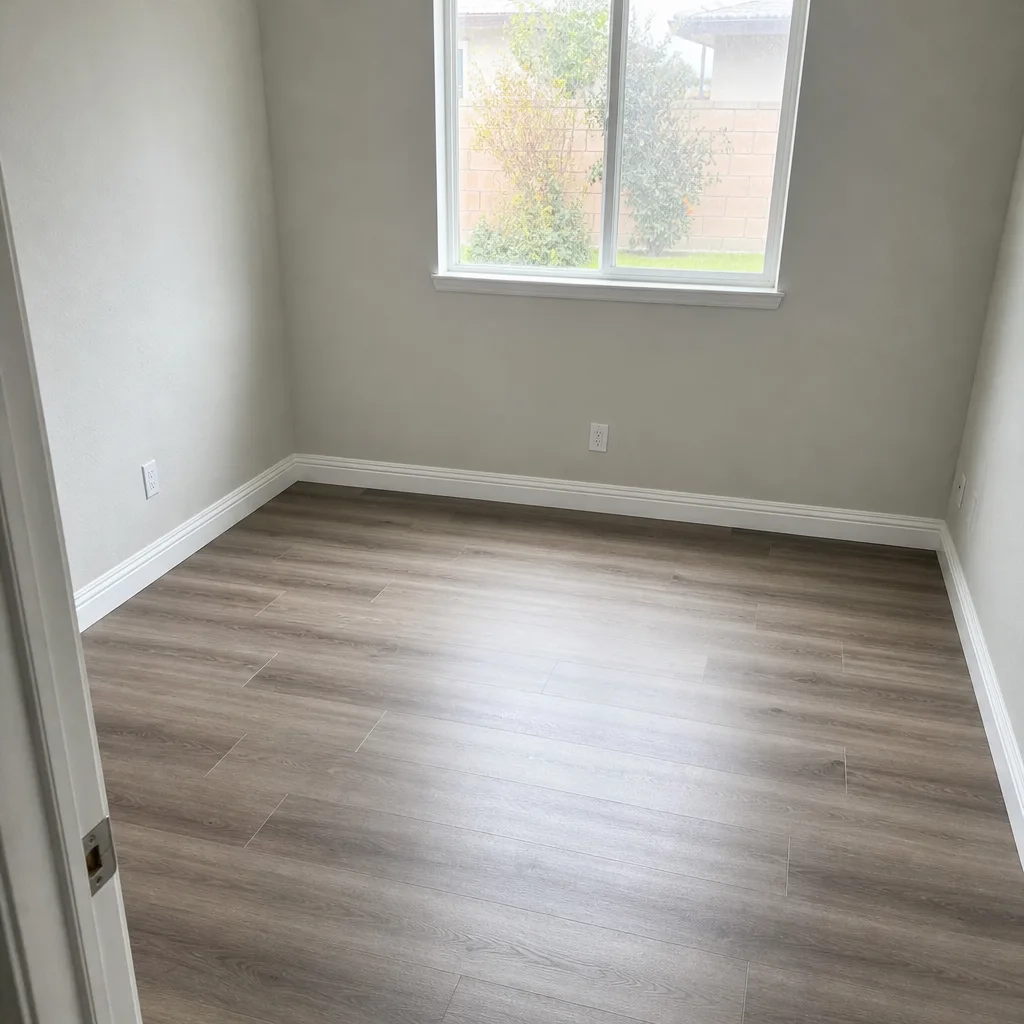 After
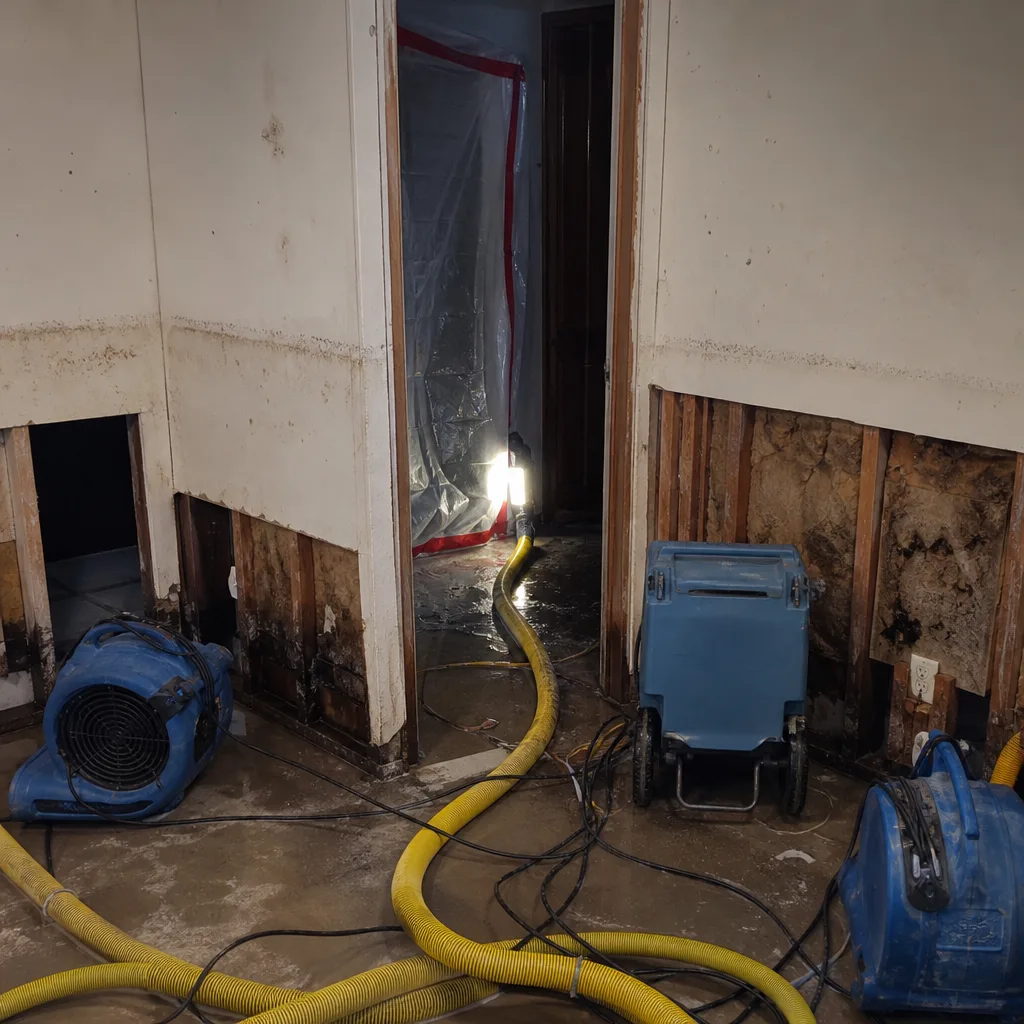 Before
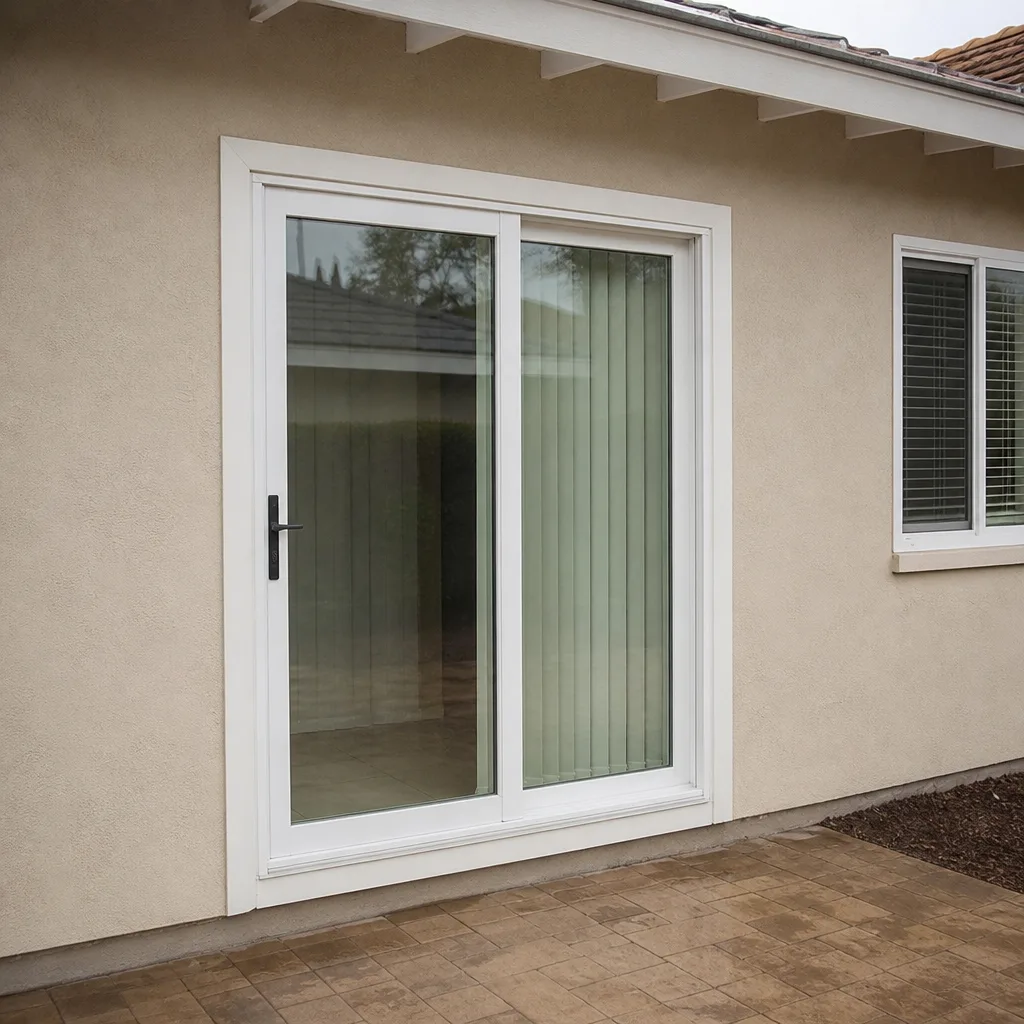 After
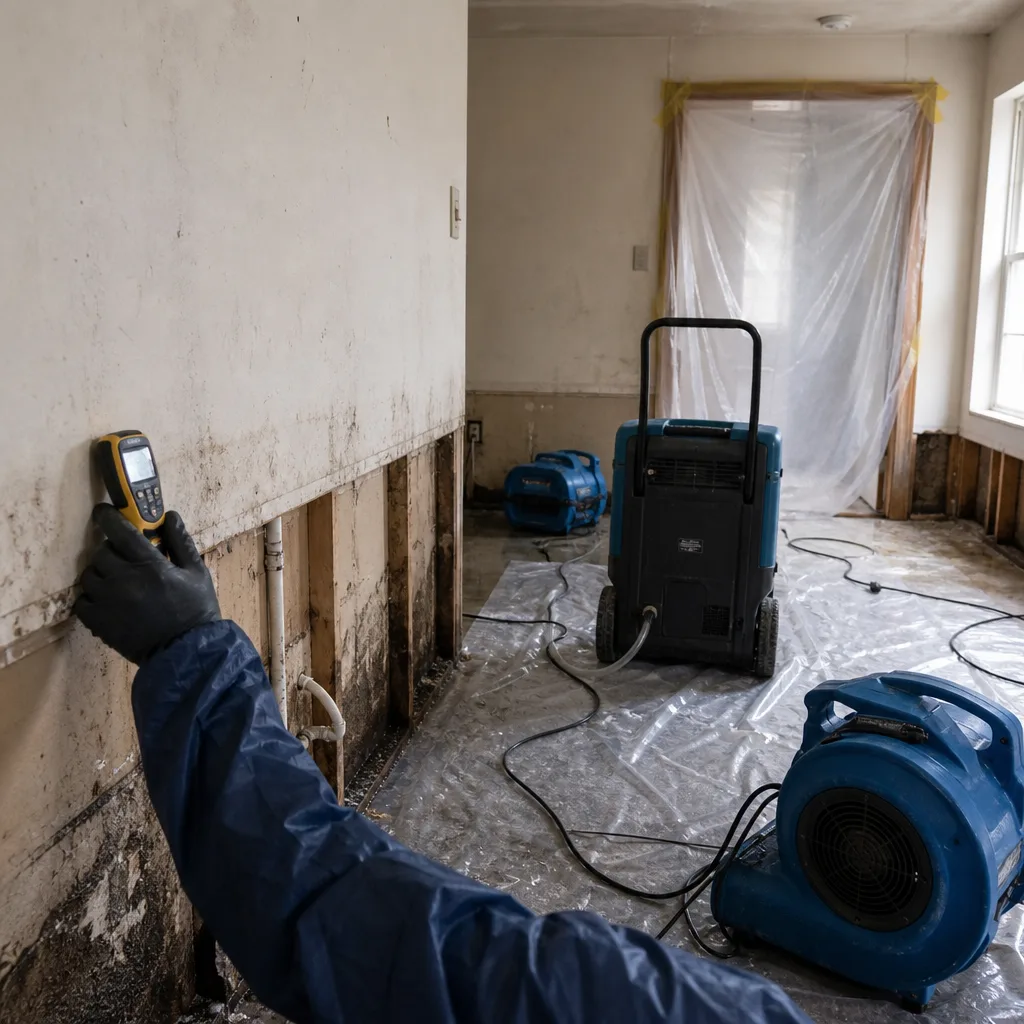 Before
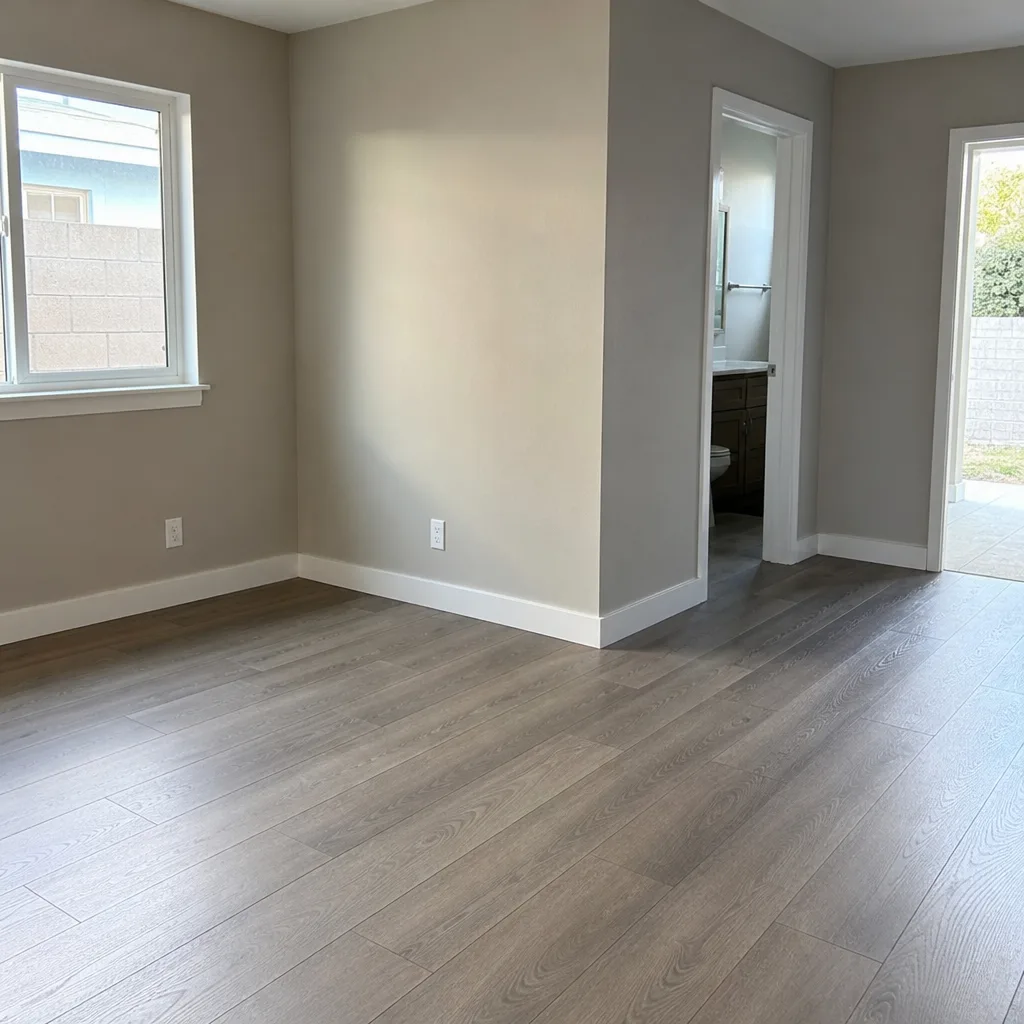 After
Common Water Damage Restoration Problems We See in Highland Homes
- Delayed extraction behind stucco walls. Water that looks minor on the surface is often sitting inside wall cavities behind mid-century stucco. By the time a homeowner notices staining at the baseboard, the moisture has been there long enough for microbial growth to begin. Every hour of delay in Highland’s warm interior temperatures accelerates that timeline.
- Smoke residue ignored during water mitigation. A home near the foothill washes may have ash and soot in the attic and ductwork from a Santa Ana wind event, and then take on water months later. If the smoke residue is not addressed during the water job, odor complaints resurface after the reconstruction is done. We scope for both on the same walkthrough.
- Undersized drying equipment on slab-on-grade homes. Highland’s slab foundations mean water migrates under vinyl plank, tile, and carpet pad. Consumer-grade fans dry the surface and leave the substrate wet. Moisture readings stay elevated, flooring fails later, and the homeowner gets told the job was done. It was not. We run commercial air movers and dehumidifiers sized to the actual affected cubic footage.
- Wash-adjacent homes getting hit twice in one year. A house backing a foothill canyon can get smoke in September and mud at the door in January. Treating them as separate small losses misses the compounding damage. One documented scope covering both smoke and water positions the insurance claim correctly from the start.
Pricing for Water Damage Restoration in Highland, CA
Here are actual numbers we quote in Highland. Emergency water extraction with same-day response: $450 to $1,100 depending on affected square footage and accessibility. Structural drying and dehumidification, including daily moisture monitoring: $800 to $2,500 for a typical 2 to 3 room loss. Flood cleanup with Category 3 water, antimicrobial treatment, and disposal of saturated materials: $2,500 to $6,000. Burst pipe restoration including drywall removal, cavity drying, and prep for repair: $1,800 to $4,200. Basement water removal, where basements exist in older Highland stock: $1,500 to $3,500. The biggest cost variables are water category, how long water sat before discovery, and whether flooring or cabinetry must come out. Estimates are free. Call (833) 589-8366 and we’ll give you a written scope before any work starts.
We Also Serve Cities Near Highland
Dorchester Water Damage handles water damage restoration across the eastern Inland Empire, including Highland, San Bernardino, Muscoy, Redlands, and Loma Linda. If your property sits just outside 92346, the same crew, same equipment, and same documentation standard applies. For full details on our process, see our Water Damage Restoration team page.
Serving Highland, CA — Our Local Coverage Area
We’re based in the Highland area and know this community well. Use the map below to see our service coverage — if you’re nearby, we can almost certainly help.
FAQs About Water Damage Restoration in Highland
Highland’s fire-then-flood cycle means restoration scopes here often include two distinct damage layers in the same property: smoke residue and ash pushed into attics, wall cavities, and forced-air systems during Santa Ana wind events, and then muddy Category 3 water intrusion when winter storms hit burn scars above 92346. A proper restoration scope must address both, because smoke particulates remaining in ducts and cavities during water mitigation will cause odor complaints after the job is closed. Call (833) 589-8366 and we’ll walk the property with both failure modes in mind from the first visit.
Category 1 is clean water from a supply line or faucet. Category 2 is contaminated water that has been sitting or has picked up detergents, soil, or biological material. Category 3 is grossly contaminated water, including floodwater, sewage, and foothill runoff that has traveled across ground. In Highland, the category matters because Category 2 and 3 water require antimicrobial treatment and removal of saturated porous materials like carpet pad, drywall to a set height, and insulation. Category 1 can often be dried in place. The category drives the scope and the insurance claim, so it is documented at the start.
Yes. Our crew scopes for both smoke residue and water damage in the same walkthrough, which is exactly what Highland’s hillside-adjacent homes require. After a Santa Ana event pushed smoke into a 1960s single-story stucco home near the foothill washes, our crew performed moisture mapping and found elevated moisture readings in the wall cavities from subsequent burn-scar runoff. We set up containment, used Dri-Eaz dehumidifiers and air movers for structural drying, and completed an antimicrobial treatment after extracting the Category 3 water. The drying logs documented pre-loss condition for the homeowner’s insurance. Call (833) 589-8366 for a combined scope on your home.
Mold can begin establishing within 24 to 48 hours after water intrusion in Highland’s warm interior temperatures, especially inside wall cavities behind stucco where the moisture cannot evaporate. The timeline shortens when humidity is elevated after winter storms. Our extraction and drying process starts same-day in most 92346 jobs, and we monitor moisture readings until the structure reaches dry standard, not a guess.
We run commercial drying equipment from Dri-Eaz, Phoenix, and XPOWER, plus structural drying systems from Injectidry for moisture inside wall cavities and under flooring. These are the same brands used by large commercial restoration firms, not rental-store equipment. The difference matters most on slab-on-grade Highland homes where surface drying leaves substrate moisture that fails later. Call (833) 589-8366 and we’ll explain what equipment your specific loss requires.
Written by Glen Pacheco, Owner at Dorchester Water Damage, serving Highland and the Inland Empire.