Last updated October 30, 2026
 Water damage drying
 Fire & smoke cleanup
 Mold remediation
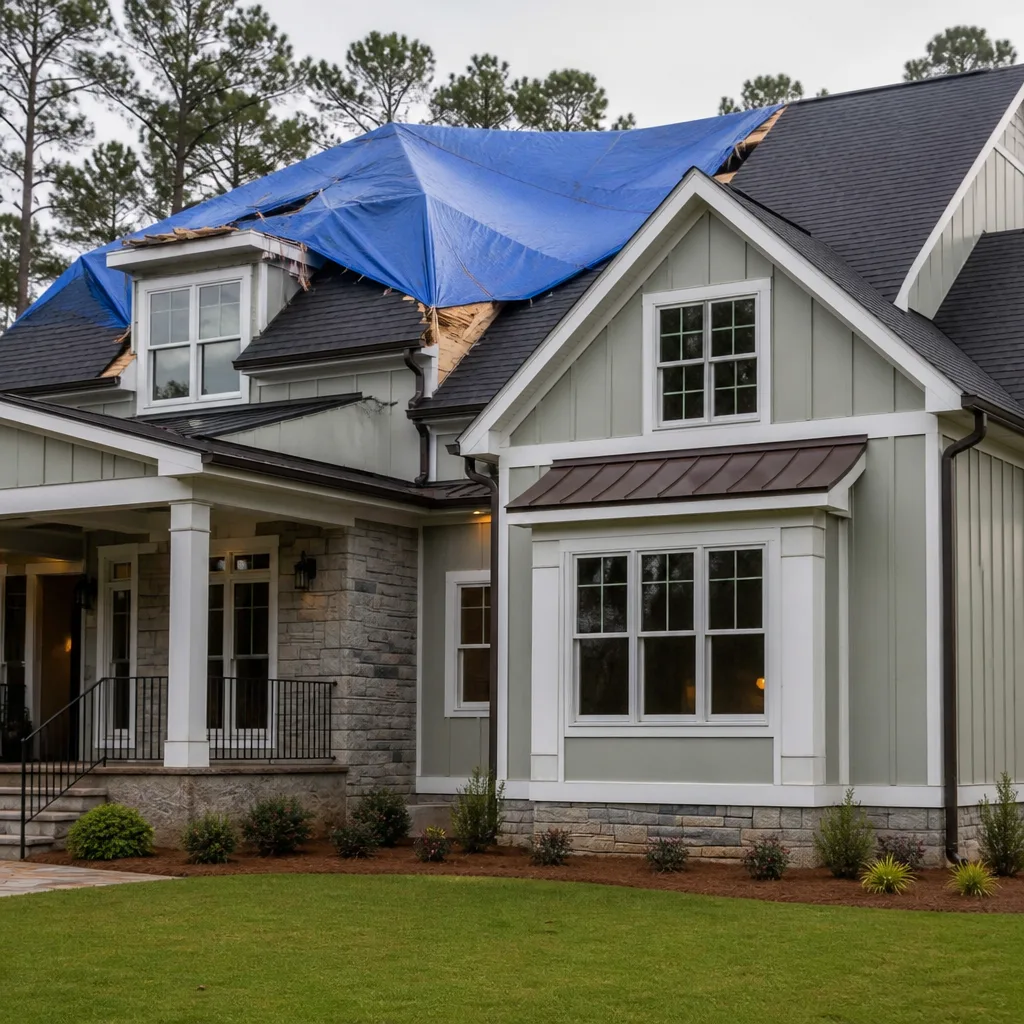 Storm response
 Sewage cleanup
 Reconstruction
Free visual inspection and a written scope of work before any mitigation begins - photos, moisture readings, and drying logs go in your claim file
The scope we write is the scope we bill. Anything new gets shown to you, in writing, before we touch it.
Get your free estimateThe Complete Guide to Damage Restoration in Ontario
Most homeowners in Ontario treat damage restoration as a single event – a crew shows up, pulls out wet drywall, runs some fans, and calls it done. That mindset is exactly how a Category 2 water loss becomes a six-month-later mold claim, or how a rushed fire cleanup leaves smoke odor baked into the HVAC system. Restoration isn’t one action. It’s a sequenced protocol governed by IICRC standards, and skipping even one phase undermines every phase that follows. A restoration job closed in five days isn’t necessarily finished – S500 defines completion by moisture readings, not calendar time, and Ontario adjusters are increasingly demanding that documentation before they’ll close a claim. This guide maps the full chain, from initial Category classification to final clearance testing, so you understand what “complete” actually means when the equipment leaves your property.
Quick Answer
Damage restoration in Ontario is a multi-phase IICRC-aligned process: emergency mitigation, water extraction or debris removal, structural drying or soot neutralization, controlled demolition where required, disinfection, and documented validation. The critical distinction most homeowners miss is that completion is defined by measurable standards – psychrometric readings, clearance sampling, and written scope documentation – not by how the surfaces look or how many days have passed. In Ontario’s dry heat, visible dryness can mask trapped moisture inside wall cavities and sub-floors, which is why professional drying fleets and moisture log documentation matter more than fan count.
Restoration work we handle
Table of Contents
- Category Classification: Why the Water Type Dictates Everything
- Why Ontario’s Climate Creates a Deceptive Drying Environment
- IICRC S500 and S520: What the Standards Actually Require on Site
- Extraction and Structural Drying: The Equipment Gap That Matters
- Mold Remediation: Containment, Removal, and the S520 Workflow
- Fire Damage Restoration: Soot Chemistry and the Sequence That Prevents Callbacks
- Documentation and the Insurance Workflow: What Adjusters Actually Look For
- Common Mistakes to Avoid
Category Classification: Why the Water Type Dictates Everything
The first decision on any water damage job in Ontario isn’t how many fans to set up. It’s what category of water you’re dealing with. The IICRC S500 classifies water damage into three categories, and that classification drives every equipment, safety, and disposal decision downstream. A contractor who skips this step or guesses wrong has already compromised the job before a single piece of equipment is unloaded.
Category 1 is clean water from a sanitary source: a supply line rupture, an overflowed bathtub, a failed water heater. The water itself poses no immediate health threat, but that status degrades fast. Within 24 to 48 hours in Ontario’s summer heat, standing Category 1 water can support microbial growth and effectively become Category 2.
Category 2 is significantly contaminated water, sometimes called gray water. This includes dishwasher discharge, washing machine overflow, toilet overflow with urine only, and sump pump failures. It contains microorganisms and nutrients that accelerate mold growth. Anyone handling Category 2 water should wear appropriate PPE – gloves, eye protection, and in many cases respirators – and affected porous materials often cannot be economically dried and restored.
Category 3 is grossly contaminated water, sometimes called black water: sewage backups, floodwater from rising rivers or storm surge, and any water that has remained standing long enough to support pathogenic growth. Category 3 water in an Ontario home means full containment protocols, hard-surface disinfection with EPA-registered biocides, and disposal of saturated porous materials. No amount of drying rescues sewage-saturated carpet.
Here’s what Ontario homeowners rarely hear from budget contractors: the category doesn’t just determine cleanup approach. It determines what can be saved, what must be removed, and what level of documentation your insurer will require. When we arrive at a water loss in Ontario, the first thing we document is the category determination and the reasoning behind it, because that note is the anchor for the entire claim file. An adjuster reviewing the scope six weeks later needs to see that Category 3 was diagnosed and handled as Category 3 – not discovered mid-project and quietly absorbed.
Why Ontario’s Climate Creates a Deceptive Drying Environment
Ontario sits in a semi-arid pocket of the Inland Empire with low ambient humidity, which sounds like a drying advantage. It is also a trap. Low relative humidity pulls moisture from the surface of soaked materials quickly, which makes walls feel dry to the touch while the cavities behind them stay saturated for weeks. The inside of a wall assembly in an Ontario home can hold grain-specific moisture content well above 20% while the painted surface feels bone dry. That’s not a minor issue. That’s a mold reservoir waiting to activate.
Summer temperatures regularly exceed 95°F across Ontario, from the commercial corridors near the 10 freeway to the residential streets south of the Ontario Mills area. Heat accelerates evaporation, but it also accelerates microbial growth. The combination of hot surfaces, trapped moisture, and a closed-up house – because nobody wants to leave doors open in July – creates exactly the warm, stagnant conditions mold spores need. A drying plan that looks finished because the surface is dry can leave the structure primed for a secondary claim.
The Ontario-specific answer is structural drying verification, not visual inspection. Moisture content readings need to come from inside wall cavities, under sub-floors, and behind baseboards. Without those data logs, a homeowner has no way to know whether “dry” means actually dry or just dry on the surface. In our experience working losses across Ontario, the visual check is the single most common source of false confidence we see. Homeowners accept a handwave and a thumbs-up, then six months later a musty smell appears behind the drywall in the guest bathroom. That’s not bad luck. That’s an incomplete drying protocol.
IICRC S500 and S520: What the Standards Actually Require on Site
The IICRC S500 is the recognized standard for professional water damage restoration. The S520 is the companion standard for mold remediation. When a contractor in Ontario says they follow “industry standards,” these are the documents they mean – or should mean. They aren’t a marketing slogan. They’re a methodology for extracting water, drying structures, preventing microbial amplification, and validating the result.
S500 establishes four classes of water damage based on the extent of absorption and evaporation potential. Class 1 affects a small area with low-porosity materials, minimal water absorption. Class 4 is a deep saturation scenario: hardwood floors, plaster walls, brick, concrete, stone, and large areas that require specialty drying methods and long drying times. Between them, Classes 2 and 3 describe progressively larger areas and higher absorption rates. The class determines the number and type of drying units, the use of desiccant versus refrigerant dehumidifiers, and the expected duration of the drying phase.
Here’s the workflow S500 maps onto an Ontario job:
- Initial assessment and safety inspection. Electrical hazards are identified and isolated. Structural stability is checked. The water source is confirmed stopped or disconnected.
- Category and class determination. The water is classified by contamination level. The affected area is measured and assigned to a drying class. These two determinations lock in the plan.
- Extraction. Standing water is removed with truck-mounted or portable extraction units. The more water removed now, the faster everything downstream goes.
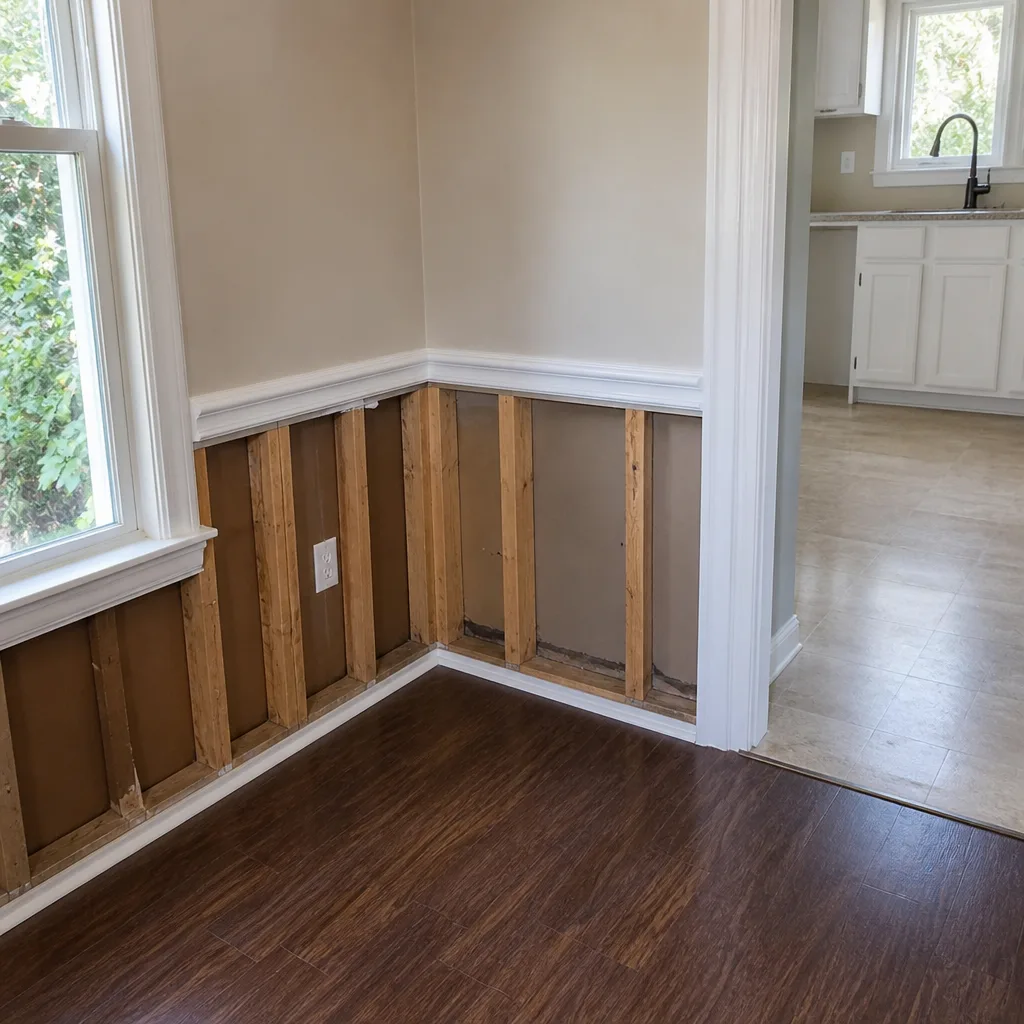
- Controlled demolition where required. This means removing saturated materials that cannot be economically dried or that pose contamination risk – not gutting the room because it’s faster to replace than dry.
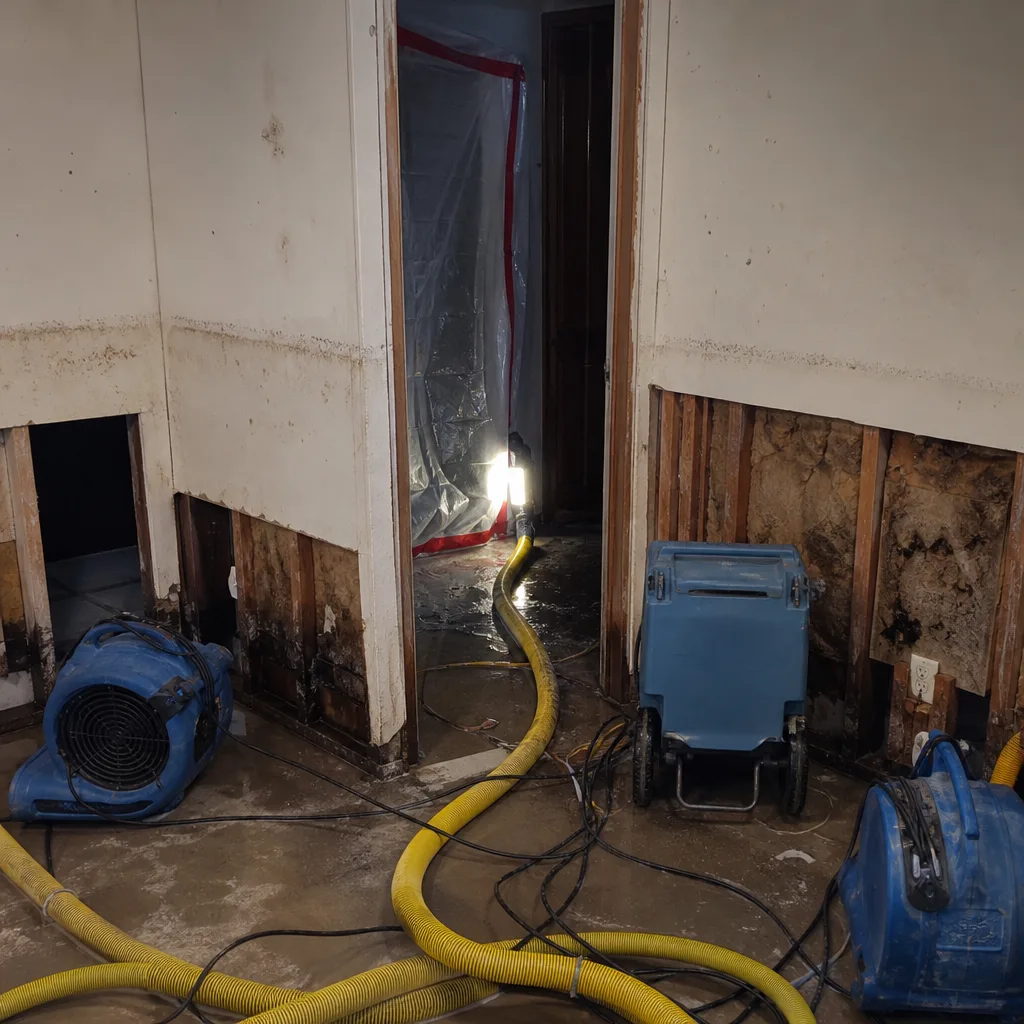
- Drying system deployment. High-volume air movers and professional-grade dehumidifiers are placed based on the class assignment, not scattered evenly across the room.
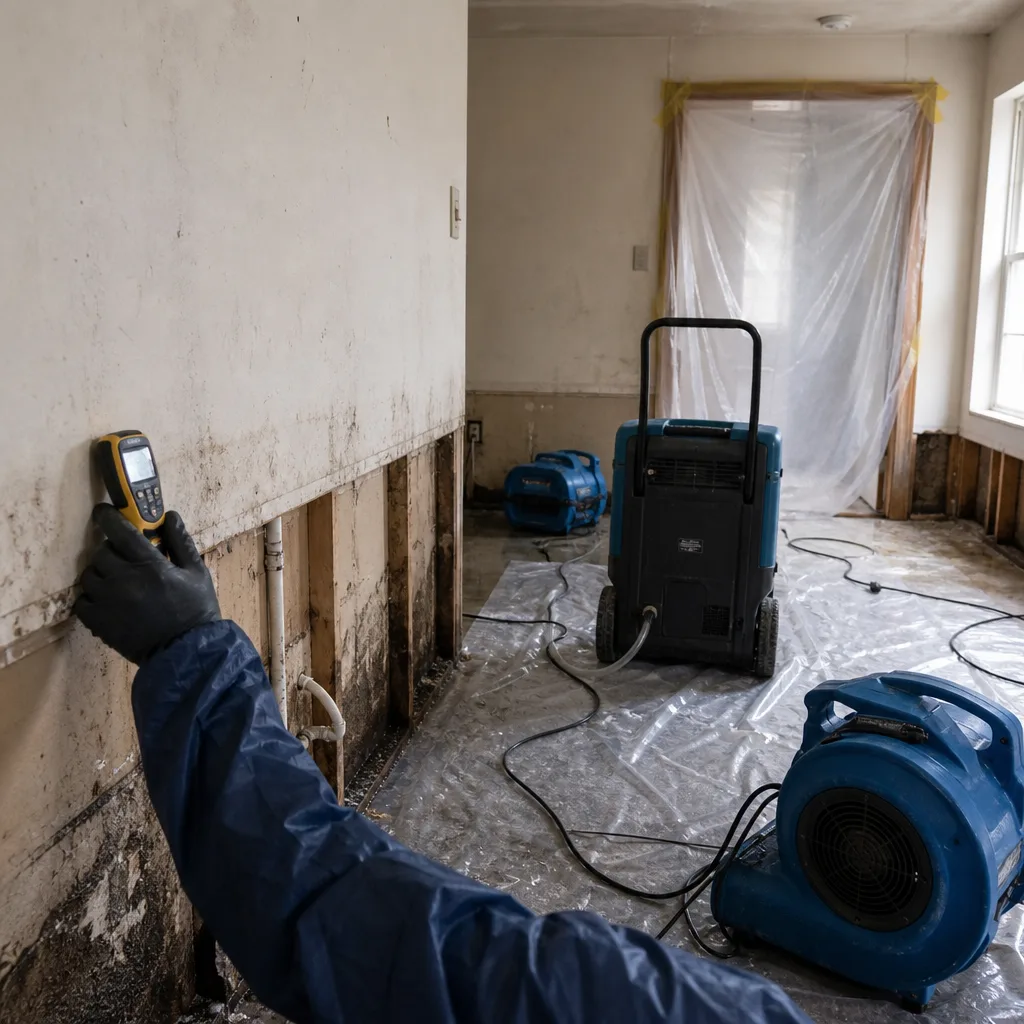
- Daily monitoring and documentation. Moisture content readings are logged, temperature and relative humidity are recorded, and drying goals are adjusted as needed. S500 requires documentation that shows the drying curve trending toward target.
- Completion validation. Drying is finished when moisture content readings at multiple depth points hit the target established for the material type. Not when the equipment rental period ends. Not when the tenant wants the room back.
S520 lays out a parallel sequence for mold: identify the source of moisture, contain the affected area, remove contaminated materials using controlled methods, clean surfaces and HVAC systems where indicated, and conduct post-remediation verification. The verification step is the one most often skipped by budget operators in Ontario, and it’s the step that protects you against a disputed claim later.
Extraction and Structural Drying: The Equipment Gap That Matters
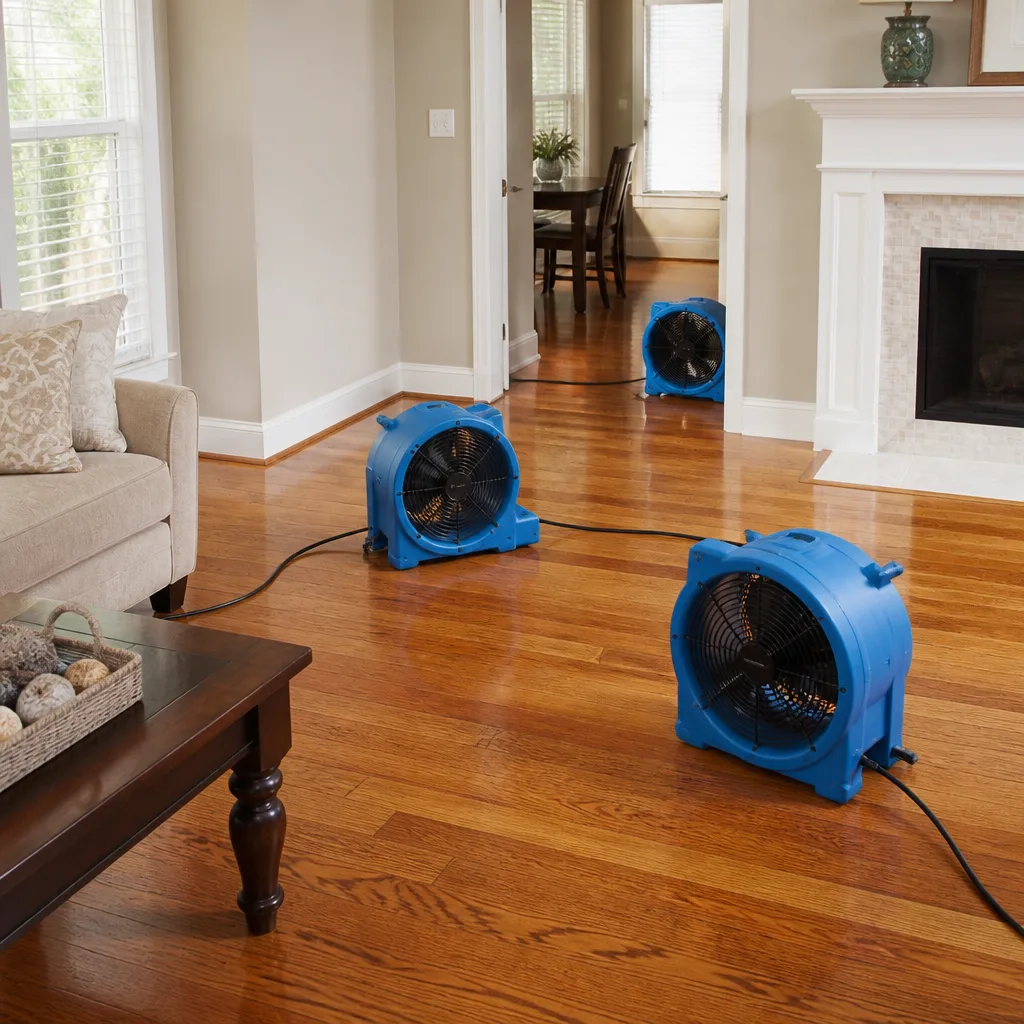
There’s a visible difference between professional drying equipment and the hardware-store fans and rental dehumidifiers some operations deploy on Ontario water losses. The professional fleet used by serious restoration companies – Dri-Eaz, Phoenix, XPOWER, B-Air – conditions air differently. These are high-static air movers designed to create airflow across wet surfaces at a rate consumer fans can’t match, paired with low-grain refrigerant or desiccant dehumidifiers that pull water vapor out of the air column continuously.
The less visible difference is structural drying. Surface drying handles what’s on the outside: drywall faces, tile floors, baseboards. Structural drying handles what’s inside: wall cavities, sub-floor spaces, insulated floor assemblies, the interstitial spaces where moisture travels and hides. Injectidry systems pull negative pressure through sealed wall cavities and under sub-floors, drawing moisture out of spaces a fan in the middle of the room can’t reach. Skipping structural drying is how a water loss in an Ontario slab foundation home ends with cupped hardwood floors six months after the claim check cleared.
We run a professional drying fleet built on Dri-Eaz, Phoenix, and XPOWER equipment, with Injectidry capabilities for wall-cavity and sub-floor extraction. That matters for two reasons. First, it means we can often dry in place materials that a generalist contractor would replace – which means less demolition, less reconstruction cost, and less disruption to a homeowner already dealing with a serious disruption. Second, it means the drying process produces the data logs and daily readings that an adjuster can actually review. XPOWER air movers and Phoenix dehumidifiers don’t just dry the room faster. They produce the measurement trail that proves the room was dried.
Minimally invasive structural drying isn’t just a cost play. It’s a preservation decision. Every square foot of drywall that doesn’t get demolished is a square foot of reconstruction, dust, and scheduling delay that never happens. In Ontario’s current renovation market, where drywall crews and finish carpenters are booked weeks out, drying in place can shave real calendar time off the return-to-normal timeline.
Mold Remediation: Containment, Removal, and the S520 Workflow
Mold claims in Ontario tend to surface in two ways: as a direct discovery – visible growth on a wall, a persistent musty smell – or as a secondary consequence of a water loss that wasn’t dried to standard six months ago. Both paths lead to the same sequence, but the second path is the harder one, because by then the moisture source may no longer be obvious, and the mold may have colonized cavities that were never opened.
S520 remediation starts with an assessment of the moisture source. Mold cannot sustain active growth without water. Fixing the mold without fixing the water is not remediation. It’s staging the next outbreak. In Ontario homes, common sources include slow plumbing leaks under sinks that ran behind vanity cabinets for months, condensation on improperly insulated ductwork in attics, and slab leaks under tile floors where the vapor barrier was compromised.
The remediation sequence runs like this:
- Containment. The affected area is isolated with physical barriers and negative air pressure, so disturbed spores don’t spread through the rest of the house during removal. A containment chamber is a real physical structure, not a sheet of plastic taped over a doorway.
- Source removal. Contaminated porous materials are cut out and bagged in the containment zone before being carried through the home. Hard surfaces are HEPA-vacuumed, then cleaned with EPA-registered antimicrobials appropriate for the surface.
- HVAC evaluation. If the system circulated during the mold event, duct cleaning or replacement may be indicated. S520 addresses this explicitly, because a colonized HVAC system re-contaminates everything downstream.
- Drying. The cleaned structure is returned to acceptable moisture levels before rebuilding. This isn’t optional. Rebuilding over a damp frame is mold reassembly.
- Post-remediation verification. Clearance sampling establishes that indoor spore levels have returned to baseline or below. A “clearance” just means someone looked at the wall and said it seemed fine. That is not verification. That is a handshake.
If there’s one point in the S520 workflow where Ontario homeowners get burned, it’s the verification phase. Contractors quote remediation, then treat the post-clearance assessment as an optional add-on. It isn’t optional. If you ever file a mold-related claim, your insurer will want to see remediation documentation that ties the scope of work to the scope of contamination and confirmed the result. A mold job closed with a general contractor’s invoice and no verification data is a dispute waiting for the next owner’s disclosure packet.
Fire Damage Restoration: Soot Chemistry and the Sequence That Prevents Callbacks
Fire damage restoration in Ontario begins with an uncomfortable truth: the fire was one part of the damage. Smoke, soot, and the water used to suppress the fire often cause more widespread degradation than the burn zone itself. Soot is not inert dirt. It’s acidic, it’s microscopic, and it spreads through air pathways and wall cavities far beyond the room where the fire started. Within 72 hours, acid soot can etch glass, permanently stain plastics, and corrode metal surfaces. Restoration timelines matter, but sequence matters more.
The sequence for fire loss in an Ontario home:
- Board-up and strip-down. Security first: the structure is protected from weather and intrusion. Damaged materials that cannot be saved are identified and the scope is documented.
- Source removal. Charred materials and saturated insulation are removed. This step prevents continued off-gassing and eliminates the highest-concentration soot reservoirs.
- Soot and smoke neutralization. Surface soot is removed using dry chemical sponges, HEPA vacuuming, and appropriate wet cleaning methods. Smoke odor requires more than masking: thermal fogging, ozone treatment where appropriate, and hydroxyl generation are used to neutralize odor molecules, not cover them with fragrance.
- Substrate cleaning and sealing. Porous surfaces are cleaned and sealed where needed. Unsealed drywall that absorbed smoke will continue releasing odor for years.
- HVAC inspection. Ductwork exposed to smoke must be inspected and cleaned or replaced. A rebuilt living room connected to a soot-lined HVAC system is a callback waiting to happen.
- Reconstruction and content restoration. The repair scope is documented, the contents are cleaned or restored, and the structure is rebuilt to pre-loss condition.
The phase-skipping mistake most common in fire restoration is treating smoke odor as an air-freshening problem instead of a chemistry problem. Spraying deodorizer into a room with soot-contaminated wall cavities might get the unit rented for another month, but the odor will return. Proper fire restoration in Ontario means neutralizing the odor source, not managing the symptom. The same goes for soot on surfaces: wiping it with a wet rag can embed it deeper into porous materials. Dry removal first, wet cleaning second, sealing last. Skip the seal, and the stain bleeds through the new paint.
Documentation and the Insurance Workflow: What Adjusters Actually Look For
Most Ontario homeowners never see the documentation side of restoration until their claim gets challenged. Then it’s the only thing that matters. For a deeper look at what restoration actually costs, see our Damage Restoration Cost Breakdown: The Ontario Homeowner’s Reference for 2026. Adjusters don’t evaluate your restoration based on how the house looks in photographs. They evaluate the paper trail: the scope, the classification, the daily drying logs, the demolition rationale, the clearance documentation. If that paper trail is thin or missing, the claim can stall or shrink regardless of how well the actual work was done.
What a complete documentation package includes on a water damage restoration in Ontario:
- Initial loss assessment. Date and time of arrival, water source identification, category and class assignment with supporting rationale.
- Moisture mapping. Baseline moisture content readings from affected materials, recorded at multiple points before drying begins. This baseline is what the drying progress is measured against.
- Daily drying logs. Temperature, relative humidity, grains per pound, and moisture content readings logged for every affected area, every day. This is a psychrometric data record, not a subjective note.
- Equipment inventory. What was installed, where, and when. Air mover count, dehumidifier capacity, specialty drying systems. An adjuster can cross-reference this against the drying logs to validate the plan.
- Demolition documentation. Photos and written rationale for every material removed. “We cut out the drywall because it was wet” is not documentation. “Drywall removed from 0-4 feet in bedroom 2; baseline moisture content at removal was 32% in wall cavity” is documentation.
- Completion report. Final moisture readings showing all materials at or below target levels, dated and signed. This is the document that closes the drying phase and triggers reconstruction approval.
On a mold remediation job, the equivalent package starts with the assessment and moisture source identification, includes the containment protocol and remediation scope, and ends with the post-remediation verification report. The verification report isn’t a nice-to-have. It’s the difference between a closed file and a lingering liability.
An Ontario adjuster reviewing a water loss six weeks after the fact is working from this documentation. A restoration partner who can’t produce daily logs and completion data is asking the adjuster to take their word for it. Adjusters don’t take anyone’s word for it. They take documentation. That’s the entire game.
Common Mistakes to Avoid
- Drying to touch instead of drying to standard. Surface dryness in Ontario’s low-humidity air creates false confidence. Moisture content readings from inside wall cavities and sub-floors are the only valid completion criteria. A contractor who closes the job based on how the wall feels hasn’t closed anything.
- Pulling equipment too early. Drying logs don’t lie: if the moisture content curve hasn’t hit target, the job isn’t done. Renting equipment costs money, so budget operators have an incentive to pull it early. That savings becomes your future mold remediation bill.
- Category guessing. Treating Category 2 water as Category 1, or pretending a Category 3 situation is “not that bad,” changes the entire safety and disposal protocol. If the documentation says clean water but the source was a sewage backup, the insurance claim can be denied as fraudulent. The category is what it is; hiding it helps no one.
- Demo-first thinking. Some generalist contractors in Ontario default to removing anything wet because demolition is billable and drying is a waiting game. A professional restoration plan uses structural drying where materials can be saved and removes materials only where drying is technically impossible or cost-prohibitive. Unnecessary demolition increases your reconstruction cost and extends your displacement.
- Skipping post-remediation verification on mold jobs. A mold job with no clearance testing isn’t finished. It’s just quiet for a while. Insurers and future lenders want the verification data.
- Treating soot as a cleaning problem instead of a chemistry problem. Fire restoration requires neutralizing acidic soot and odor molecules at the source, not wiping surfaces and spraying deodorizer. Seal the substrates or the odor returns with the first humid day.
- Hiring a generalist for a loss event. Restoration is a distinct discipline with its own standards, equipment, and documentation requirements. A contractor who “also does water damage” between kitchen remodels rarely runs professional drying equipment or produces the logs an adjuster needs. The savings disappear the first time the claim stalls or the odor returns.
When to Call a Professional
Some damage situations are unambiguous: standing water that won’t drain, visible mold growth larger than a few square feet, fire damage that has left soot throughout the structure, sewage backup. In those cases, wait time is damage time. Every hour of delay extends the extraction challenge, accelerates microbial growth, or lets soot etch deeper into surfaces. Other situations look small but hide larger problems: a small ceiling stain from a slow roof leak, a musty smell with no visible source, warped flooring near an appliance. These aren’t “wait and see” issues. They’re diagnostic calls that get more expensive every week they’re ignored.
Dorchester Water Damage home offers free estimates throughout Ontario for water, mold, and fire loss events. If you’re uncertain whether your situation warrants professional restoration, call (833) 589-8366 and describe what you’re seeing. We’ll tell you straight whether you need a technician on site or a few days of careful monitoring. The estimate is free, and you won’t get a high-pressure sales pitch. You’ll get a written scope you can hand to your adjuster, whether you hire us or not.
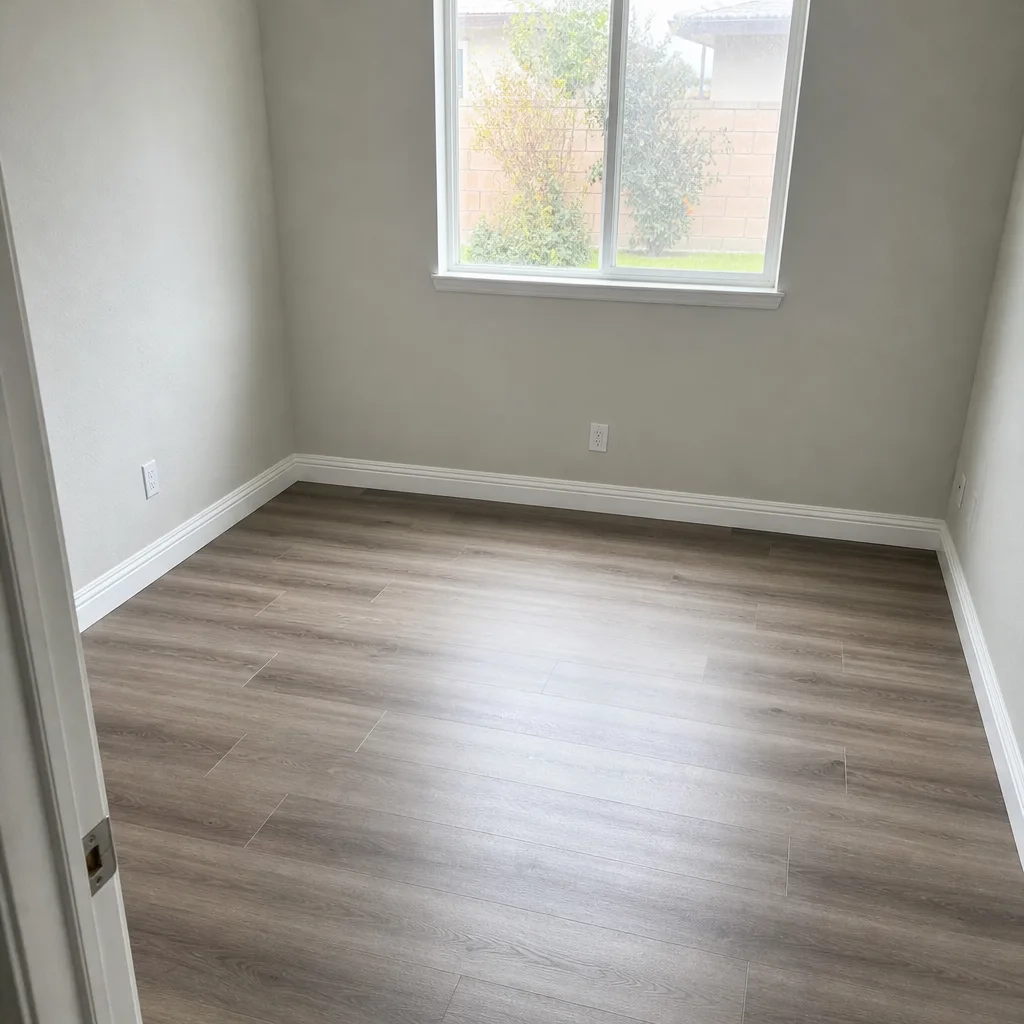
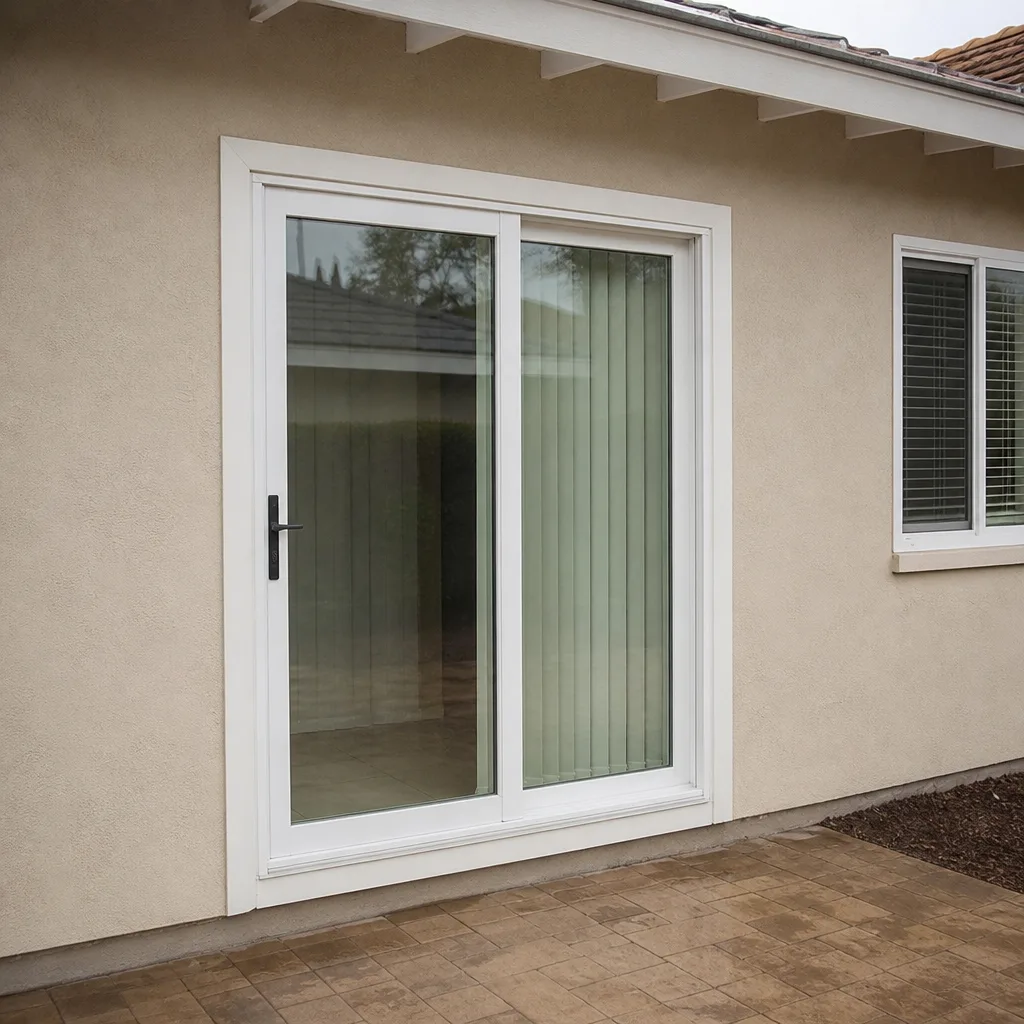
See the difference
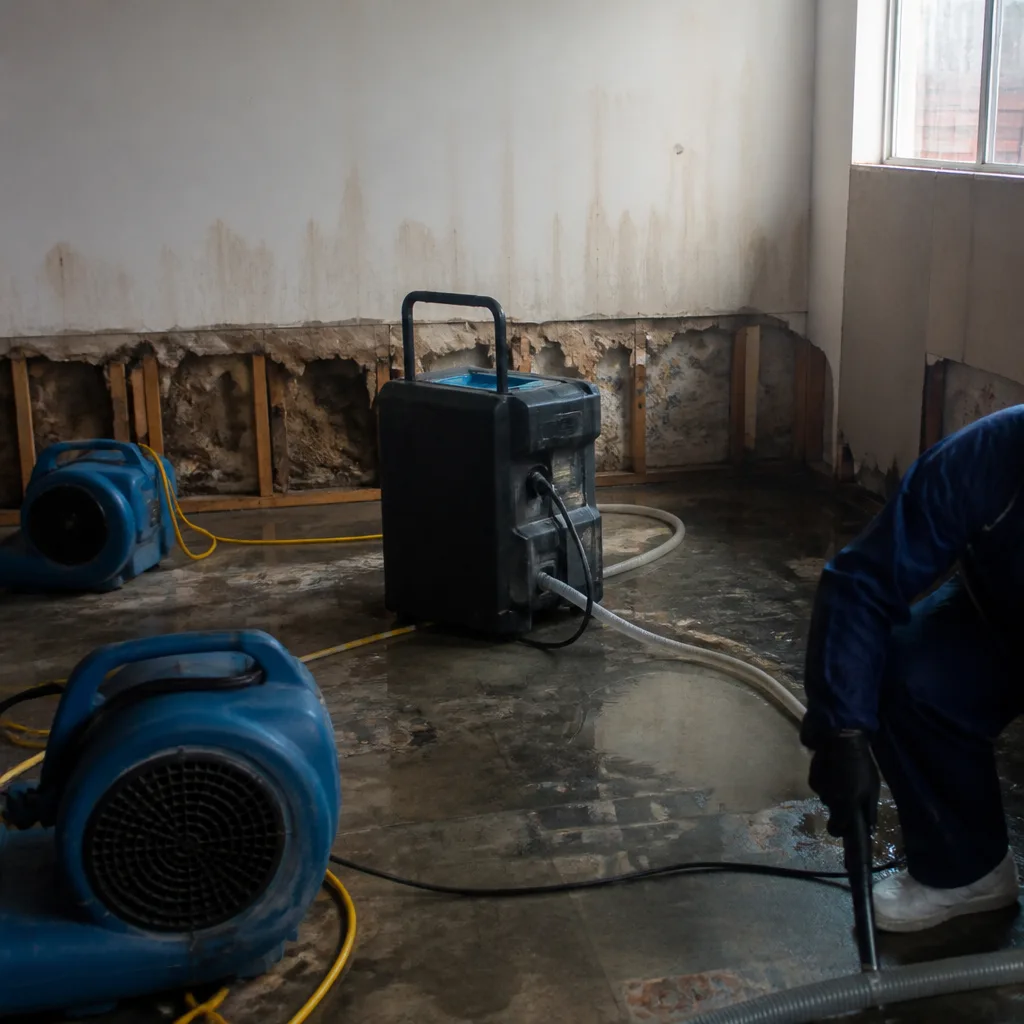 Before
 After
 Before
 After
 Before
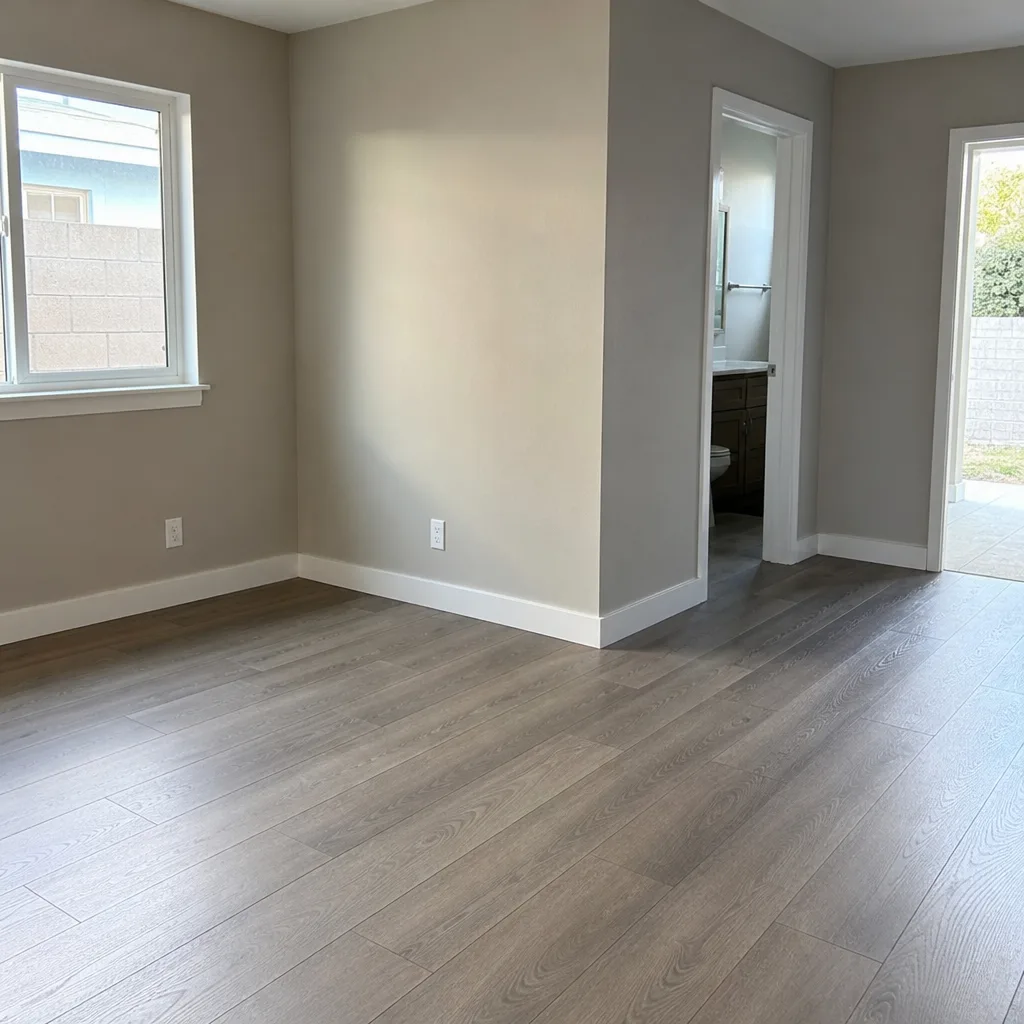 After
Frequently Asked Questions
Water damage restoration in Ontario typically takes three to seven days for the drying phase, depending on the water class and the materials affected. Class 1 losses with low-porosity surfaces may dry in two to three days; Class 4 deep-saturation losses involving hardwood, plaster, or concrete can run seven days or more. Drying time is determined by moisture content readings, not a fixed schedule. Call (833) 589-8366 for a realistic timeline based on your specific loss.
Mitigation is the emergency phase: stopping the water source, extracting standing water, removing unsalvageable materials, and setting up drying equipment. Restoration is the repair phase: rebuilding walls, replacing flooring, restoring the property to pre-loss condition. In Ontario, the two phases are often contracted separately, which is why a restoration partner who handles the full sequence – mitigation, drying validation, and repair – eliminates coordination gaps between companies.
Insurance coverage for mold remediation depends on the cause of the mold and the terms of your specific policy. Mold caused by a sudden, covered water loss – a burst pipe, for example – is often covered, while mold from long-term neglect or lack of maintenance typically is not. The documentation matters: adjusters look for evidence that the mold was caused by a covered peril and that remediation followed IICRC-aligned standards. If you’re working through a mold situation, we can help you document the claim from day one.
Consumer fans and rental dehumidifiers move air and remove some moisture, but they don’t produce the airflow volumes or extraction rates needed for structural drying. The spaces that matter most – wall cavities, sub-floors, layered flooring assemblies – are exactly the spaces consumer equipment can’t reach. Professional drying fleets using Dri-Eaz, Phoenix, and XPOWER equipment paired with Injectidry structural systems dry in days what rental equipment leaves damp for weeks. That trapped moisture is where mold starts.
Signs of hidden water damage include musty or damp smells, peeling or bubbling paint, warped baseboards, staining on ceilings or walls that changes over time, and higher-than-normal indoor humidity. Some hidden damage produces no visible sign at all, especially in Ontario’s dry climate where surface evaporation masks cavity moisture. Professional moisture mapping using penetrating meters can identify trapped moisture behind surfaces before you see any visible evidence.
Mold testing is not always required before remediation, but it becomes valuable in specific situations: when you suspect hidden mold with no visible growth, when an insurance claim requires damage documentation, or when a medical condition makes exposure risk a serious concern. S520-aligned remediation focuses on fixing the moisture source and removing the contamination regardless of species. Post-remediation verification testing confirms the fix worked. Call (833) 589-8366 if you’re not sure whether testing is warranted for your situation.
After a fire in Ontario, the immediate priorities are safety and stabilization: confirm the structure is safe to enter, shut off utilities if instructed to do so, and contact a restoration provider for emergency board-up to protect the property from weather and intrusion. Don’t attempt to clean soot yourself – soot is acidic and improperly cleaning it can drive it deeper into porous surfaces. The faster professional soot neutralization begins, the fewer permanent surfaces get etched or stained. Call (833) 589-8366 for emergency fire damage response.
Dorchester Water Damage handles the full loss event sequence: water extraction, structural drying, mold remediation, and fire damage restoration including the necessary repair coordination. We don’t hand you off to a general contractor at the halfway point. One accountable company runs the documentation trail from initial assessment to completion report, which simplifies the claims process and eliminates finger-pointing between separate vendors. For a full explanation of our service areas, see Water Damage Restoration in Muscoy, Mold Remediation in Muscoy, and Fire Damage Restoration in Muscoy.
The Bottom Line
Damage restoration in Ontario isn’t a task; it’s a documented sequence, and the documentation matters as much as the work itself. Category classification drives equipment decisions. Structural drying drives mold prevention. Soot neutralization drives odor permanence. And psychrometric data logs, clearance verification, and written scopes drive insurance outcomes. Hiring a restoration partner who understands this sequence – and can produce the paper trail that proves it – is the difference between a job that’s finished and a job that’s merely quiet for a while. If you’re facing a water, mold, or fire loss in Ontario, call (833) 589-8366 for a free estimate and a written scope you can trust. You can also explore more guides & resources on our blog.
Written by the team at Dorchester Water Damage, serving Ontario since 2018.