
 Water damage drying
 Fire & smoke cleanup
 Mold remediation
 Storm response
 Sewage cleanup
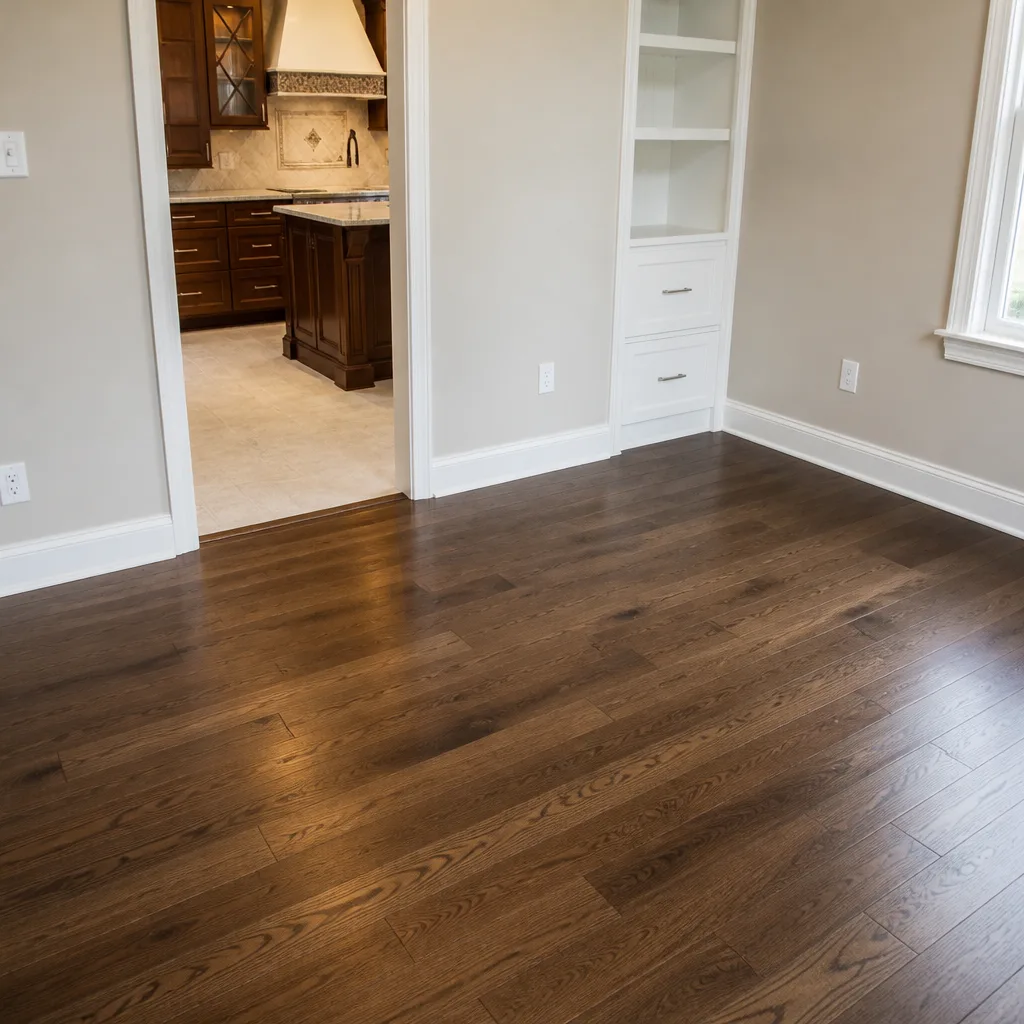
 Reconstruction
Free visual inspection and a written scope of work before any mitigation begins - photos, moisture readings, and drying logs go in your claim file
The scope we write is the scope we bill. Anything new gets shown to you, in writing, before we touch it.
Get your free estimateFast, Reliable Water Damage Restoration Across Stanton
Water damage restoration in Stanton, CA typically costs $1,800 – $4,200 for a standard single-room mitigation and runs $4,000 – $11,000 when structural drying involves shared walls or slab leaks. Most Stanton jobs we handle are from 1950s and 60s tract homes where original galvanized plumbing has finally failed under the slab or a storm has driven water past shallow roof overhangs. If you’re standing in water right now, call (833) 589-8366. We dispatch crews to Stanton within 60 – 90 minutes, and the first hour determines whether this stays a one-house problem or becomes a two-house one.
Why Dorchester Water Damage Is Stanton’s Preferred Water Damage Restoration Company
Stanton’s wall-to-wall construction changes how water damage has to be handled. A mitigation crew that treats this city like any other suburban grid will dry your floors and push moisture into your neighbor’s framing. We’ve seen it happen. Our Water Damage Restoration team runs containment and moisture mapping on both sides of a shared wall as standard practice here, because the setbacks are too tight to pretend the properties are independent.
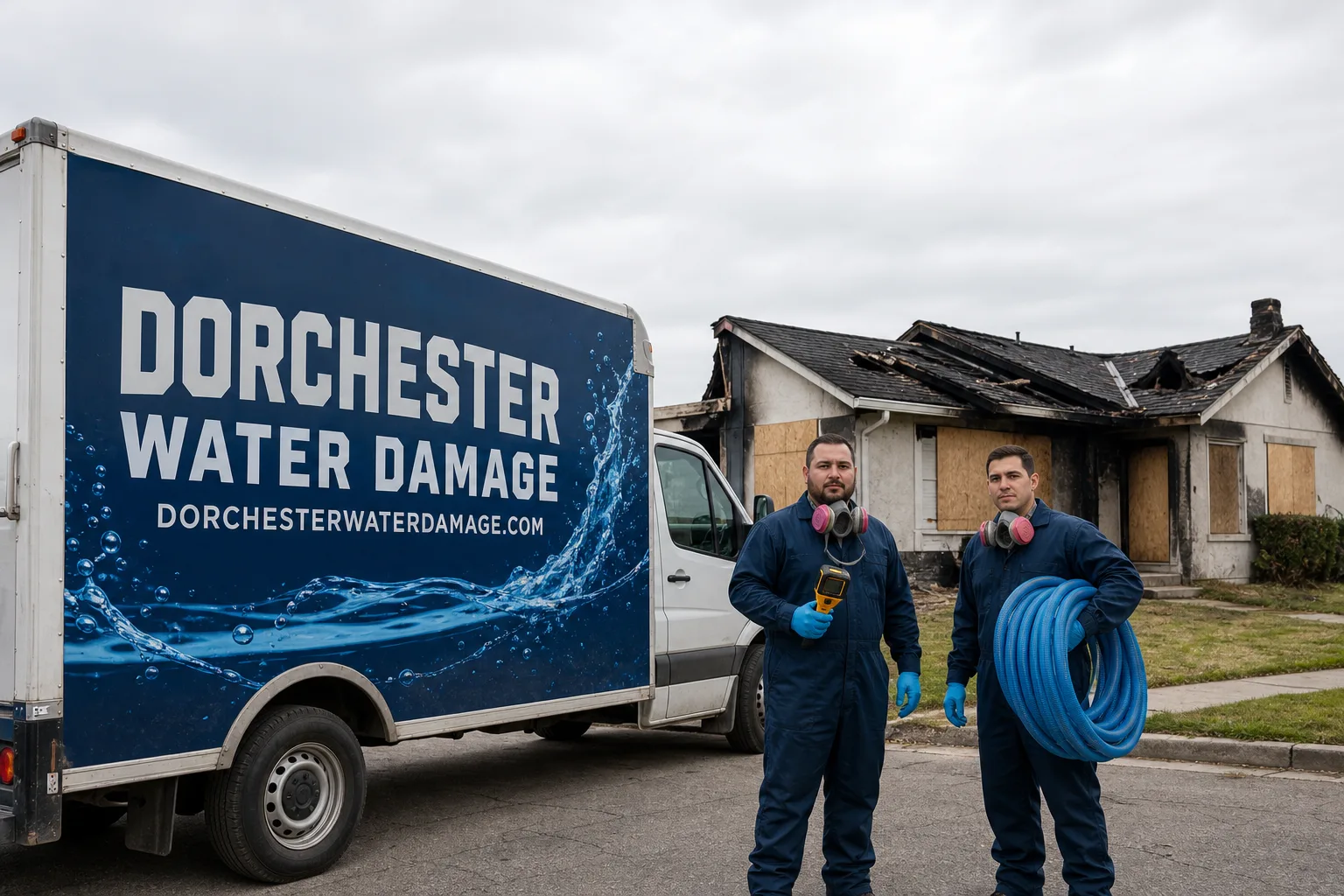
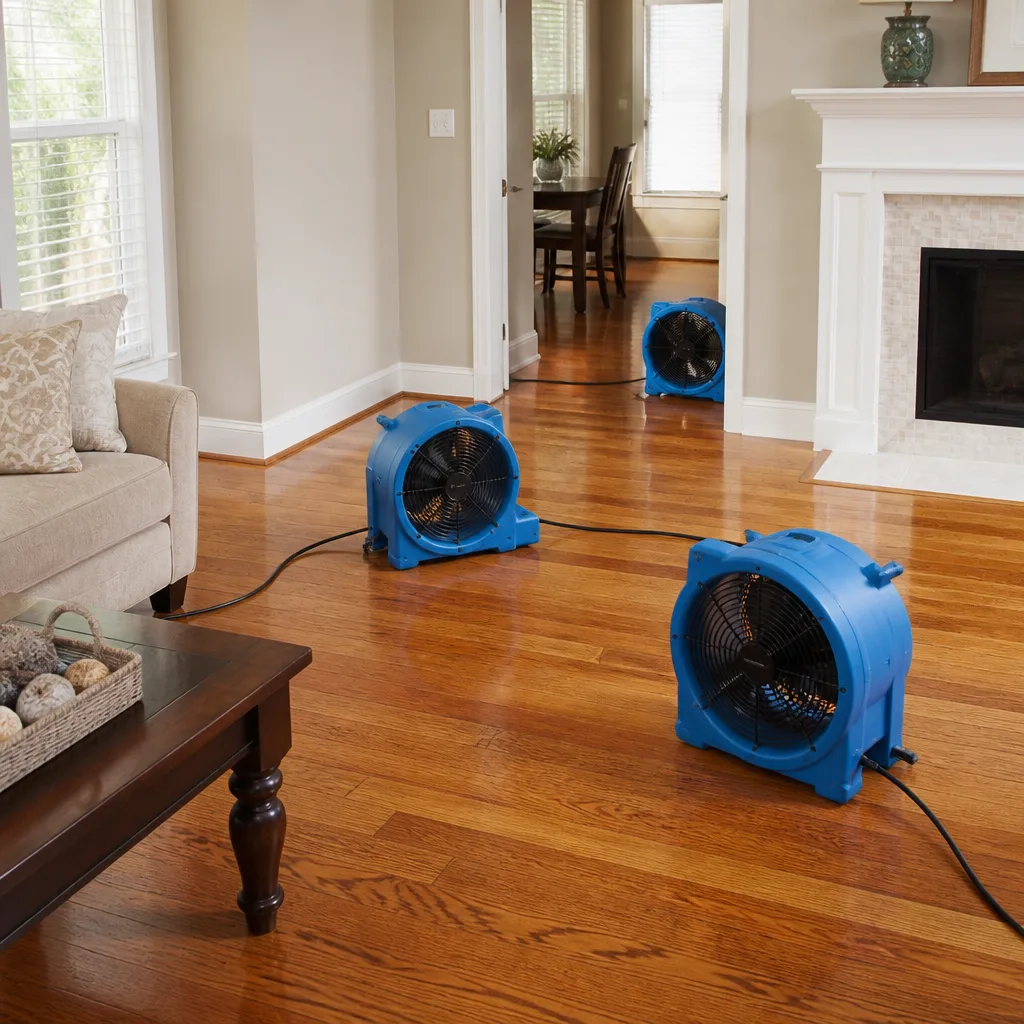
Glen Pacheco built Dorchester Water Damage around professional-grade equipment and documented process. When we show up in Stanton with Dri-Eaz air movers, Phoenix dehumidifiers, and Injectidry wall-cavity drying systems, adjusters recognize the equipment list. That matters when your claim is being reviewed. Our work is logged, photographed, and tied to pre-loss condition from the first day, which means your insurer gets documentation they can actually process without sending everything back for clarification.
Local response matters more in Stanton than in most Orange County cities. A home on Cerritos Avenue or a tract street off Beach Boulevard is minutes from a neighbor’s bedroom wall. Our crews know that when we arrive, the first call is often to the next-door property owner, not just the homeowner who called us. That’s not something a generalist contractor from outside the area thinks about until it’s already a dispute.
Restoration work we handle
Flood Damage Restoration in Stanton
Flood Damage Restoration in Stanton usually means one of two things: storm water driven in through a failing roof or window, or a supply line or water heater flood that has run across slab-on-grade flooring into baseboards and drywall. The work involves water extraction, containment, structural drying with professional-grade equipment, and moisture mapping to confirm the framing, not just the carpet, is dry. A single-room flood cleanup in Stanton runs $1,200 – $2,800; a whole-house flood event with structural drying typically lands between $5,000 and $9,500 depending on how far water has traveled through the slab and shared walls.
Storm-Driven Roof and Window Intrusion
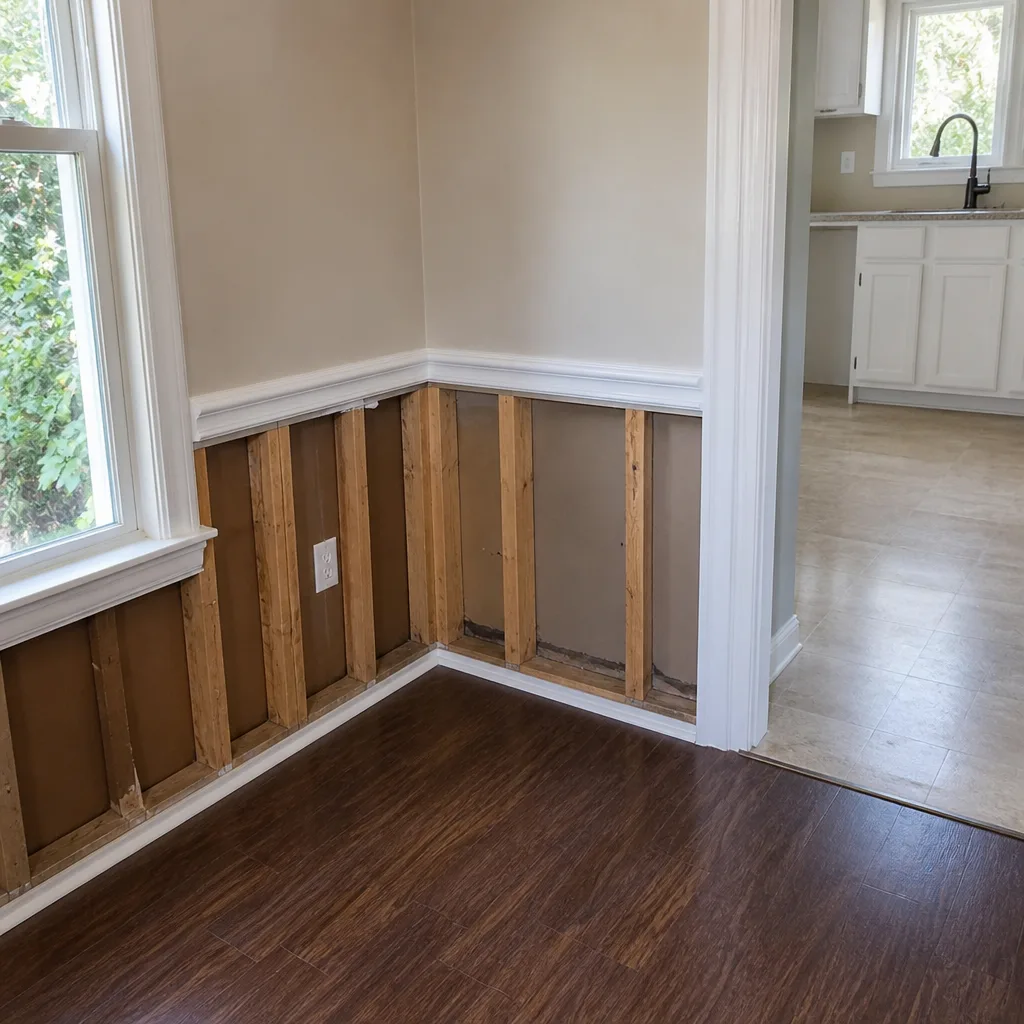
Stanton’s 1950s and 60s homes have shallow roof overhangs, and decades of dry-rot around fascia boards and window frames create entry points when winter rain hits hard. Water runs inside the wall cavity, saturates insulation, and starts wicking through drywall. By the time staining shows on the ceiling, the framing behind it has been wet for days. We cut containment, pull wet insulation, and run Injectidry systems inside the wall cavity itself, which dries the structure without tearing out every sheet of drywall.
Slab Leaks That Surface as Flooding
Original galvanized plumbing under a Stanton slab fails slowly, then catastrophically. Homeowners often report hearing water run when no fixtures are on, then suddenly finding an inch of water across the kitchen floor. We extract first, then map moisture through the slab and into any shared walls, because that water has been moving laterally for weeks before it surfaced. This is the scenario where drying the neighbor’s side is most often required.
Water Damage Cleanup in Stanton
Water Damage Cleanup in Stanton is the first four to six hours after a loss: extraction, removal of unsalvageable materials, sanitizing, and setting the drying system. In older tract homes with original hardwood or laminate over concrete slab, this phase determines what can be saved. A standard water cleanup in Stanton with no structural saturation runs $900 – $2,200; cleanup that includes pulling baseboards, drilling weep holes, and addressing category 2 or 3 water runs $2,500 – $6,000. The sooner extraction starts, the less demolition follows.
Category 2 Water in Older Stanton Homes
When a washing machine drain backs up or a dishwasher line leaks across a 1960s kitchen, the water picks up contaminants from the slab and old building materials. That’s category 2, and it changes the cleanup protocol. We remove affected porous materials, sanitize the slab and framing, and document every step so your insurer sees the water category call was made correctly. In homes where water has sat under flooring for a week or more, we’re often already looking at category 3 and a mold response alongside the water cleanup.
Protecting What’s Still Dry
Containment isn’t just for mold. In Stanton’s narrow-lot homes, running air movers without containment pushes humid air into adjacent rooms, closets, and sometimes through shared walls into the neighbor’s interior. We set negative air pressure on the affected area before drying starts. That keeps the wet zone contained and prevents secondary damage to areas that never got wet. It’s standard on every Stanton job because the floor plans are tight and the wall assemblies are shared.
Trusted Brands We Service in Stanton
When you call us for water damage in Stanton, the equipment that arrives is what commercial restoration firms run: Dri-Eaz dehumidifiers and air movers, Phoenix axial fans, XPOWER air scrubbers, and Injectidry wall-cavity drying panels. We stock HEPA filters, extraction hoses, and replacement parts for these systems locally, so a mid-job equipment swap doesn’t mean waiting on an out-of-state supplier. For Stanton homeowners and property managers, that’s the difference between drying completed in 3 – 4 days and drying that drags on while a rental blower limps along. Glen Pacheco made the call early: professional-grade equipment, not hardware-store fans, on every single water loss.
Common Water Damage Restoration Problems We See in Stanton Homes
- Slab leaks that run for weeks before surfacing. Original galvanized supply lines fail slowly under 1950s and 60s slabs, and water travels laterally through the concrete and into shared walls long before a homeowner sees a puddle. By the time we’re called, the neighbor’s garage or bedroom wall is often already showing moisture. This is the single most common call pattern in the 90680 grid.
- Shared-wall wicking between tract homes. Wall-to-wall construction with zero lot lines means a saturated wall assembly in one house is directly coupled to the next house. We set containment and drying on both sides of the property line as one continuous job, with moisture readings on both structures logged to the same drying report.
- Roof and fascia rot from shallow overhangs. Stanton’s post-war homes were built with minimal roof projection, which means decades of winter rain have worked on window headers and fascia boards. When a storm finally drives water in, the leak is often far from where the staining appears. Moisture mapping through ceiling and wall cavities is how we find the actual path.
- Stucco hiding saturated framing. Stucco-on-wood-frame construction looks fine on the outside while the framing behind it stays wet for days or weeks. Surface-level drying tests give a false all-clear. We use penetrating moisture meters and in-wall drying systems to document that the structure itself, not just the drywall face, has returned to pre-loss moisture content.
See the difference
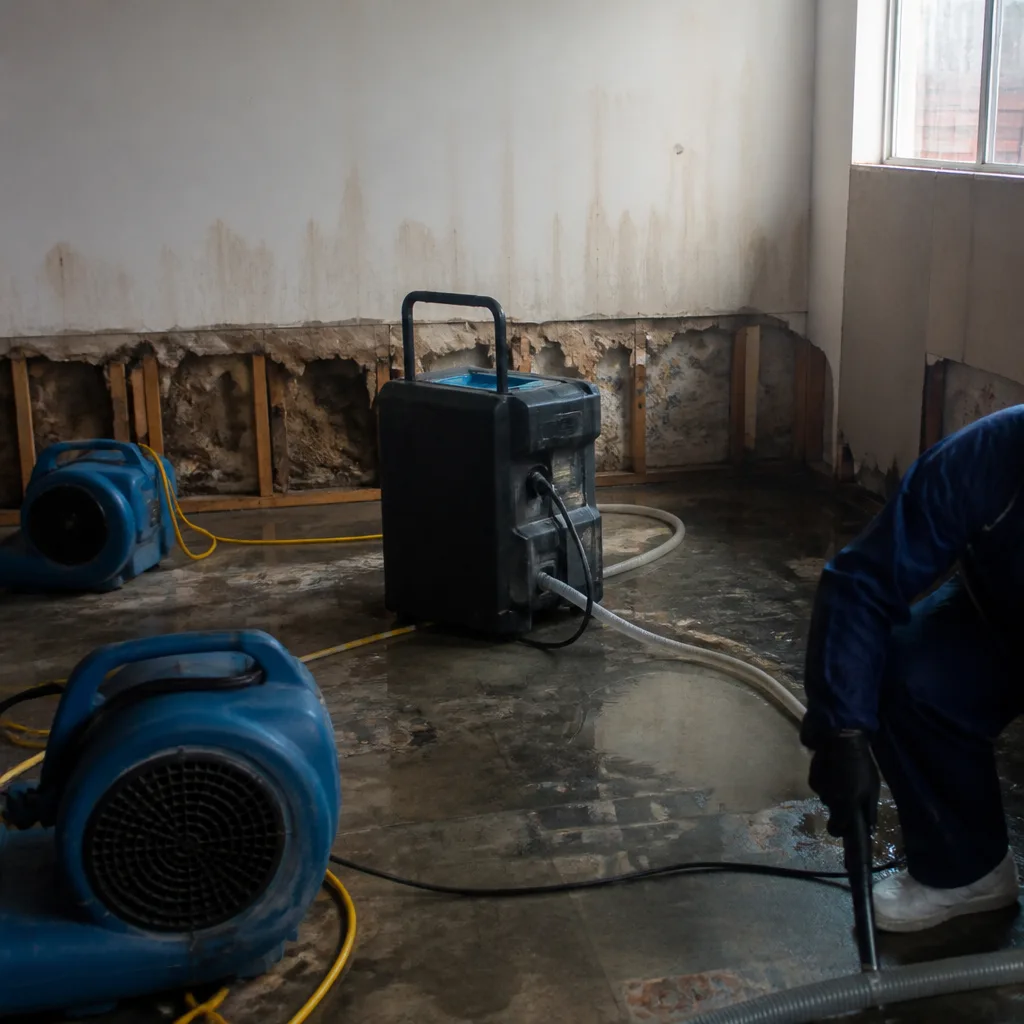 Before
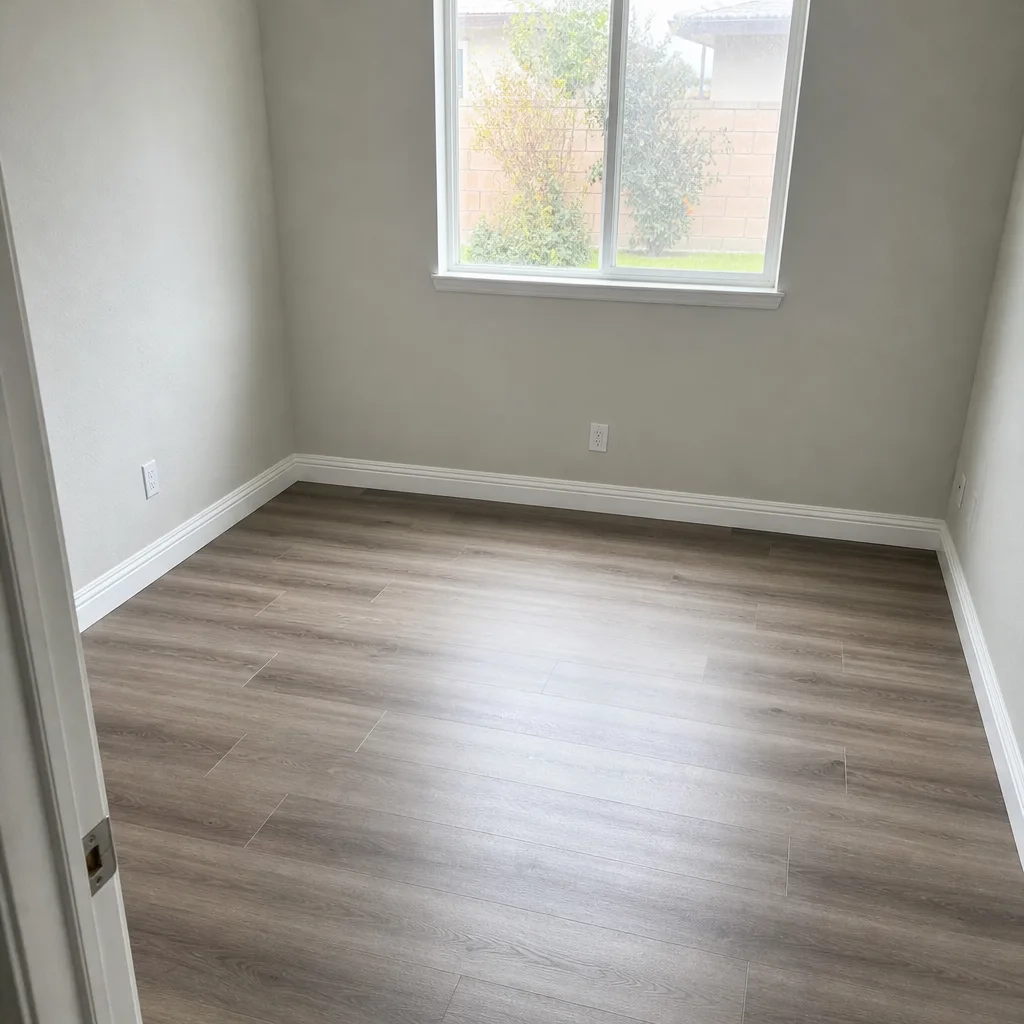 After
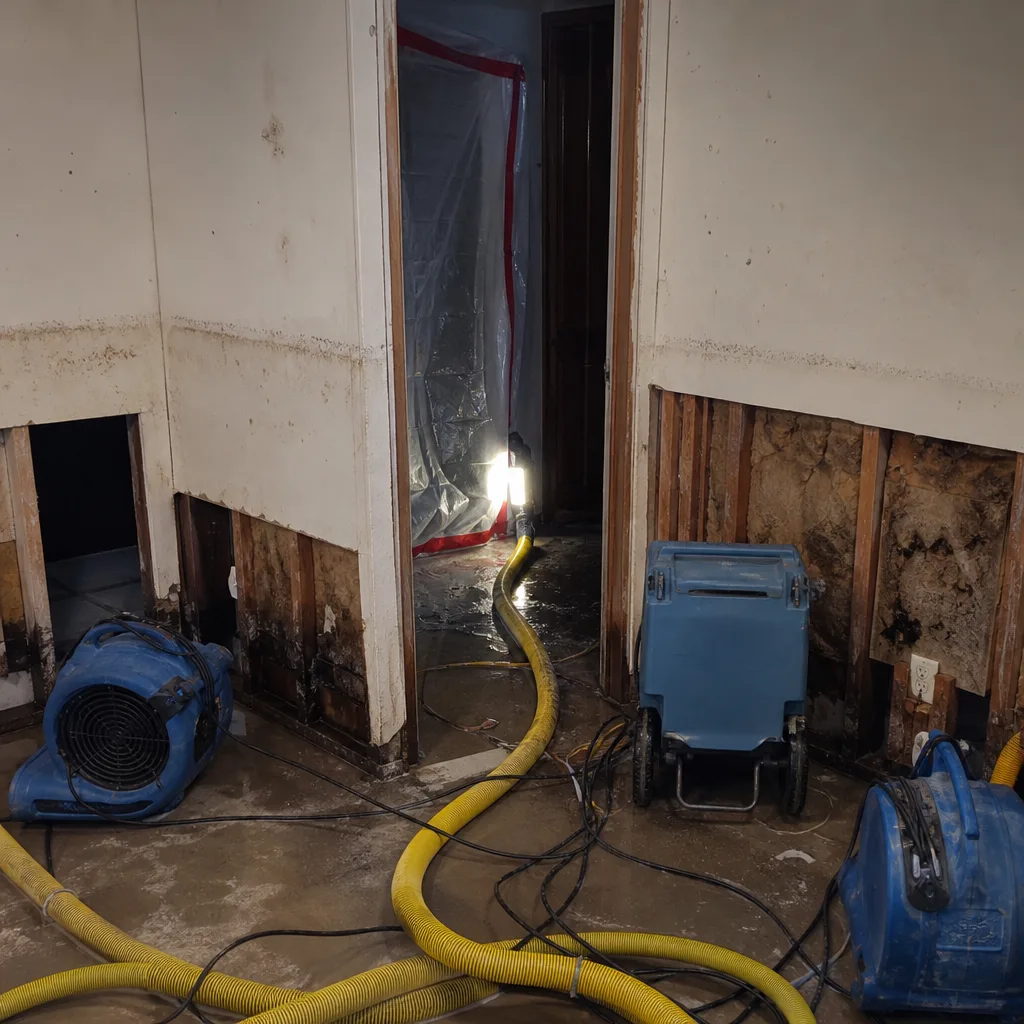 Before
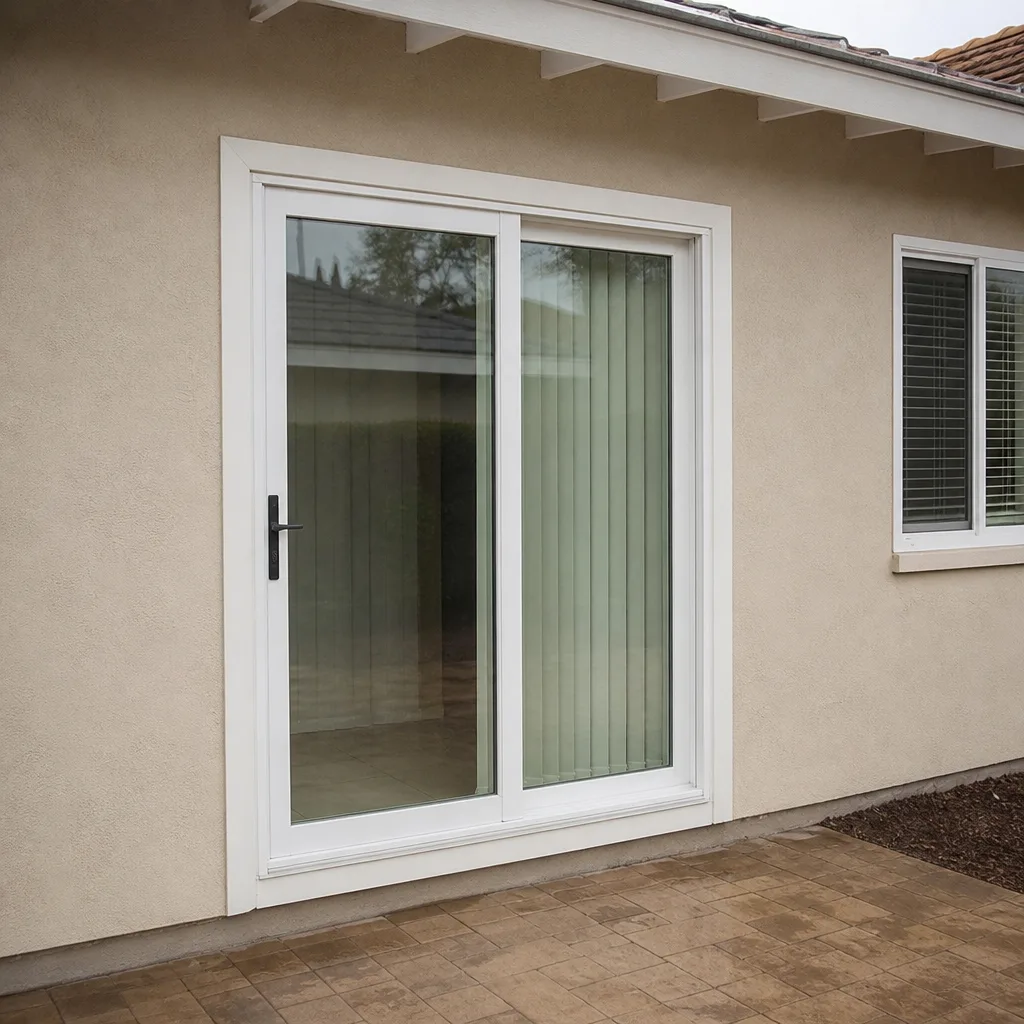 After
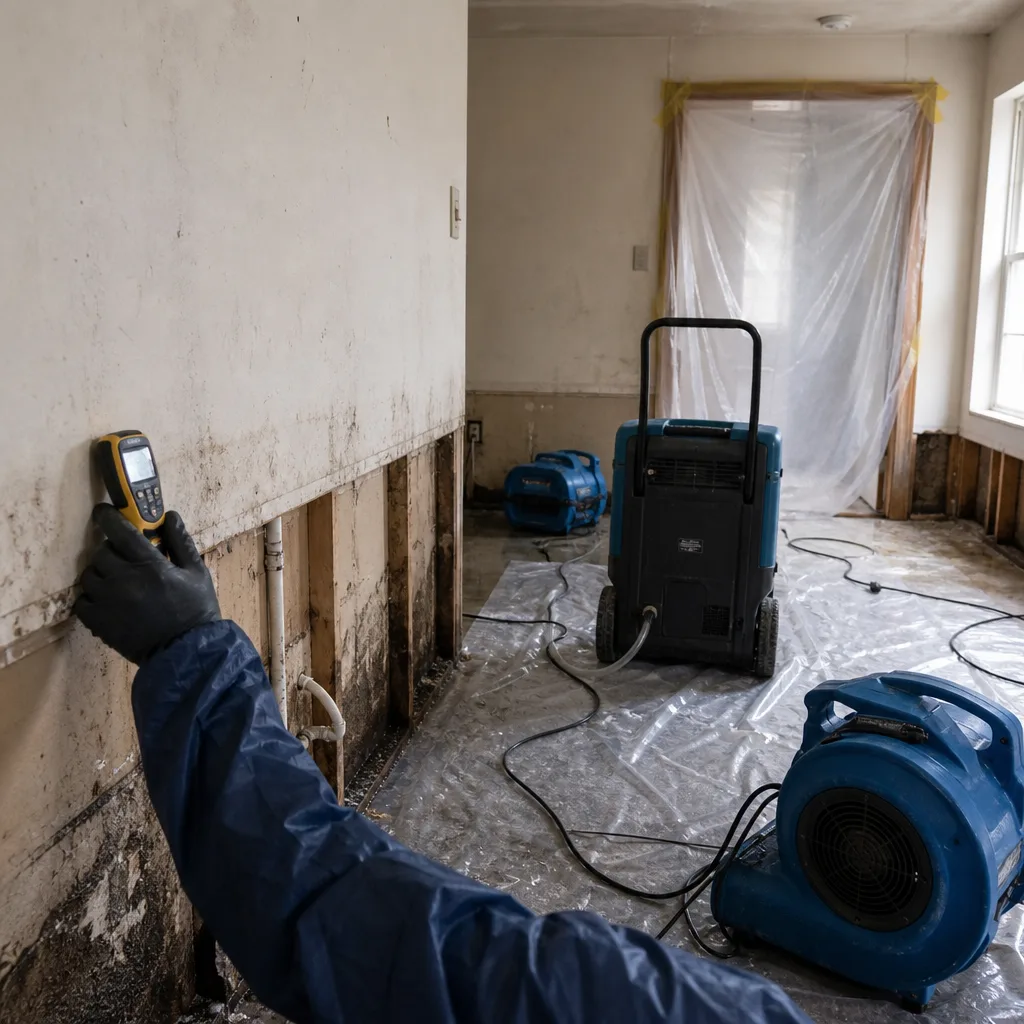 Before
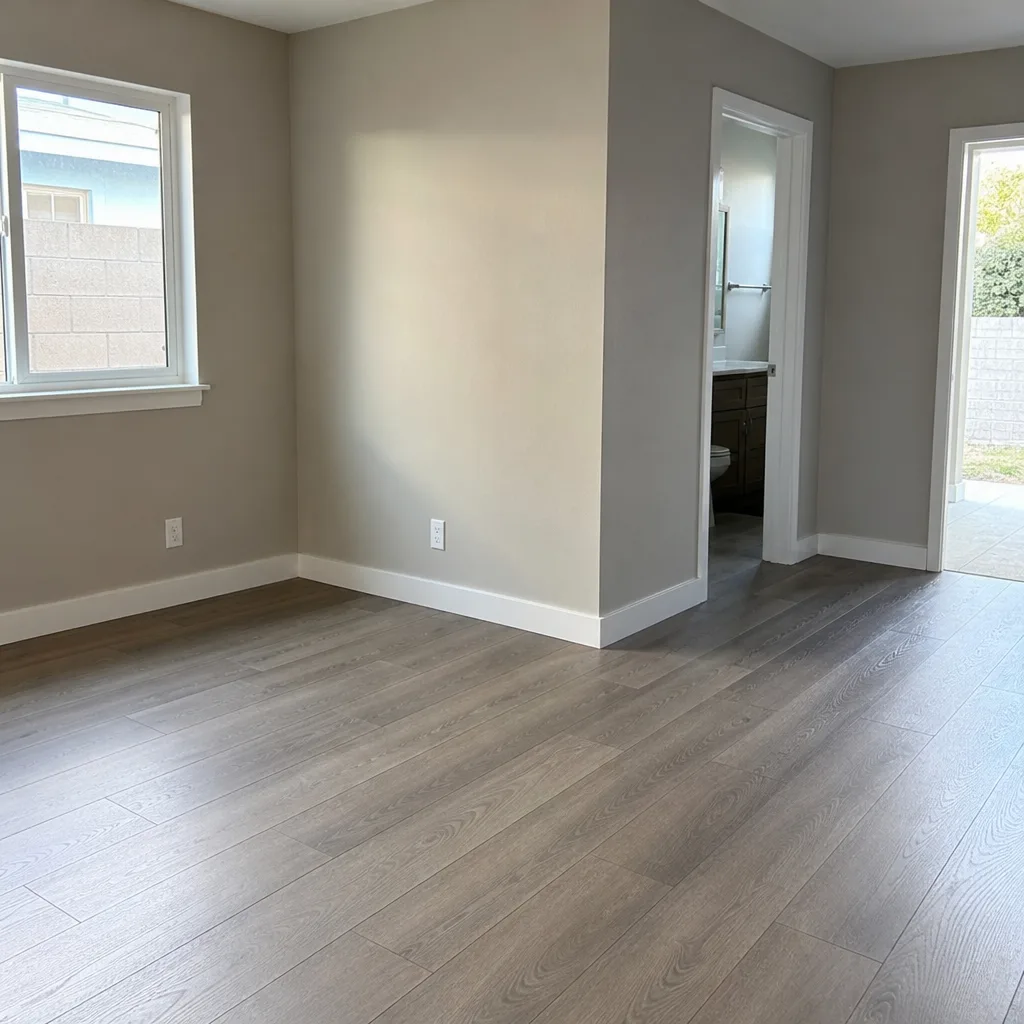 After
Pricing for Water Damage Restoration in Stanton, CA
We Also Serve Cities Near Stanton
Our crews cover Water Damage Restoration in Stanton and the surrounding Orange County grid daily, including Garden Grove, Cypress, Westminster, and Midway City. If your property sits across a city line but you’re dealing with the same 1950s tract construction and slab plumbing, the same protocols apply. We run one continuous service area through this corridor, so the crew that answers in Stanton is the same crew that handles the neighboring zip codes.
Serving Stanton, CA — Our Local Coverage Area
We’re based in the Stanton area and know this community well. Use the map below to see our service coverage — if you’re nearby, we can almost certainly help.
FAQs About Water Damage Restoration in Stanton
Why does a water loss in Stanton so often mean drying the neighbor’s house too?
Because Stanton’s tract homes are built wall-to-wall with zero lot lines, so a saturated wall assembly in one house is physically coupled to the wall assembly next door. Moisture wicks through the shared framing, and without containment on both sides, you dry one house and push water into the other. We treat the shared wall as one continuous drying zone, set air movement and dehumidification on both properties, and log moisture readings for both structures. Call (833) 589-8366 if you suspect your neighbor’s leak is wetting your wall.
A slab leak soaked the floor of my 1960s Stanton tract home. What does the crew actually do first?
We extract standing water, shut down the affected area, and map moisture through the slab and into every shared wall before a single piece of equipment is placed. The water has likely been moving laterally under your slab for weeks, so the visible puddle is the last symptom, not the first. Then we set containment, pull baseboards where needed, drill weep holes in wet drywall, and position Dri-Eaz air movers and dehumidifiers with a drying plan logged from hour one. Estimates are free at (833) 589-8366.
How fast does mold matter after a Stanton storm leak?
Mold colonization starts within 24 – 48 hours of water intrusion in Stanton’s climate, and the stucco-on-wood-frame construction means the wet material is hidden behind the wall surface where you can’t see it. We treat any storm leak older than a day as a potential mold response, which means containment, air scrubbing, and drying to a documented standard rather than just extracting visible water. Drying begins on the first visit, not after an estimate is approved.
Does the category of water change what you can save in an older Stanton home?
Yes, and it’s a bigger factor in Stanton than in newer construction because the original building materials are more porous and the slab has decades of accumulated contaminants. Category 1 water from a supply line can often be dried in place; category 2 water from washing machine or dishwasher overflows means removing saturated baseboards and pad and sanitizing the slab; category 3 water from sewage or long-standing storm intrusion means cutting drywall and removing insulation. We document the water category call so your insurer sees the reasoning, which protects your claim.
What equipment do you bring for a water loss in Stanton’s 1950s – 60s homes?
We run a professional drying fleet from Dri-Eaz, Phoenix, XPOWER, B-Air, and Injectidry, the same brands commercial restoration firms use nationwide. For Stanton specifically, the Injectidry wall-cavity and structural drying systems matter most, because they pull moisture out of the wall assembly itself without requiring us to tear out every sheet of drywall and stucco on day one. That means less demolition, less reconstruction cost, and a faster return to pre-loss condition.
Call Dorchester Water Damage for Stanton Water Damage Restoration
If you have water moving through a Stanton slab, wicking through a shared wall, or dripping past a rotted fascia board, call (833) 589-8366 now. Glen Pacheco and our crew will get to your property fast, set containment, and start extracting water on the first visit. We document everything for your insurer, we write a scope of work before we cut anything open, and we dry the structure, not just the surface.
Written by Glen Pacheco, Owner at Dorchester Water Damage, serving Stanton and Orange County since our first water loss response.