Last updated October 30, 2026
 Water damage drying
 Fire & smoke cleanup
 Mold remediation
 Storm response
 Sewage cleanup
 Reconstruction
Free visual inspection and a written scope of work before any mitigation begins - photos, moisture readings, and drying logs go in your claim file
The scope we write is the scope we bill. Anything new gets shown to you, in writing, before we touch it.
Get your free estimateChoosing the Right Damage Restoration Brand: A Buyer’s Guide for Ontario
Most homeowners in Ontario pick a restoration company the same way they’d pick a pizza place: they glance at the name on the truck, maybe check a review, and hope for the best. That’s a costly approach when you’re dealing with water in wall cavities or smoke residue in ductwork. The franchise name painted on a van tells you almost nothing about the specific equipment that will roll through your door, the certifications of the actual technicians on site, or whether the drying plan will hold up when your insurer’s adjuster reviews the file. This guide will walk you through what actually separates a professional restoration operation from a marketing shell, using the Ontario market as our reference point. For a deeper dive, see The Complete Guide to Damage Restoration in Ontario. You’ll learn how to verify credentials directly, what equipment numbers to demand, and how to evaluate documentation standards before you sign anything.
Quick Answer
When choosing a damage restoration company in Ontario, CA, ignore the brand name and evaluate three things instead: the equipment manifest (professional brands like Dri-Eaz, Phoenix, and Injectidry versus rental-store fans), verifiable technician certifications through the IICRC registry, and the documentation package the company produces for insurance purposes. A locally owned operation with dedicated professional equipment and IICRC-aligned methodology will typically outperform a franchise crew working with pooled or rented machinery. Request the equipment list and certification numbers before the first truck arrives.
Restoration work we handle
Table of Contents
- The Franchise Myth: Why the Name on the Truck Doesn’t Match the Crew Inside
- The Equipment Manifest: What Pro Gear Actually Looks Like
- How to Verify IICRC Certification (The Registry Method)
- Documentation Standards: What Your Insurer Actually Needs
- The Equipment-to-Area Ratio Benchmark
- Local Operations vs. Franchise Crews: What We See in Ontario
- Evaluating a Contractor’s Adjuster Relationship Track Record
- Common Mistakes to Avoid
- When to Call a Professional
- Frequently Asked Questions
- The Bottom Line
The Franchise Myth: Why the Name on the Truck Doesn’t Match the Crew Inside
A nationally recognized restoration brand on the side of a van creates instant trust. That’s the point of the franchise model. But here’s what the marketing doesn’t tell you: franchise compliance audits happen periodically, not per job. The crew dispatched to your home in Ontario may be a subcontractor with no direct employment relationship to the brand. They may have completed the franchise’s internal training, or they may have been onboarded last week because a storm surge overwhelmed the regular roster.
We’ve walked into homes where a homeowner assumed IICRC-certified technicians were handling their water damage because the franchise website prominently displayed the logo. The actual tech on site was a day laborer following verbal instructions. The drying equipment was consumer-grade. The moisture readings weren’t documented. The claim still paid out, but the structure retained moisture for weeks, and a mold problem followed.
This isn’t an argument against franchises. It’s an argument for verification. The brand name on the truck is a marketing signal, not a quality guarantee. What matters is the specific equipment in that truck and the specific certification status of the individual standing in your living room with a moisture meter.
The Equipment Manifest: What Pro Gear Actually Looks Like
Professional restoration equipment is not subtle. If a crew shows up with a dozen box fans from a hardware store and one dehumidifier that looks like something you’d buy for a damp basement, you’re not getting structural drying. You’re getting surface drying. The difference matters more than most homeowners in Ontario realize.
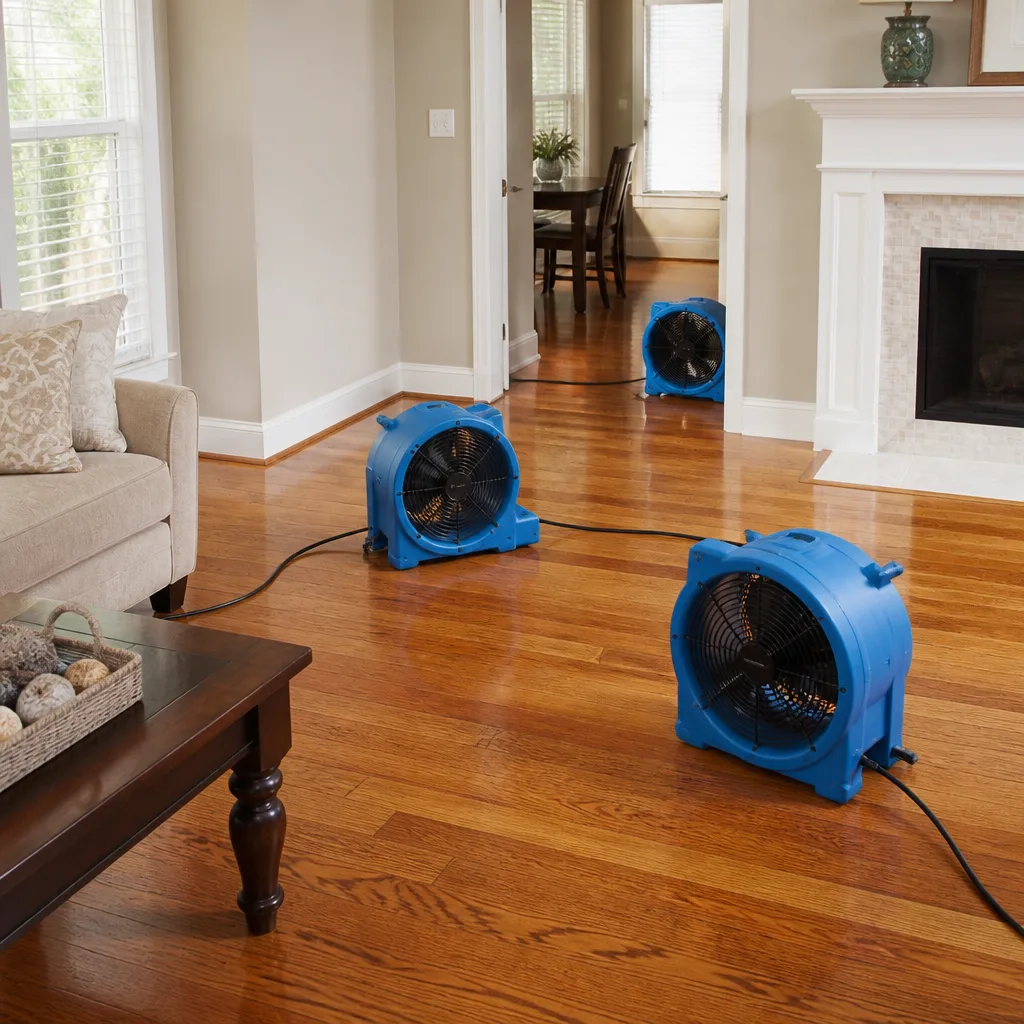
Legitimate restoration operations run professional drying fleets built around specific brands. Dri-Eaz, Phoenix, XPOWER, and B-Air are the names that show up on commercial restoration job sites and in the equipment manifests insurance adjusters recognize. These units move significantly more air than consumer models and pull moisture at rates that make structural drying possible within days rather than weeks.
Here’s a practical checklist of what to look for:
- LGR dehumidifiers: Low-grain refrigerant units, typically Dri-Eaz or Phoenix models, mounted on wheels and heavy enough that you wouldn’t want to carry one upstairs alone. If the dehumidifier looks like something you could buy at a big-box store, it probably is.
- Centrifugal air movers: Professional air movers are compact, directional, and loud. Brands like XPOWER and B-Air produce units that move 2,000-plus CFM. Box fans do not replace them.
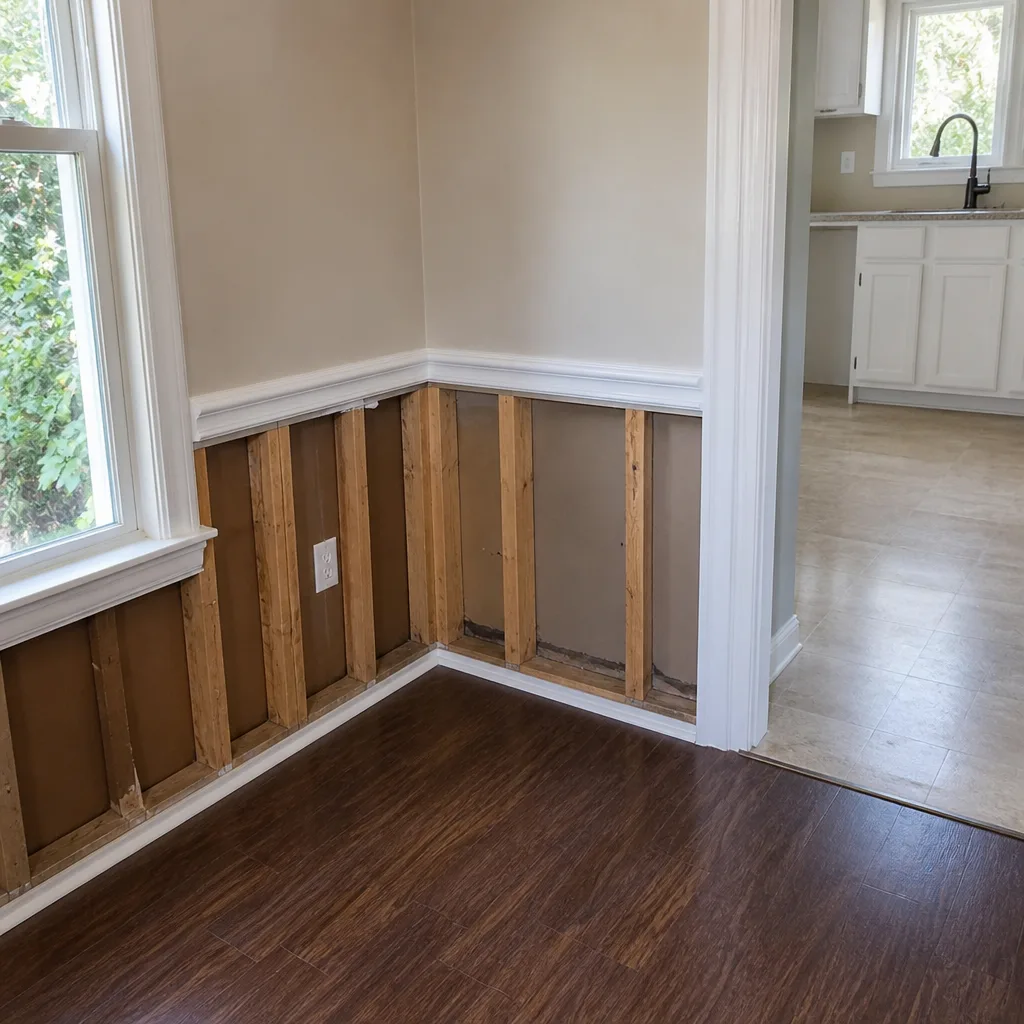
- Injectidry systems: This is the real differentiator. Injectidry panels force dry air into wall cavities and under sub-floors, extracting moisture from inside structural spaces without defaulting to demolition. If a contractor’s answer to wet walls is always a sledgehammer, they don’t have structural drying capability.
- Moisture meters and thermal imaging: A serious operator carries penetrating and non-penetrating moisture meters, plus a thermal imaging camera for mapping. If the tech is using touch and smell to assess moisture, walk away.
When you’re comparing companies in Ontario, ask for the equipment manifest before signing. Any legitimate operation will tell you exactly what they’re bringing.
How to Verify IICRC Certification (The Registry Method)
The IICRC (Institute of Inspection, Cleaning and Restoration Certification) is the recognized standard-setting body for the restoration industry. When we say our process is IICRC-aligned, that means our methodology follows the technical frameworks insurers, adjusters, and property managers recognize. Many companies claim IICRC certification. Fewer bother to keep their technicians individually certified, because certification costs money and requires ongoing education.
Here’s the step-by-step method to verify a technician’s certification directly, rather than trusting a company’s self-reported credential claims:
- Ask for the technician’s full name and IICRC certification number. Not the company’s certification. The individual who will actually perform the work. If the company hesitates or offers only a company-level credential, that’s a red flag.
- Visit the IICRC Global Locator. Search for the technician by name or certification number. The registry lists certified individuals, not just companies.
- Check the certification category. IICRC credentials are category-specific. A technician certified in carpet cleaning is not certified in water damage restoration (WRT) or applied structural drying (ASD). Ask for WRT or ASD specifically.
- Verify recertification status. IICRC certifications expire and require continuing education credits to renew. A certification earned in 2015 and never renewed is not current.
- Ask who performs the final moisture assessment. The certified technician should be present for initial assessment, monitoring, and final clearance. A company that sends a certified tech for the sales call and uncertified labor for the work is not delivering certified work.
In our experience serving Ontario, very few homeowners perform this verification. The ones who do tend to be working with an adjuster who’s flagged a prior bad experience. You don’t need to become a restoration expert. You just need to verify that the person who showed up is the person with the credential.
Documentation Standards: What Your Insurer Actually Needs
Insurance claims don’t fail because the drying didn’t work. They fail because nobody can prove the drying worked. When your adjuster reviews a water damage claim, they’re looking for documentation that demonstrates the loss was properly mitigated and the scope of work was justified. A restoration company that hands you a one-page invoice with a total at the bottom has not provided documentation your insurer can work with.
Serious restoration operators produce a documentation package that includes several specific deliverables. Here’s what to ask for:
- Daily psychrometric logs: Temperature, relative humidity, and specific humidity readings recorded at every visit. These logs show the drying curve and prove the environment was trending toward dry. A company that doesn’t log daily readings is guessing.
- Moisture mapping overlays: A diagram of your affected area with moisture readings marked at each measurement point. This shows the extent of the loss on day one and the progress on subsequent days. It takes a technician with a moisture meter and the discipline to record readings systematically.
- Equipment placement diagrams: A layout showing where air movers and dehumidifiers were placed and when they were moved. This matters to adjusters because improper placement can extend drying time, and extended drying time raises questions about the contractor’s competence.
- Photo documentation: Comprehensive photos from day one through completion, including pre-existing conditions, the affected areas, equipment in place, and the final dry condition. Your insurer will not pay for damage they cannot see.
- Wet-to-dry progression records: Initial moisture content readings, interim readings, and final readings proving the affected materials reached dry standard.
When we handle water damage in Ontario, the documentation is part of the deliverable, not an afterthought. We build the claim file alongside the drying process, because we know the adjuster will review both. That’s the difference between a contractor who does restoration work and one who supports insurance claims professionally.
The Equipment-to-Area Ratio Benchmark
One of the most useful questions you can ask a restoration company in Ontario is simple: how much equipment will you deploy for my square footage? A legitimate operator will answer with specific numbers. A company that hedges, gives a vague range, or changes the subject is planning to under-equip your job.
The IICRC S500 standard, which governs professional water damage restoration, provides guidance on appropriate drying capacity. While the exact configuration depends on the class and category of water loss, here’s a general benchmark for a Category 1 (clean water) loss affecting a typical living area:
- Air movers: One centrifugal air mover per 100 to 150 square feet of affected area, minimum. A 300-square-foot living room with water damage should have at least two to three professional air movers, not one box fan in the corner.
- LGR dehumidifiers: One large-capacity LGR unit (130 to 180 pints per day) for every 800 to 1,200 square feet of affected space, depending on ceiling height and humidity load. Two LGRs are not uncommon for a multi-room loss.
- Structural drying equipment: If walls or sub-floors are affected, injectidry panels or targeted cavity drying should be included. This is not optional equipment. It’s the difference between drying the structure and tearing it out.
- Monitoring frequency: A competent operator returns daily to record readings and adjust equipment placement. Two visits per week is not enough to maintain a proper drying curve.
The numbers matter because under-drying is invisible for weeks. You think the problem is solved. Then the baseboards start to warp, the paint bubbles, and you smell that musty odor that means mold has found a foothold. By then, the original drying crew is long gone, and your insurer is asking why the claim wasn’t handled properly the first time.
Local Operations vs. Franchise Crews: What We See in Ontario
Ontario is a large city with a housing stock that ranges from newer tract developments in the south to older mid-century homes throughout the central corridor. The climate is hot and dry for much of the year, but when the rains come through or a supply line fails in a slab foundation, the damage moves fast. Homeowners here need a restoration crew that can respond with the right equipment on the first trip, not one that has to locate a dehumidifier because the shared equipment pool is committed elsewhere.
Franchise operations have advantages: national standards, marketing reach, and the ability to pull resources from other territories during large losses. But the local franchise’s actual equipment inventory varies widely. Some franchisees own professional gear. Others rely on pooled equipment arranged through the corporate network, which means your job waits while a dehumidifier gets shipped in from another county. Subcontracted crews add another layer of uncertainty, because the crew dispatched to your home may not work directly for the brand at all.
Locally owned operations with dedicated restoration equipment have a structural advantage in per-job reliability. The equipment in the warehouse is the equipment that shows up at your door. There’s no booking system for a shared Dri-Eaz fleet, no waiting on a corporate dispatch decision. When we respond to a water loss in Ontario, the drying fleet runs on our trucks and in our warehouse. It’s ours, it’s maintained, and it’s available now.
That’s not to say every local operator is automatically better. A handyman with a wet vac is a local operator too. The point is that brand affiliation tells you nothing about equipment ownership. Ask the question directly: does the dry-out crew work for you or for a subcontractor? Is the equipment in your warehouse or rented per job?
Evaluating a Contractor’s Adjuster Relationship Track Record
If your loss is covered by insurance, the restoration contractor and your adjuster will be working in the same file. That relationship matters more than most homeowners in Ontario realize. A contractor who has a track record of clean scopes, defensible documentation, and professional communication makes the claim process smoother. A contractor with a reputation for inflated scopes and disputed charges creates friction that lands on you.
Here’s how to evaluate an adjuster relationship before you sign:
- Ask about direct biller status with major California carriers. A restoration company with direct billing relationships has passed the insurer’s vendor vetting process. That’s not a guarantee of quality, but it is a signal that the company’s documentation and pricing have held up under scrutiny before.
- Ask about dispute rate on submitted scopes. This is the question that separates professionals from amateurs. A serious operator can tell you, in approximate terms, how often their scopes come back with line-item disputes from adjusters. If they’ve never had a dispute, they’re either new or not telling the truth. If every scope gets disputed, that’s a red flag too.
- Ask how they handle scope negotiations. The right answer involves documentation: photo evidence, psychrometric logs, moisture mapping overlays, and a written justification for each line item. The wrong answer is “we fight it out” or “the adjuster usually just approves whatever we send.”
- Ask for a sample documentation package. A legitimate operator will show you a redacted example of what they deliver to insurers. If they’re vague about what documentation they provide, assume they provide none.
The insurance company is not your adversary in this process, but they are a skeptical reviewer of the bill. A restoration contractor who can defend a scope with professional documentation protects your claim from delays and your out-of-pocket exposure from surprise denials.
See the difference
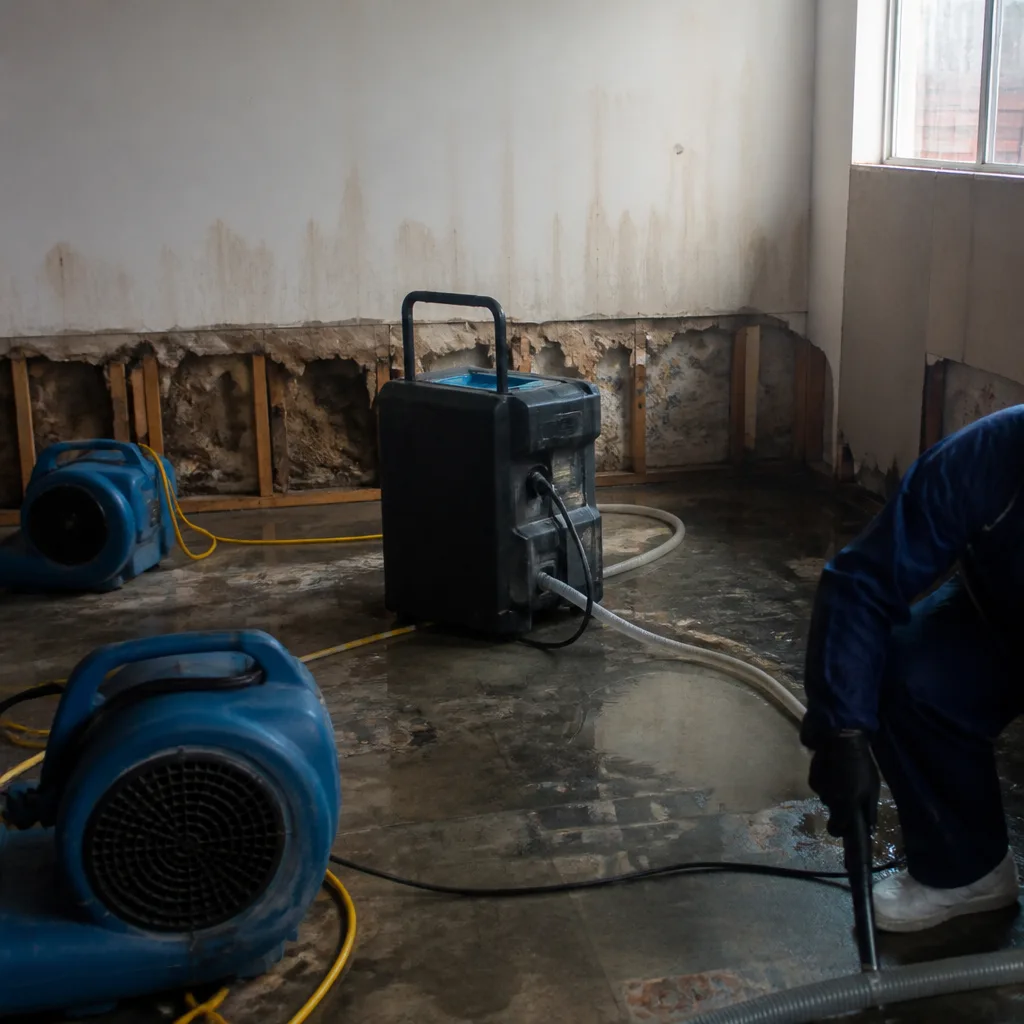 Before
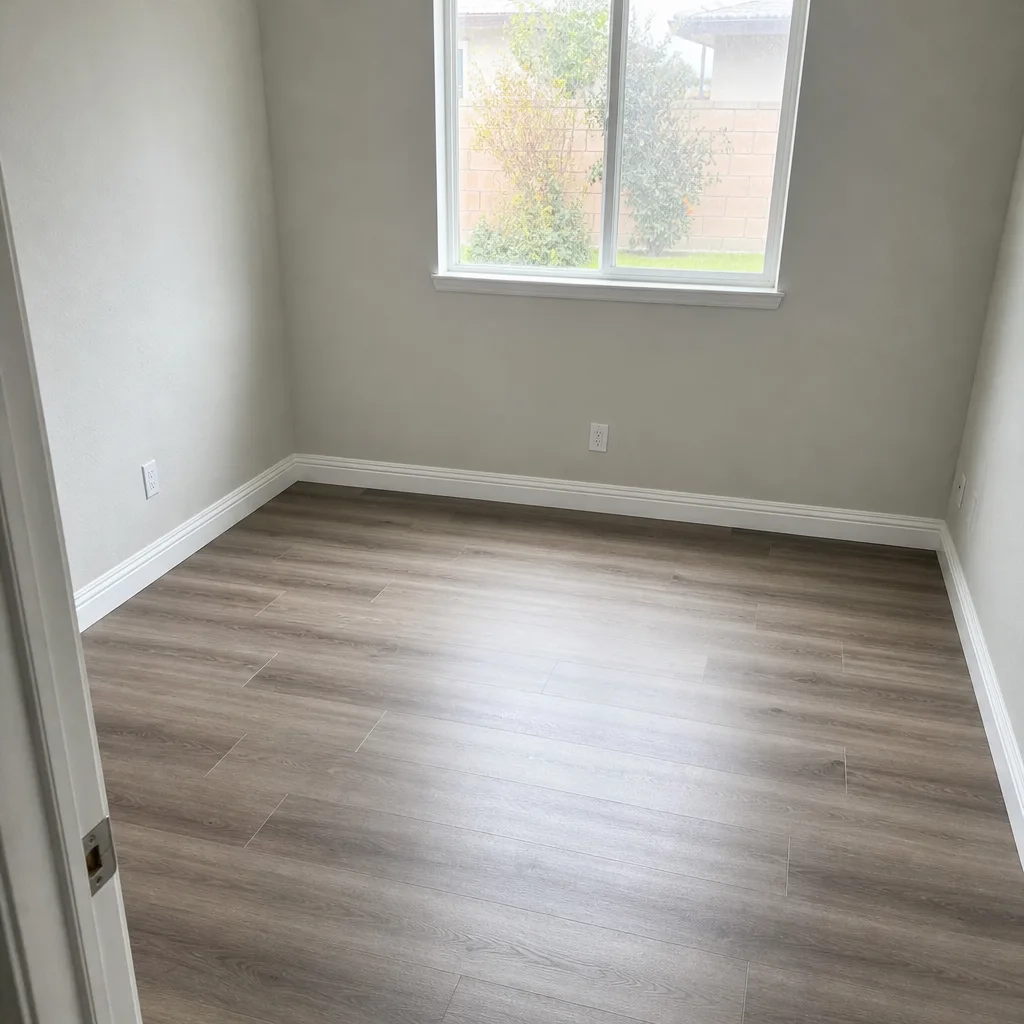 After
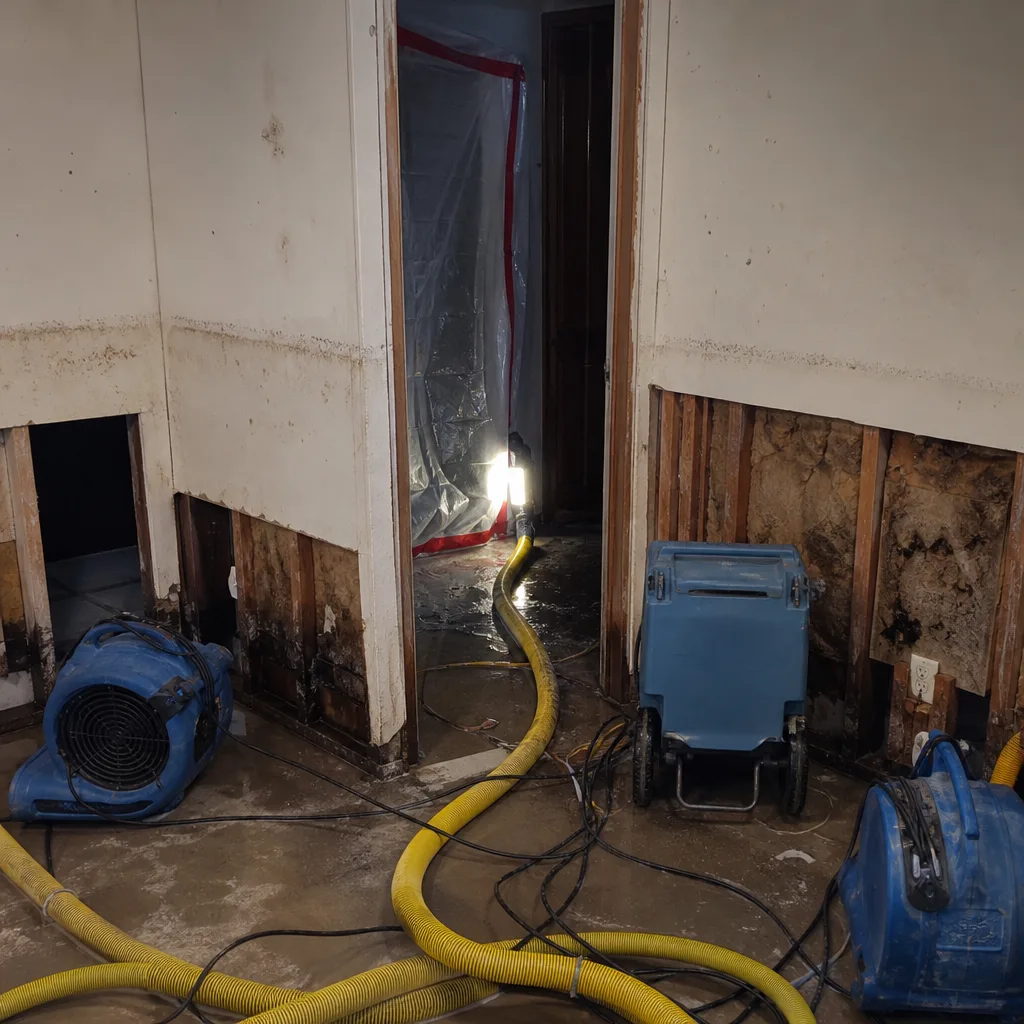 Before
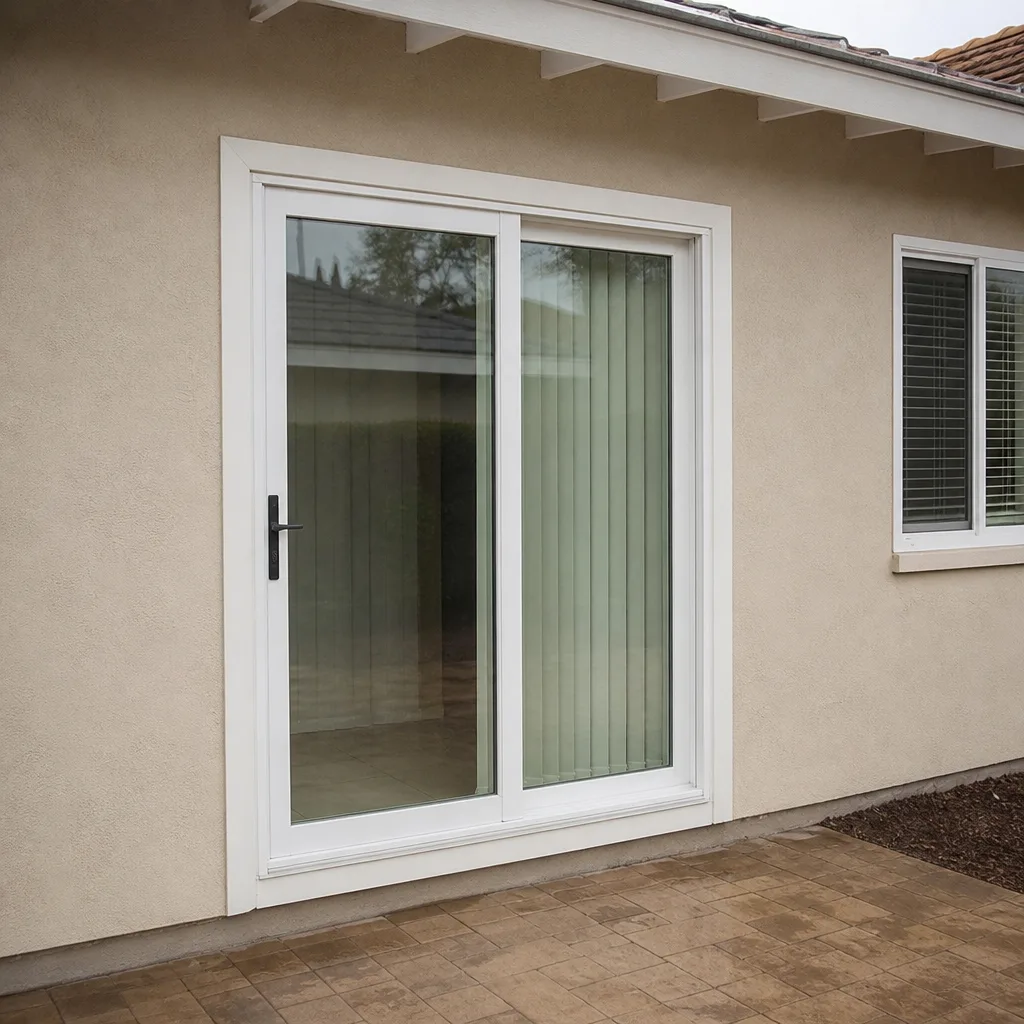 After
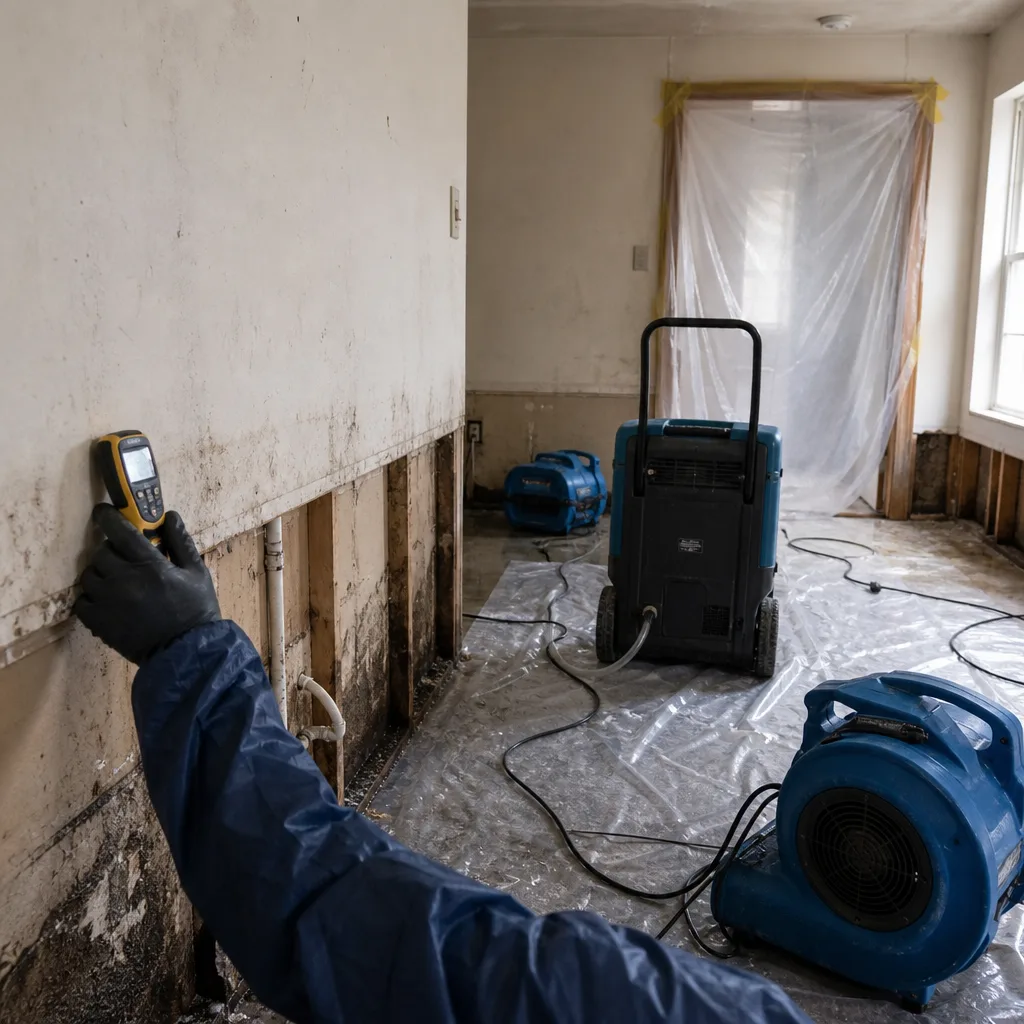 Before
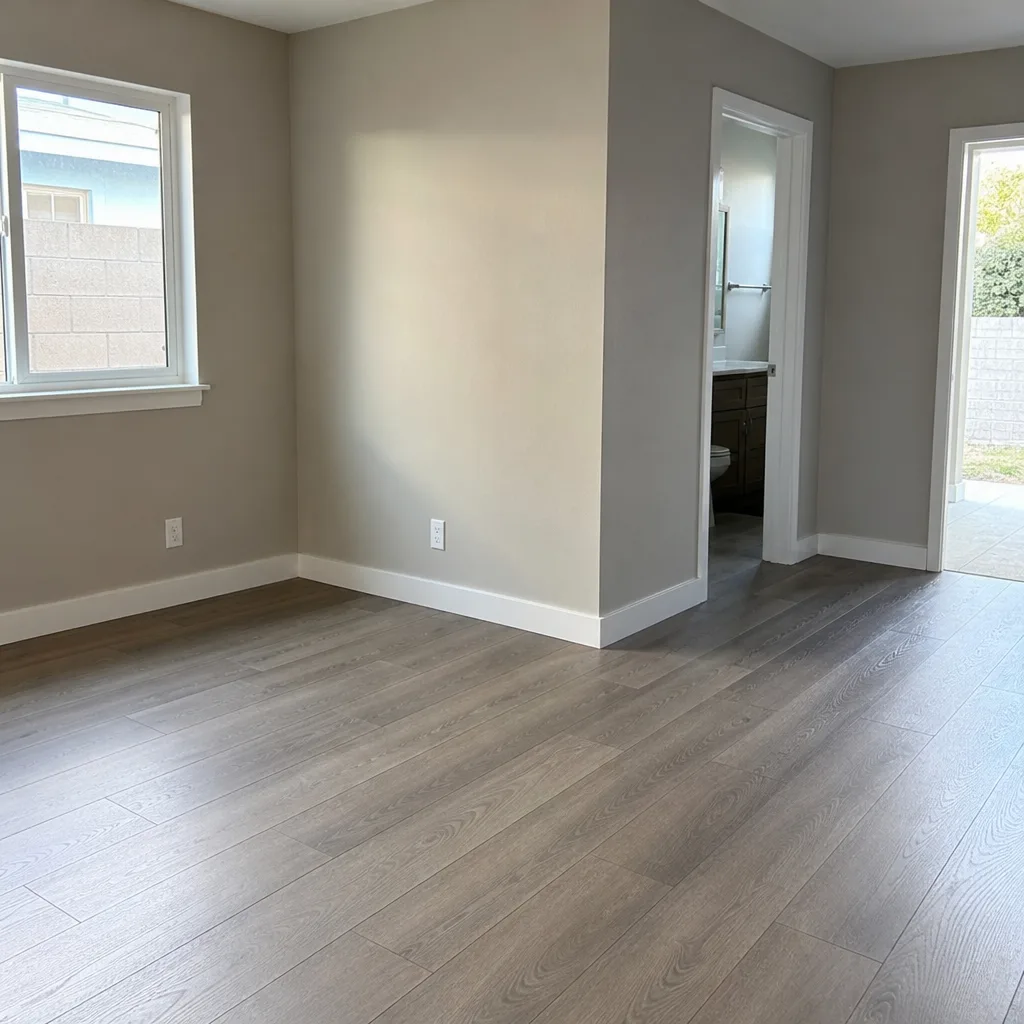 After
Professional Equipment Brands and What They Signal
The brands on a restoration truck are not incidental. They’re a signal of investment, training, and intent. A company that runs Dri-Eaz, Phoenix, XPOWER, B-Air, and Injectidry equipment has made a capital commitment to professional restoration. A company that runs hardware-store fans has made a different calculation entirely.
Dri-Eaz and Phoenix produce the LGR dehumidifiers that form the backbone of professional drying operations. These are not the dehumidifiers you see in basements or crawl spaces. They’re commercial units that extract moisture at rates measured in pints per day, not ounces. XPOWER and B-Air make the centrifugal air movers that push air across wet surfaces at the velocity required for evaporation. Injectidry is the specialized equipment that addresses moisture inside wall cavities and under sub-floors, the hidden reservoirs where water lingers after the surface looks dry.
When you see this equipment on a job, you’re seeing the same brands deployed by large commercial restoration firms handling multi-story office building losses and hospital water events. The owner of a single-family home in Ontario deserves the same equipment standard, because the physics of drying don’t change based on property values. Moisture moves at the same rate in a $400,000 home and a $40 million building. The difference is whether the contractor brought the tools to manage it.
Ask about equipment brands before you hire. A restoration company that can’t name its dehumidifier manufacturers off the top of its head doesn’t own them.
One Company, Full Loss Event: Why Multi-Service Matters
Water damage doesn’t stay water damage forever. Untreated moisture becomes mold. A water loss that reaches electrical systems or appliances becomes a potential fire source. The loss event may start with a single cause, but it rarely stays contained to a single category of damage. That’s why the restoration company you choose should be able to handle the full arc of the loss.
When a homeowner in Ontario calls us after a supply line failure, we’re handling water extraction, structural drying, and the documentation package. But if the moisture has already caused microbial growth, we’re also the team that handles Mold Remediation in Muscoy. And if the loss involves more than water, the same operation provides Fire Damage Restoration in Muscoy and Water Damage Restoration in Muscoy under one roof.
The alternative is the handoff chain: a water crew dries the structure, a mold company comes in for remediation, a fire restoration outfit handles the burn damage, and you’re coordinating three separate schedules, three documentation packages, and three invoice streams for one loss event. That’s a coordination burden no homeowner should carry during the worst week of their year.
Ask any restoration company you’re evaluating whether they handle water, mold, and fire in-house. If the answer is no, ask who their mold subcontractor is. Then ask that mold subcontractor whether they’ve ever worked with the water crew before. The hesitation will tell you what you need to know.
Local Market Realities in Ontario, CA
Ontario’s housing stock presents specific challenges for restoration work. Older homes in the central and northern neighborhoods often have plaster walls over lath, which holds moisture differently than modern drywall. Slab foundations are common throughout the city, which means supply line leaks travel up through the slab and into flooring, baseboards, and wall cavities from below. Crawl spaces under older homes hold humidity that complicates any drying effort. A restoration company familiar with Ontario’s housing patterns knows to check for capillary action through slab cracks, knows that plaster dries more slowly than drywall, and knows that a crawl space moisture problem can re-wet a structure that was just dried.
The climate is a factor too. Ontario’s hot, dry summers accelerate surface evaporation, which can create a false sense of progress. The surface feels dry while moisture remains trapped in wall cavities and under flooring. An operator using moisture meters and psychrometric readings doesn’t get fooled by a dry surface. A contractor using touch as a test does. That’s how hidden moisture becomes a mold claim three months later.
Common Mistakes to Avoid
- Hiring the first company that answers the phone. Emergency response matters, but even in a crisis you have time to ask two questions: what equipment are you bringing, and who is certified on the crew? A legitimate company answers both without hesitation.
- Accepting a “free inspection” without seeing a moisture meter. If the inspection consists of a visual walkthrough and a handshake, you haven’t received an inspection. You’ve received a sales call. Ask to see the moisture readings being taken and recorded.
- Signing a work authorization without documentation terms. The authorization should specify that you receive daily psychrometric logs, moisture mapping, and photo documentation. If those deliverables aren’t in writing, they won’t happen.
- Assuming the insurance company’s preferred vendor is the best option. Preferred vendor status means the contractor has passed the insurer’s vetting, which is useful. It does not guarantee the specific crew on your job has the certifications or equipment to handle your specific loss. Verify independently.
- Focusing on price over equipment. The cheapest quote usually means the lightest equipment loadout. Under-drying leads to mold, which leads to a second, larger claim. The expensive fix is the cheap fix done twice.
- Letting the contractor skip the written scope. A verbal scope is unenforceable and unverifiable. A written scope agreed before work starts protects you from surprise charges and gives your adjuster a document to review. No scope, no work.
- Ignoring the mold risk during water damage. Mold germination can begin within 24 to 48 hours of a water event. A drying plan that takes a week to reach the site is a mold cultivation plan. Insist on same-day or next-day deployment.
When to Call a Professional
Some water events are manageable with a mop and patience. A spilled glass of water is not a restoration project. But the threshold for professional intervention arrives faster than most homeowners in Ontario expect. If water has contacted drywall, it’s wicking upward into the wall cavity. If water has reached a floor with a sub-floor, it’s underneath, regardless of what the surface looks like. If the water event involves a supply line failure, a sewage backup, or any gray or black water category, professional extraction and drying is not optional.
Mold is another boundary. Visible mold growth larger than roughly ten square feet, or mold in HVAC systems, wall cavities, or structural framing, requires professional remediation with containment, negative air pressure, and proper disposal. Disturbing mold during DIY cleanup can release spores throughout the home. Fire damage always requires professional structural assessment before cleanup, because smoke residue penetrates surfaces and requires specialized cleaning agents and equipment.
Dorchester Water Damage offers free estimates for water damage, mold, and fire restoration work in Ontario. Call (833) 589-8366 and you’ll reach a restoration operation that runs a professional drying fleet and documents the work the way your insurer needs it documented.
Frequently Asked Questions
Ask for the individual technician’s certification number and verify it through the IICRC Global Locator registry. Company-level claims of certification do not guarantee that the specific person on your job holds the credential. Check for Water Damage Restoration Technician (WRT) or Applied Structural Drying (ASD) certifications specifically, as these are the ones that matter for water damage work.
A professional operation brings LGR dehumidifiers (typically Dri-Eaz or Phoenix), centrifugal air movers (XPOWER or B-Air), moisture meters, and thermal imaging for mapping. For structural moisture, the best operators also deploy Injectidry cavity drying systems. If the equipment looks like what you’d buy at a hardware store, it is what you’d buy at a hardware store.
Water damage restoration in Ontario typically ranges from $2,500 to $7,500 for a contained Category 1 loss, with larger events running higher. The dominant cost driver is equipment days: how many dehumidifiers and air movers, running for how long. That’s why equipment manifests matter more than hourly rates. Call (833) 589-8366 for an exact quote based on your specific loss.
Insurance coverage depends on the cause of the water damage. Sudden and accidental events like a burst supply line are typically covered under standard homeowners policies. Gradual leaks, flood damage, and maintenance issues often are not. When coverage applies, the restoration contractor’s documentation package is what substantiates the claim. Make sure the company you choose produces daily psychrometric logs and moisture mapping, not just a final invoice.
Same-day response is standard for professional restoration operations in Ontario, and same-day or next-day equipment deployment should be non-negotiable for water damage. Explore our more guides & resources to stay prepared. Mold begins germinating within 24 to 48 hours. Every day of delay extends the drying time and increases the secondary damage. When you call a restoration company, ask directly: when is the first truck on site, and when is the first dehumidifier running?
If water contacted drywall, flooring with a sub-floor, or any structural material, surface cleaning is inadequate. Moisture wicks upward and outward from the point of contact, even when the surface looks dry. If mold is visible, cleaning without containment can spread spores and worsen the contamination. The difference between remediation and cleaning is the difference between addressing the moisture source and masking the symptom. When in doubt, ask for a moisture assessment before anyone recommends a scope of work.
The Bottom Line
The restoration company brand name on the van is the least useful piece of information available to an Ontario homeowner facing a water, mold, or fire loss. The useful information is the equipment manifest, the individual technician certifications, the documentation package, and the adjuster relationship track record. Ask for certification numbers and verify them. Demand professional equipment by brand. Review a sample documentation package before signing. Get a written scope before work starts. A restoration operation that can answer those questions confidently is one that does the work properly. One that can’t is selling a logo. When you’re ready to talk specifics, call (833) 589-8366 for a free estimate in Ontario.
Written by the team at Dorchester Water Damage, serving Ontario since 2018.